Saudi Arabia, Qatar, and Oman Persuade Trump to Avoid Strike on Iran
Darwin, 16 January : Saudi Arabia, Qatar, and Oman have convinced U.S. President Donald Trump to refrain from a potential strike on Iran, giving Tehran…



Darwin, 14 January :
Iran is preparing to carry out the death sentence of a 26-year-old man, Erfanah Sultani, on Wednesday for his participation in ongoing anti-government protests. He was arrested on January 8 from his home in the Fardis area after taking part in a protest rally in Karaj. He has been sentenced to death on charges of “moharebeh”—“waging war against God.”
Human rights organization Hengaw reported that Sultani’s family was informed of the verdict several days after the sentence was issued. The family was allowed to see him for only ten minutes before the execution. No case documents or judicial information were provided to them.
By profession, Erfanah worked in the ready-made garment industry and had recently joined a private company. Prior to his arrest, he had been receiving regular threats from security forces. Despite this, he remained steadfast in his position and informed his family that he was under surveillance.
According to Reuters and Iran Human Rights (IHR NGO), the death toll from the recent unrest in Iran has exceeded 2,000. It is amid this volatile situation that preparations are being made to carry out Sultani’s execution.
Mahmoud Amiry-Moghaddam, director of IHR NGO, stated:
“These indiscriminate killings of civilian protesters recall crimes against humanity from the 1980s.”
He urged the international community to take action to stop these mass executions.
According to the annual report of Human Rights Activists (HRA), a total of 1,922 executions were carried out in Iran in 2025—the highest number in the past decade.
The report notes that 95 percent of these executions were carried out in secrecy or without any public announcement. Just last week, a man named Ali Ardestani was executed on charges of spying for Israel.
The protests, sparked by severe economic hardship and inflation, have become the biggest internal challenge to Iran’s religious leadership in the past three years. Although government spokesperson Fatemeh Mohajerani has claimed that the government is trying to listen to protesters, the harsh crackdown by security forces and the announcement of death sentences on the ground have further complicated the situation.

Darwin, 16 January : Saudi Arabia, Qatar, and Oman have convinced U.S. President Donald Trump to refrain from a potential strike on Iran, giving Tehran…
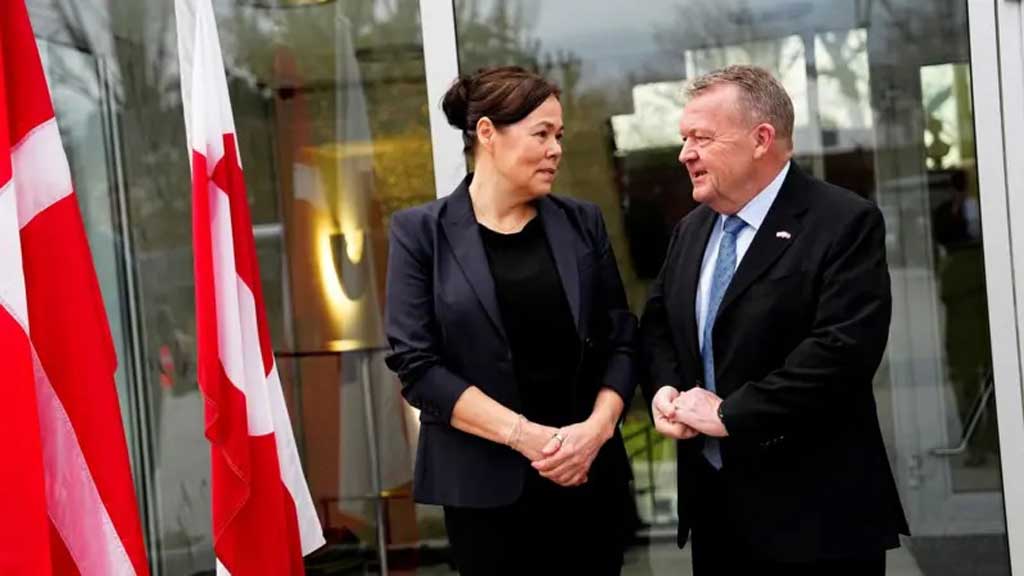
Darwin, 15 January: Denmark has announced plans to increase its military presence in Greenland amid growing geopolitical tensions surrounding the strategically important Arctic territory. According…

International Desk, 14 January: The United States is set to suspend visa issuance for citizens of 75 countries, including Bangladesh, Iran and Russia, according to…

International Desk, 14 January: Iran has warned Middle Eastern countries hosting U.S. military bases that those facilities will be targeted if the United States launches…

President Trump’s new 25% tariff on any country trading with Iran could spark a global trade war, hitting major economies like China, Brazil, and Australia.

President Trump doubles down on Greenland takeover, mocking its “dog sled” defense while warning of Russian and Chinese threats. NATO allies express alarm.

Investigation into Iran’s bloody crackdown reveals “stacked bodies” at Kahrizak and secret pre-dawn burials as the death toll reportedly passes 60

From B-2 stealth strikes to cyber warfare, we analyze President Trump’s “very strong options” for responding to Iran’s violent suppression of protesters.