How criminals secretly use your home Wi-Fi for cybercrime
Darwin, 15 May: You may think your home Wi-Fi connection is completely under your control and fully secure. But what if, without your knowledge, your…



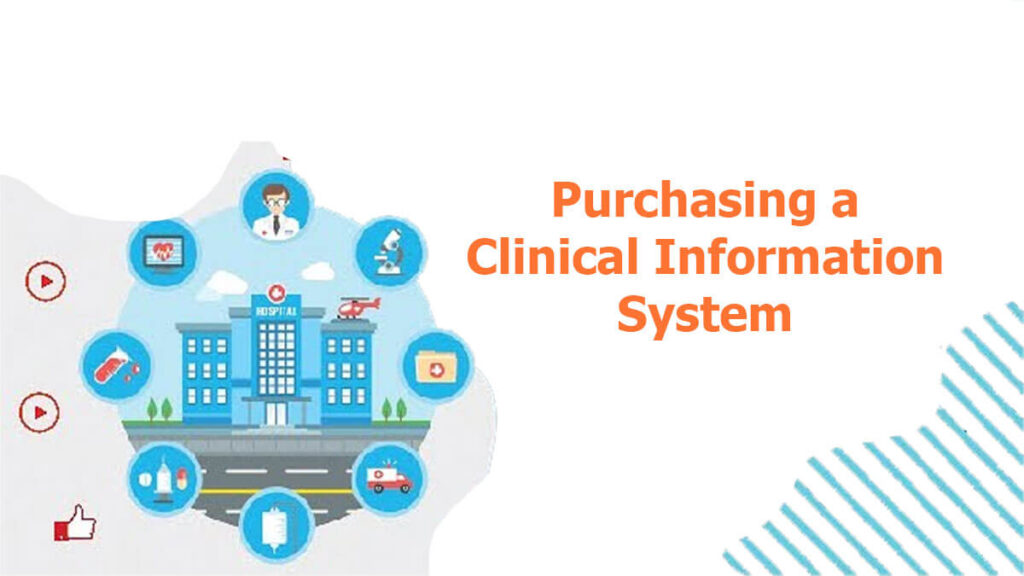
Purchasing a Clinical Information System Definition technology system puts every organization’s senior management team to the test. Unlike other administrative programs that aid in facility management, the clinical information system definition technology system has a direct impact on the lives of patients as well as the workflow of doctors, nurses, and other clinicians.
Poor vendor selection and botched implementations (e.g., software and hardware installation) and deployments may damage careers and whole enterprises (e.g., the introduction of applications to end users). Poorly selected clinical information system definition technology systems may drive doctors to competitors, have an influence on facility accreditation, and, in certain situations, attract lawsuits due to unanticipated morbidity or fatality.
As terrifying as this duty is, the greatest way to succeed is to remain humble. Senior executives must realize that it is difficult to fully investigate the features and operation of clinical information system definition technology solutions before acquisition.
No one person or committee has the technical competence or time to examine and thoroughly review the capabilities of a complete clinical information technology system.
As a result, organizations must base their purchasing decisions on characteristics that serve as surrogates for the utility and appropriateness of the systems in their institutions. These may include the source of clinical material contained with the system, a list of organizations that utilize the system, and the application’s perceived ease of use.
Although information technology providers use software demos to educate customers about their products, seeing operational systems in patient care areas provides the most important knowledge.
Unfortunately for both sellers and consumers, the competition in the healthcare information technology business, along with the complexity of these systems, pushes vendors to display software solutions that are either half-finished or in beta version during demos.
As a result, what is displayed in these demos often does not correctly reflect the features and capabilities that are presently accessible. It is critical to believe suppliers when they state that the displayed software is reflective of features and capabilities under development.
To maximize the likelihood of acquiring a product that will meet the requirements of an organization, institutions should prioritize current, operational, deployed, and implemented versions of the applications under consideration for acquisition.
The best technique to assess current-state versions of programs is to visit current customers of each vendor and see how the different applications are used regularly. Organizations must be patient and devote sufficient time to ensure that the systems function well under all scenarios. This entails seeing many hospitals and different patient care sections inside each one.
Most firms would be wiser to create ties with providers that already have operational apps that can be installed and used right away. Although functioning, published software will inevitably have some issues, it is expected that there will be fewer issues and remedies will be easily available.
In certain circumstances, it may be useful to have ties with companies that supply newly launched or under-development software.
In these cases, companies must engage in the agreement while acknowledging both the possible advantages of such partnerships as well as the potential faults and delays in the software that may be associated with acquiring new, untested software. Organizations with limited information technology infrastructure and departments should be cautious about getting into these sorts of agreements.
The sections that follow detail a suggested procedure for selecting clinical information system definition technology for an institution.
All clinical information system definition technology instruments must be purchased following the organization’s clinical strategic strategy. The strategic vision reflects the ideas and ambitions of the organization’s board of directors, medical personnel, and other healthcare experts. Obviously, cost containment is always a factor, but the need for patient safety and excellent treatment drives decision-making.
A thorough study of your firm can immediately discover possible providers of the essential application software. In virtually all circumstances, there will be a limited number of suppliers that deliver software that fits an organization’s demands. These suppliers may be identified by submitting a request for information (RFI), browsing the Internet, and contacting colleagues at universities comparable to one’s own.
Because ties with application providers endure much beyond the installation period, it is vital to have a strong, open, and trusted relationship to guarantee that deployed software will give the intended outcomes to an organization.
Because difficulties may emerge, it is necessary to maintain a good connection to guarantee that they are addressed. A healthy vendor relationship, as shown by courteous and honest interactions with all representatives of the business, unquestionably surpasses apparent advantages in features and functionality found in competing products.
The best method to assess clinical information technology applications is to see them in action in a real-world setting. Unless an organization is collaborating as a development partner with a vendor, multiple customer organizations, analogous to the buying institution, should be accessible to be visited to see clinical experts using the apps.
Purchasing companies must spend more than one day visiting these client firms and seeing the apps in use at various times throughout the day. Workloads vary, with morning physician rounds often putting the most strain on systems because of the large volume of new patient prescriptions and the necessity for patient care documentation.
Furthermore, nighttime usage corresponds to a period when information technology personnel may be limited or system maintenance may take place.
Organizations should request that their representatives be permitted to visit patient care locations unannounced and ask questions of the different program users. The more universities visited, the more data may be gathered to assess the apps and the vendor.
The degree of recurring maintenance payments, the strategic worth of the business to the vendor, and market pressures all have a significant impact on vendor price. As a result, while negotiating items with suppliers, take a comprehensive and thoughtful perspective of the products, services, and support being offered.
The total cost of ownership comprises not only the purchase price of the software, but also the vendor’s continuing maintenance charge and the cost of installing, deploying, and supporting the system during its lifetime. Finally, the significance of the vendor relationship cannot be overstated, as it will have the biggest influence on the success of deployment and, ultimately, clinical acceptance.
Implementing clinical information technology without wide clinical staff engagement and support—which necessitates a focus on all stakeholders, including doctors, nurses, pharmacists, and other health professionals—
lmost always results in a failed and inefficient deployment. Clinical information technology solutions cannot solve clinical issues, improve safety, or decrease costs on their own. These technologies equip clinicians with tools to help them modify the way they give care.
Only with clinician creativity, knowledge, and experience shaping the implementation can new procedures implemented with these instruments create acceptable workflows and produce positive results.
If deployment is inadequate and disruptive, physicians will devise workarounds for failed system procedures, resulting in medical mistakes and unacceptable waste. Organizations may be guaranteed useable solutions that are welcomed by physicians and capable of delivering anticipated and much-needed clinical and financial results through achieving adoption.

Darwin, 15 May: You may think your home Wi-Fi connection is completely under your control and fully secure. But what if, without your knowledge, your…

Darwin, 27 April: The shooting incident at the Hilton Hotel in Washington, D.C., on Saturday night—during the White House Correspondents’ Association annual dinner attended by…

Darwin, 21 April : Major changes are taking place in the leadership of Apple, one of the world’s leading technology companies. After successfully leading the…
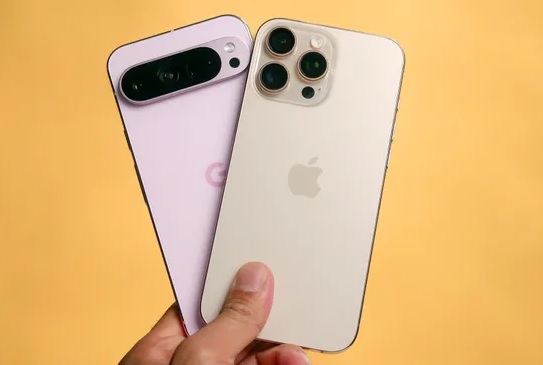
Darwin, 19 January: AnTuTu Benchmark is one of the most widely used tools in the tech world for comparing the performance of iPhones and Android…

At Australia’s only publicly-run gaming disorder clinic in Perth, patients like 15-year-old Sadmir Perviz are replacing 10 hours of online gaming with board games. The clinic treats patients suffering from Gaming Disorder, a condition formally recognised by the World Health Organization (WHO) that psychiatrist Dr. Daniela Vecchio likens to substance abuse. The clinic has treated over 300 patients with a range of comorbidities.

US investor Frank McCourt confirmed he is ready to purchase TikTok’s US operations and replace its entire Chinese technology stack, including the controversial recommendation algorithm, with his own “Project Liberty” infrastructure. The move aims to resolve the national security concerns that led to the 2024 law requiring a sale, which President Trump is expected to delay for a fifth time this week.

A new £1m scanner at Royal Brompton Hospital using Cadmium Zinc Telluride (CZT), made by British firm Kromek, has cut lengthy lung scans from 45 to 15 minutes. The “amazing feat of engineering” allows for highly detailed 3D images while reducing the radioactive dose by 30%, ushering in a “revolution” in medical imaging.

Nvidia’s CEO claimed “sales are off the charts” after profits soared >60%, but the stock fell 1% post-report. Market concern persists over Big Tech’s massive AI infrastructure spending and the risk of a bubble burst