Reagan Was Shot at the Same Hotel 45 Years Ago
Darwin, 27 April: The shooting incident at the Hilton Hotel in Washington, D.C., on Saturday night—during the White House Correspondents’ Association annual dinner attended by…



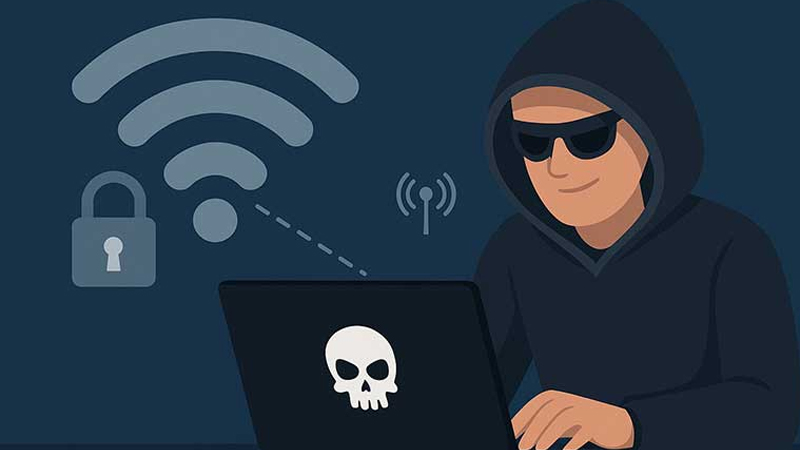
Darwin, 15 May: You may think your home Wi-Fi connection is completely under your control and fully secure. But what if, without your knowledge, your internet is being used for cyberattacks or illegal activities somewhere else in the world? It may sound like science fiction, but this is happening in reality. Cybercriminals are now building large “botnet networks” by exploiting ordinary home internet connections. Their main tools include cheap, unnamed tech devices from the market and various free apps on smartphones.
A report by the Wall Street Journal highlights this alarming trend. It says cybercriminals are operating massive botnet systems through software known as “residential proxy.” When users buy cheap streaming devices or install free VPNs and third-party apps on their smartphones, these proxy tools can secretly enter their devices. After that, the user’s home broadband or Wi-Fi connection may be used—without their knowledge—as a channel for data transfer or cyberattacks.
To illustrate the severity of the issue, Google recently took legal and technical action against one of the world’s largest residential proxy networks, “IpiIdea.” This network was linked to large illegal botnets such as “KimuWolf.” Cybercriminals were found hiding malware inside cheap Android TV boxes and gaming-related applications to gain control of users’ devices. These compromised home internet connections were then used to launch Distributed Denial-of-Service (DDoS) attacks and other serious cybercrimes.
According to security analysts, apps that offer free premium content or “free VPN” services often carry the highest risks. Riley Kilmer, co-founder of the internet analytics firm “Spar,” warned: “If a user’s IP address is linked to suspicious activity, it is likely that their network has been compromised.” Such free apps often monetize by allowing others to use the user’s internet bandwidth without consent.
Security experts recommend several steps to check whether your Wi-Fi is being misused and to protect your network:
In today’s digital age, the temptation of “free” or extremely cheap services can sometimes lead to serious risks. To avoid becoming an unwitting tool in cybercriminal networks, securing your home internet is essential.

Darwin, 27 April: The shooting incident at the Hilton Hotel in Washington, D.C., on Saturday night—during the White House Correspondents’ Association annual dinner attended by…

Darwin, 21 April : Major changes are taking place in the leadership of Apple, one of the world’s leading technology companies. After successfully leading the…

Darwin, 19 January: AnTuTu Benchmark is one of the most widely used tools in the tech world for comparing the performance of iPhones and Android…

At Australia’s only publicly-run gaming disorder clinic in Perth, patients like 15-year-old Sadmir Perviz are replacing 10 hours of online gaming with board games. The clinic treats patients suffering from Gaming Disorder, a condition formally recognised by the World Health Organization (WHO) that psychiatrist Dr. Daniela Vecchio likens to substance abuse. The clinic has treated over 300 patients with a range of comorbidities.

US investor Frank McCourt confirmed he is ready to purchase TikTok’s US operations and replace its entire Chinese technology stack, including the controversial recommendation algorithm, with his own “Project Liberty” infrastructure. The move aims to resolve the national security concerns that led to the 2024 law requiring a sale, which President Trump is expected to delay for a fifth time this week.

A new £1m scanner at Royal Brompton Hospital using Cadmium Zinc Telluride (CZT), made by British firm Kromek, has cut lengthy lung scans from 45 to 15 minutes. The “amazing feat of engineering” allows for highly detailed 3D images while reducing the radioactive dose by 30%, ushering in a “revolution” in medical imaging.

Nvidia’s CEO claimed “sales are off the charts” after profits soared >60%, but the stock fell 1% post-report. Market concern persists over Big Tech’s massive AI infrastructure spending and the risk of a bubble burst

Meta has started notifying an estimated 500,000 Australian teens (aged 13-15) that their Facebook and Instagram accounts will be shut down from December 4, ahead of the world-leading December 10 ban. Companies face up to a A$50 million fine for failing to take “reasonable steps” to block under-16s.