How criminals secretly use your home Wi-Fi for cybercrime
Darwin, 15 May: You may think your home Wi-Fi connection is completely under your control and fully secure. But what if, without your knowledge, your…



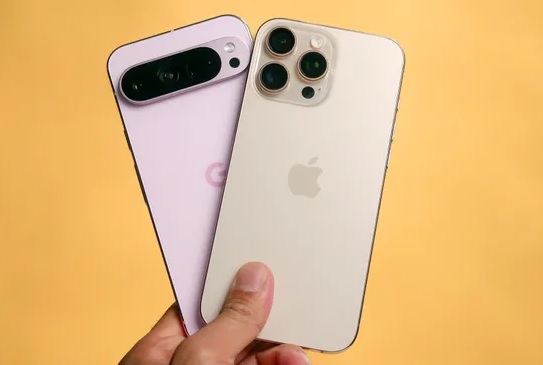
Darwin, 19 January: AnTuTu Benchmark is one of the most widely used tools in the tech world for comparing the performance of iPhones and Android smartphones. However, many technology analysts are now questioning the reliability of this benchmarking method.
The debate over whether iPhone or Android smartphones are superior has been ongoing worldwide for years. AnTuTu is the most frequently discussed benchmark used to compare the performance of these two platforms. Yet, a section of gadget experts believes that this measurement system is neither fully neutral nor entirely accurate.
Some experts argue that directly comparing iPhones and Android phones using AnTuTu is fundamentally flawed due to several structural limitations. For example, in the case of iPhones, AnTuTu uses Apple’s Metal API in the backend to determine performance scores.
In contrast, Android phones rely on the Vulkan API as their backend. Since the results are generated using two different underlying technologies, the outcomes naturally differ. As a result, many believe that comparing scores from the two operating systems using the same scale is essentially meaningless.
Another major limitation of the AnTuTu benchmark is that its results do not always reflect real-world user experience. Moreover, there is no separate AnTuTu benchmarking app available on Google Play Store, which further raises questions about the credibility and transparency of these scores.
Meanwhile, in September last year, Apple launched the iPhone 17 series in the Indian market. Within just a few months, there are indications that prices of these phones could rise by nearly ₹7,000. Apple’s chief rival, Samsung, may also follow the same path. According to sources, rising prices of phone components and hardware in the wholesale market are the primary reasons behind this potential increase.
In the past, increases in component costs did not significantly impact retail smartphone prices. However, reports suggest that both Apple and Samsung may move away from this approach in 2026.
This year has seen massive global investment in data center construction driven by artificial intelligence technologies. As a result, worldwide demand for RAM and storage (ROM) has increased significantly.
The pressure from this rising demand has pushed up the prices of smartphone components. To maintain profit margins, industry observers believe that both tech giants may ultimately choose to raise smartphone prices.

Darwin, 15 May: You may think your home Wi-Fi connection is completely under your control and fully secure. But what if, without your knowledge, your…

Darwin, 27 April: The shooting incident at the Hilton Hotel in Washington, D.C., on Saturday night—during the White House Correspondents’ Association annual dinner attended by…

Darwin, 21 April : Major changes are taking place in the leadership of Apple, one of the world’s leading technology companies. After successfully leading the…

At Australia’s only publicly-run gaming disorder clinic in Perth, patients like 15-year-old Sadmir Perviz are replacing 10 hours of online gaming with board games. The clinic treats patients suffering from Gaming Disorder, a condition formally recognised by the World Health Organization (WHO) that psychiatrist Dr. Daniela Vecchio likens to substance abuse. The clinic has treated over 300 patients with a range of comorbidities.

US investor Frank McCourt confirmed he is ready to purchase TikTok’s US operations and replace its entire Chinese technology stack, including the controversial recommendation algorithm, with his own “Project Liberty” infrastructure. The move aims to resolve the national security concerns that led to the 2024 law requiring a sale, which President Trump is expected to delay for a fifth time this week.

A new £1m scanner at Royal Brompton Hospital using Cadmium Zinc Telluride (CZT), made by British firm Kromek, has cut lengthy lung scans from 45 to 15 minutes. The “amazing feat of engineering” allows for highly detailed 3D images while reducing the radioactive dose by 30%, ushering in a “revolution” in medical imaging.

Nvidia’s CEO claimed “sales are off the charts” after profits soared >60%, but the stock fell 1% post-report. Market concern persists over Big Tech’s massive AI infrastructure spending and the risk of a bubble burst

Meta has started notifying an estimated 500,000 Australian teens (aged 13-15) that their Facebook and Instagram accounts will be shut down from December 4, ahead of the world-leading December 10 ban. Companies face up to a A$50 million fine for failing to take “reasonable steps” to block under-16s.