Oil Prices Rise in Global Markets on Fears of Middle East Supply Disruptions
Darwin, October 21: Oil prices rose in global markets on Wednesday as traders grew concerned about potential disruptions to oil supplies in the Middle East,…



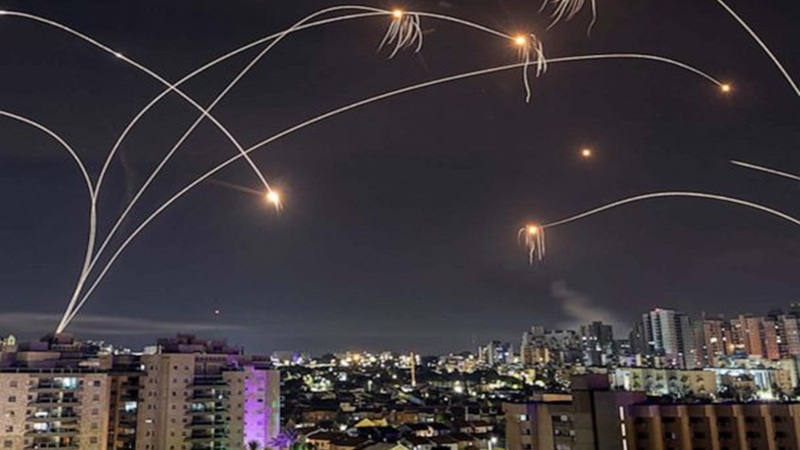
Darwin, 14 March: Amid the ongoing war with Iran, Israel is facing a shortage in its missile defense system. The country’s stockpile of ballistic missile interceptors is rapidly depleting. Israel has already informed the United States about the situation. Several unnamed U.S. officials told the American news website Semafor that without a solution, Israel could face severe devastation from Iranian missile attacks.
The issue was reported on Sunday by Ynet, the online edition of the Israeli newspaper Yedioth Ahronoth.
According to the report, Israel entered the conflict with Iran with a limited number of interceptors. The stockpile had already been reduced after extensive use during clashes with Iran last summer. In addition, Iran’s continued missile attacks are putting heavy pressure on Israel’s long-range air defense systems.
Meanwhile, Iran has reportedly begun equipping some of its missiles with cluster munitions. The information was first reported by CNN. Analysts say the use of such weapons could cause Israel’s interceptor stockpile to run out even faster.
A U.S. official told Semafor that Washington had anticipated such a situation for several months. “We had expected this issue, and it has indeed happened,” the official said.
However, the official emphasized that the United States itself is not facing a similar shortage. Nevertheless, analysts and some policymakers fear that if the war with Iran continues for a prolonged period, it could put pressure on U.S. weapons stockpiles as well.
It remains unclear whether the United States will sell or supply additional interceptors to Israel under the current circumstances. Previous U.S. military aid packages to Israel included missile defense systems. However, providing additional interceptors could also put pressure on America’s own reserves.
A U.S. official stated, “We have everything necessary to protect our bases, troops, and interests in the region.” He also noted that Israel is exploring various solutions to address the shortage.
Israel has alternative defensive measures to counter Iranian missile attacks, including using fighter jets to destroy missiles midair. However, specialized interceptor systems are considered the most effective for dealing with long-range ballistic missiles. Israel’s Iron Dome system is primarily designed to intercept short-range rockets.
Earlier this month, U.S. President Donald Trump claimed that the United States’ ammunition supply is “almost unlimited.” However, defense analysts have long argued that in reality U.S. stockpiles are insufficient compared to military requirements.
According to the Center for Strategic and International Studies, during the 12-day conflict with Iran in June last year, the United States launched more than 150 interceptors from the Terminal High Altitude Area Defense system, commonly known as THAAD. At the time, this accounted for nearly a quarter of the total U.S. stockpile.
Additionally, several reports suggest that during the first five days of the current conflict, interceptor missiles worth about $2.4 billion from the Patriot Missile System were used.
In January, the United States Department of Defense (Pentagon) initiated efforts to significantly increase the production of the THAAD ballistic missile defense system. The U.S. official added that the United States still possesses sufficient THAAD systems, fighter jets, and medium-range interceptors.
When asked for comment, the White House, the United States Department of Defense, and the Israel Defense Forces did not immediately respond.

Darwin, October 21: Oil prices rose in global markets on Wednesday as traders grew concerned about potential disruptions to oil supplies in the Middle East,…

Darwin, October 21: Iran is prolonging negotiations with Washington in an attempt to politically weaken President Donald Trump ahead of the US midterm elections, according…

Darwin, October 21: Today is the auspicious occasion of Bijaya Dashami. The five-day Sharadiya Durga Puja, the biggest religious festival of the Hindu community, officially…

Darwin, October 20: Today is Maha Navami, the ninth day of Sharadiya Durga Puja. Members of the Hindu community will observe the day through religious…

Darwin, October 20: Protests and violence over the rising cost of living have erupted in Italy, one of Europe’s largest economies, following similar unrest in…

Darwin, October 20: US President Donald Trump has warned that protests and violence similar to those in France could spread across the United States if…

Darwin, October 20: Moscow has reaffirmed its full support for Tehran just hours after US President Donald Trump remarked that Russia was doing very little…

Darwin, October 19: Former Manchester City manager Pep Guardiola has urged the world not to forget the Palestinians in Gaza. In a video for the…