Oil Prices Rise in Global Markets on Fears of Middle East Supply Disruptions
Darwin, October 21: Oil prices rose in global markets on Wednesday as traders grew concerned about potential disruptions to oil supplies in the Middle East,…



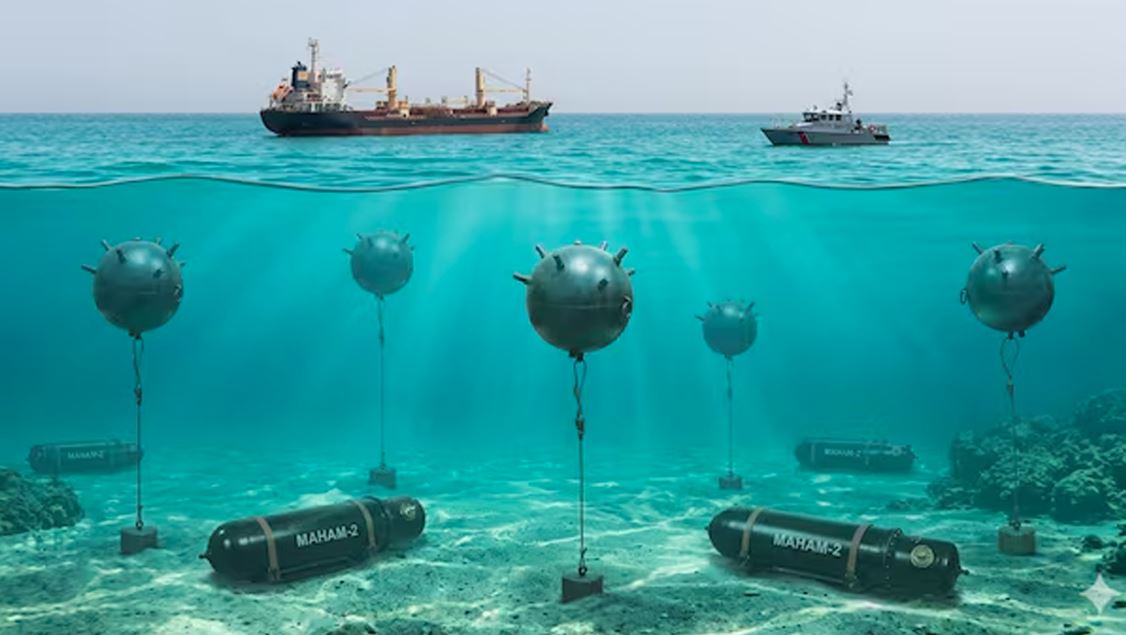
Darwin, 24 April: A U.S. Pentagon assessment has stated that fully clearing mines allegedly laid by Iran in the Strait of Hormuz could take up to six months, according to a report cited by The Washington Post.
This prolonged timeline could keep global oil prices elevated for an extended period, the report adds.
Since the outbreak of war involving the United States and Israel, Iran has effectively restricted navigation through this vital shipping route, leading to a sharp rise in global oil and gas prices and increased volatility in the global economy.
In peacetime, nearly one-fifth of the world’s oil and gas shipments pass through the Strait of Hormuz. Even after a ceasefire, the waterway remains largely closed, while the United States continues its naval blockade.
According to AFP from Washington, The Washington Post, citing officials, reported that even if the war ends and the blockade is lifted, clearing mines from the strait could still take several months.
The report claims that such operations are unlikely to begin before the conflict formally ends.
In a classified briefing to members of the House Armed Services Committee, lawmakers were reportedly told that the clearance operation could take up to six months.
They were also informed that Iran may have deployed at least 20 mines in and around the strait. Some of these are reportedly GPS-enabled and capable of being remotely controlled while floating, making detection more difficult.
However, Pentagon spokesperson Sean Parnell rejected the report, calling it inaccurate.
He said, “The idea that the Strait of Hormuz would remain closed for six months is both unrealistic and unacceptable to the Secretary of Defense.”
Parnell added that although the report was based on a “classified, closed-door briefing,” much of its content was “incorrect.”
Iran’s Islamic Revolutionary Guard Corps has already declared around 1,400 square kilometers as a “danger zone” due to suspected mine threats—an area roughly 14 times the size of Paris.
Iranian Parliament Speaker Mohammad Bagher Ghalibaf has stated that the Islamic Republic will not reopen the Strait of Hormuz unless the U.S. naval blockade is lifted.
A spokesperson for German shipping company Hapag-Lloyd said last week that ship owners, fearing mines, are still seeking information on alternative safe routes.
At the beginning of this month, during a brief ceasefire, the Strait was partially reopened, but only a very limited number of vessels passed through due to ongoing threats of attacks and mines.
Earlier in April, the U.S. Navy claimed its ships had entered the strait to begin mine-clearing operations. However, Iran’s Revolutionary Guard denied the claim and warned against the movement of military vessels.
Meanwhile, in London, military planners from more than 30 countries have begun discussions on a multinational mission led by the United Kingdom and France to secure safe navigation in the Strait of Hormuz after the war.
The proposed “defensive” coalition aims to plan the reopening of the strait and coordinate mine-clearing operations.
Darwin, October 21: Oil prices rose in global markets on Wednesday as traders grew concerned about potential disruptions to oil supplies in the Middle East,…
Darwin, October 21: Iran is prolonging negotiations with Washington in an attempt to politically weaken President Donald Trump ahead of the US midterm elections, according…

Darwin, October 21: Today is the auspicious occasion of Bijaya Dashami. The five-day Sharadiya Durga Puja, the biggest religious festival of the Hindu community, officially…

Darwin, October 20: Today is Maha Navami, the ninth day of Sharadiya Durga Puja. Members of the Hindu community will observe the day through religious…

Darwin, October 20: Protests and violence over the rising cost of living have erupted in Italy, one of Europe’s largest economies, following similar unrest in…

Darwin, October 20: US President Donald Trump has warned that protests and violence similar to those in France could spread across the United States if…
Darwin, October 20: Moscow has reaffirmed its full support for Tehran just hours after US President Donald Trump remarked that Russia was doing very little…

Darwin, October 19: Former Manchester City manager Pep Guardiola has urged the world not to forget the Palestinians in Gaza. In a video for the…