Washington, August 4 (Reuters) — The United States has used a significant portion of its stockpile of highly accurate long-range missiles during the five-month conflict with Iran, according to three sources familiar with the matter, raising concerns about the country’s preparedness for future military confrontations.
The sources said the heaviest use has been of the Army Tactical Missile System (ATACMS) and the Precision Strike Missile (PrSM), two of the U.S. Army’s primary land-based, long-range precision weapons. Two of the sources claimed that nearly the entire inventory of both missile types has been expended.
The extent of the depletion of U.S. long-range missile stockpiles has not previously been reported publicly. These weapons are regarded as a critical component of America’s military capabilities because they enable precise strikes against distant targets while allowing forces to remain outside enemy defenses. U.S.-supplied ATACMS missiles have also played a key role in the war in Ukraine, enabling Ukrainian forces to strike targets deep inside Russian territory. The newer PrSM is gradually replacing ATACMS and offers greater range and improved capabilities.
Defense analysts estimate that each missile costs more than $1 million and could play a vital role in any future conflict with China. However, the sources declined to disclose how many of these missiles remain in the U.S. arsenal.
President Donald Trump launched a joint military campaign with Israel against Iran in February, expressing confidence that the operation would conclude quickly. Instead, the conflict has continued for five months.
According to the sources, the prolonged war has rapidly depleted missile stockpiles, potentially limiting Washington’s ability to deter rivals such as Russia and China if another major crisis emerges.
One source said U.S. Central Command (CENTCOM), responsible for military operations in the Middle East, exhausted nearly all of its land-based missile inventory early in the conflict but later received additional supplies from stockpiles located elsewhere in the world. All three sources spoke to Reuters on condition of anonymity due to the sensitivity of the information.
Asked about the reported depletion of missile stockpiles, the White House referred Reuters to a statement from President Trump.
“We have far more ammunition than any other country in the world, and much more than we need,” Trump said.
He added that the U.S. defense industry is currently producing ammunition at the highest level in its history, while factories and manufacturing capacity are being expanded at a record pace.
Military analysts agree that production of artillery shells and various missile systems has reached record levels. However, they caution that current manufacturing rates may still be insufficient to sustain a prolonged, high-intensity conflict.
Lockheed Martin, which manufactures ATACMS, PrSM, and the Terminal High Altitude Area Defense (THAAD) missile defense system, declined to comment immediately on Trump’s remarks or missile inventories. RTX, formerly Raytheon, which produces Tomahawk cruise missiles and Patriot interceptors, also did not immediately respond to requests for comment.
Pentagon chief spokesman Sean Parnell said the U.S. military remains the world’s most capable fighting force.
“We have everything required to conduct operations whenever and wherever the President directs,” Parnell said. “We have successfully executed missions across multiple combatant commands while maintaining the capabilities needed to defend the American people and our national interests.”
According to the sources, multiple meetings were held within the Trump administration last week to review the state of U.S. missile inventories. Officials questioned how long military operations against Iran could continue if stockpiles continued to decline, particularly if another international crisis required a rapid military response.
One source said the rapid depletion of ATACMS and PrSM inventories was partly the result of a strategic decision by the Trump administration to rely heavily on long-range missile strikes rather than sending manned combat aircraft into heavily defended Iranian airspace.
Analysts believe these precision weapons would be especially valuable in any future conflict with an adversary possessing advanced air defenses, particularly China. A March report by the Center for Strategic and International Studies (CSIS) noted that such missiles had been used to strike targets inside Iran.
The report also observed that PrSM remains in limited supply because it is a relatively new system. However, the U.S. Army has placed large procurement orders for delivery by 2027 while gradually retiring ATACMS in favor of increased PrSM production.
Two sources also said military officials had been warning President Trump for weeks that stocks of defensive systems, including Patriot interceptors, were also declining rapidly. Several international media outlets reported last week that those concerns contributed to Trump’s decision to cancel plans for another major strike on Iran.
A U.S. official rejected that account, saying Trump’s decision was instead influenced by pressure from Gulf nations.
The war has also reignited debate in Washington over the constitutional limits of presidential war powers. Critics argue that Trump has conducted the campaign without congressional authorization, and no formal request for either a declaration of war or authorization for the use of military force has been submitted to Congress.
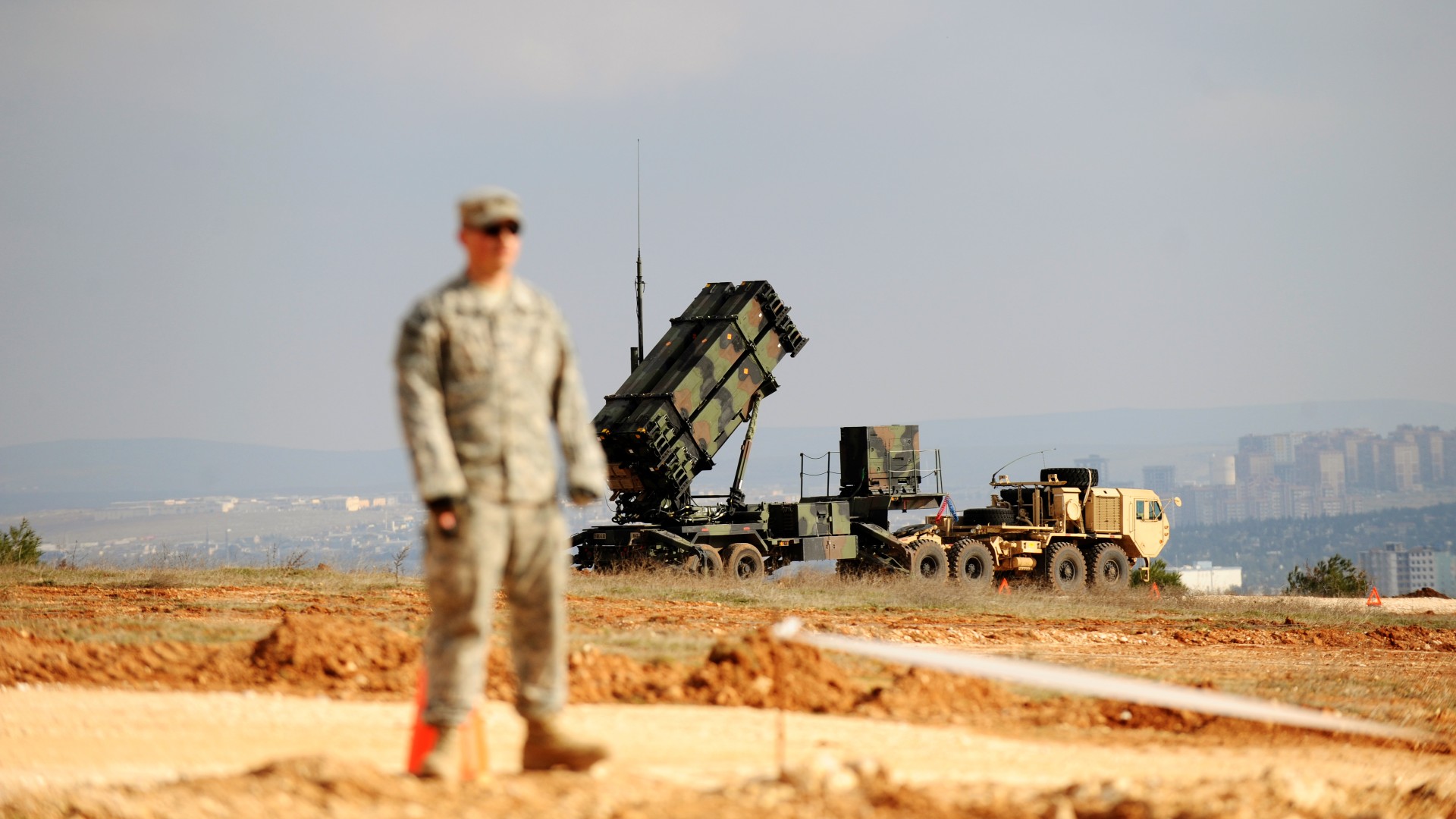
Meanwhile, another CSIS report published last week estimated that the United States used approximately 65% of its Patriot interceptor inventory between February and July. During the same period, THAAD interceptor stockpiles declined by at least 38% compared with the start of the conflict. Patriot and THAAD are among America’s most advanced missile defense systems, designed to detect and destroy incoming ballistic missiles.
Reuters could not independently verify those figures. However, two sources said the CSIS estimates were broadly consistent with internal U.S. government data.
One source further claimed that the United States has used just under half of its global inventory of Tomahawk cruise missiles since the war began. Tomahawks, typically launched from destroyers, cruisers, and submarines, form the backbone of the U.S. Navy’s long-range strike capability and allow precision attacks without risking pilots.
RTX recently announced that it has reached a preliminary multi-year agreement with the Pentagon to increase production of Tomahawk missiles. The company is also expanding production of other munitions as part of a broader effort to rebuild U.S. military stockpiles.
Source: Reuters