$9 Trillion Wiped Off Global Markets Amid AI Fears
November 22: Global stock markets have suffered a major sell-off amid growing concerns about the future of the artificial intelligence (AI) industry and expectations of…



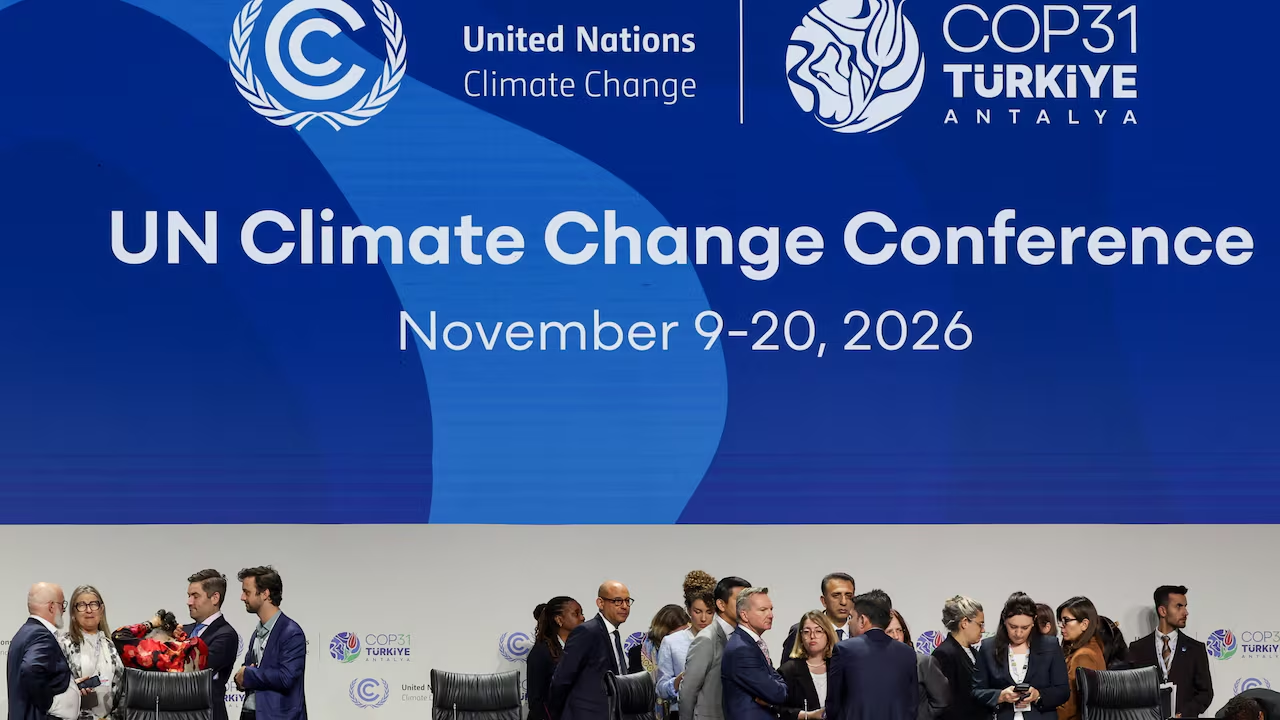
Antalya, November 23: The European Union, the United Kingdom and several developing nations have rejected the proposed outcome of the COP31 climate summit in Turkey, describing it as unacceptable because it fails to mention fossil fuels, the main driver of climate change.
The rejection came after the UN climate negotiations, originally scheduled to conclude on Friday, extended into Sunday afternoon, making COP31 the longest climate summit on record.
The proposed agreement, known as the “Antalya Pact”, was drafted under the joint presidencies of Turkey and Australia. However, growing divisions among participating countries prevented it from securing the consensus required for adoption.
Speaking on behalf of the European Union, Ireland’s Environment Minister Darragh O’Brien said the proposed deal failed to address the urgency of the climate crisis.
“We will not endorse a decision that does not respond to the science and that actually risks deepening the chasm between global commitments and the action required. It does not even mention fossil fuels,” he said.
The Antalya Pact called on countries to electrify their economies, urged wealthy nations to provide financial assistance to poorer countries for climate adaptation, and encouraged efforts to limit the overshoot of the Paris Agreement’s 1.5°C global warming threshold.
However, it did not endorse a “transition away from fossil fuels”, a demand supported by more than 130 countries.
The draft also included controversial provisions on carbon capture and storage (CCS) technology. Critics argued that relying on such technology could allow continued fossil fuel production rather than accelerate the transition to cleaner energy.
The EU made clear that it could not accept the final text in its existing form. O’Brien said the bloc would not support an agreement that failed to address fossil fuels or risked legitimising their continued use.
His remarks were greeted with applause. Panama, the Marshall Islands and Norway subsequently raised similar objections.
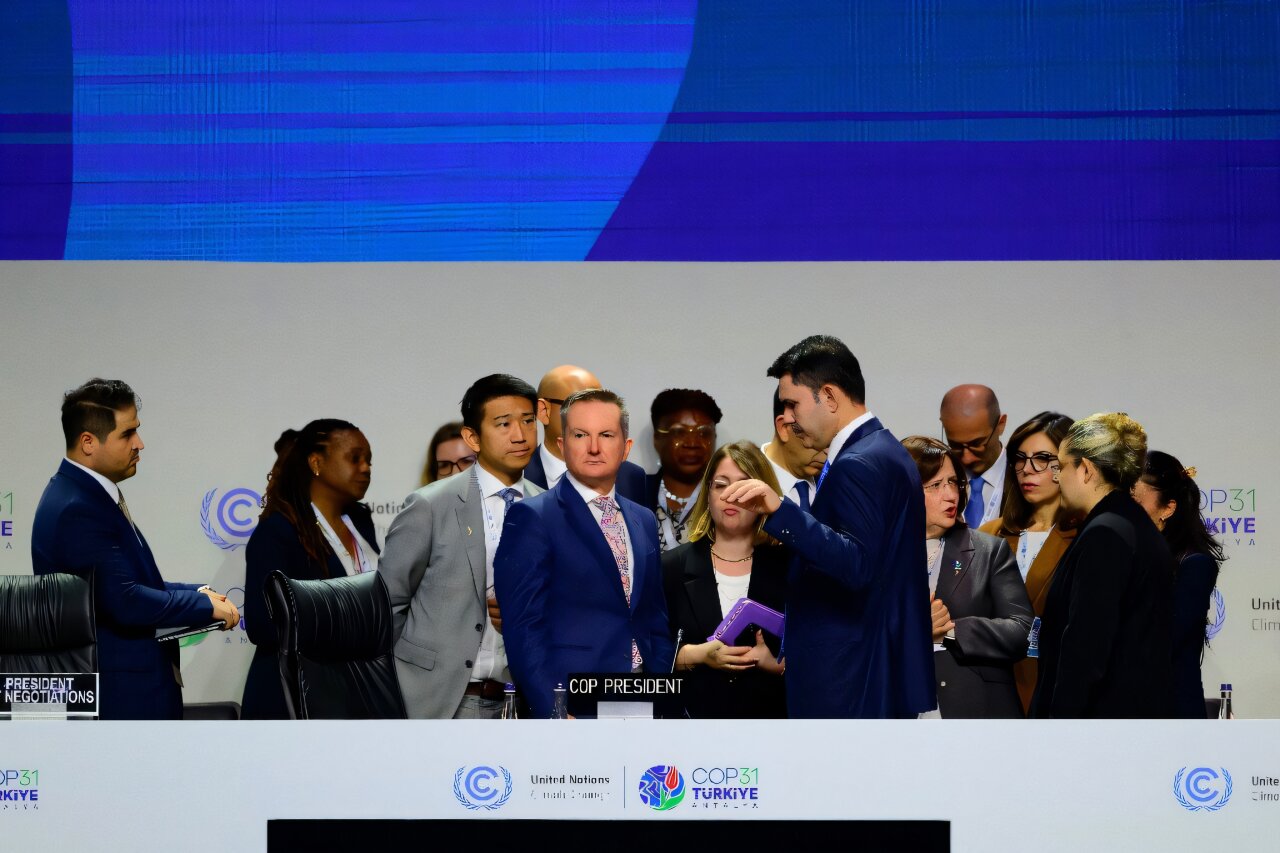
Bill Hare, chief executive of climate advisory group Climate Analytics, described the moment as a significant turning point, saying countries were standing up to fossil fuel interests.
While the EU, UK, small island states and several developing countries opposed the proposed pact, other nations were reluctant to reject the entire agreement.
Saudi Arabia defended the inclusion of carbon capture and storage provisions. The African Group, China and Pakistan also did not formally reject the proposal, although some expressed reservations.
Pakistan told the conference that objections to certain provisions should not undermine the entire agreement.
“Climate action is not a menu from which we can select only what suits us,” its representative said.
Ghana also criticised aspects of the negotiating process but stopped short of rejecting the final text.
“Africa has always chosen to build multilateralism rather than walk away from it,” Ghana told the conference.
However, Mohamed Adow, director of the thinktank Power Shift Africa, described the summit as “the worst COP ever”. He criticised both the proposed agreement and the role of wealthy nations, arguing that vulnerable countries were being left to face the consequences of a crisis they had contributed least to creating.
Adow also accused European governments of hypocrisy, saying they were demanding fossil fuel transition plans from other countries while continuing to expand fossil fuel activities themselves.
Despite failing to secure agreement on the main outcome document, the Turkish and Australian presidencies managed to adopt decisions on several related issues.
These included measures supporting a “just transition” to help workers in high-carbon industries move towards a low-carbon economy.
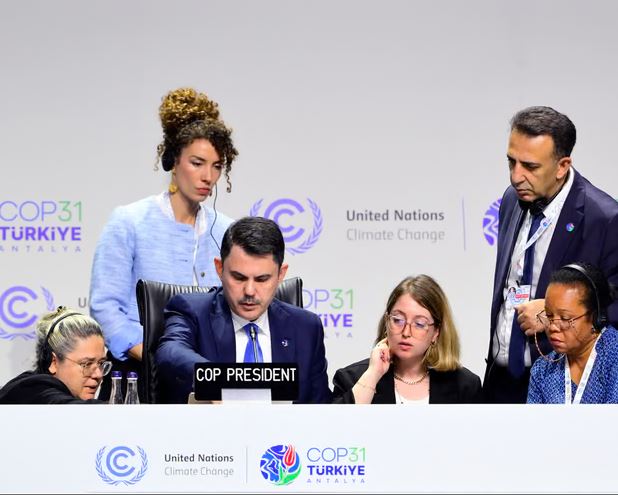
However, Turkey’s COP President Murat Kurum acknowledged that countries had failed to reach consensus on the draft overarching decision, meaning the Antalya Pact was not adopted.
“We have done our utmost; ultimately, we have not imposed this text on anyone, nor have we issued an ultimatum such as a ‘take it or leave it’ demand,” Kurum said.
He added that several parties in the negotiating hall opposed the document and that there was no consensus to adopt it.
Australia’s Climate Change Minister and COP co-president Chris Bowen defended the leadership of the joint presidency, saying Australia had made every possible effort to secure an agreement.
However, he acknowledged that the opposing positions the presidencies had attempted to reconcile were “unbridgeable”.
Simon Stiell, executive secretary of the UN Framework Convention on Climate Change, admitted that the consensus-based negotiating process had fallen short. Nevertheless, he pointed to the adoption of several agenda items and said the summit had delivered some progress and concrete results.
The failure to reach agreement has intensified concerns about the international community’s ability to respond collectively to the worsening climate crisis.
Extreme weather events have continued to claim lives around the world this year, including deadly heatwaves, droughts and floods. A glacier collapse in Nepal has also highlighted the growing risks associated with a warming planet. The effects of a strengthening El Niño have added to weather-related pressures in several regions.
Former Irish president and former UN climate envoy Mary Robinson expressed frustration at the lack of urgency during the negotiations.
“There isn’t the sense of urgency to address these issues. That to me is very frustrating,” she said, criticising the summit’s co-presidents for failing to provide stronger leadership.
UN Secretary-General António Guterres also expressed deep disappointment that COP31 had ended without consensus on an overarching agreement.
“I share the very profound frustration of all those who expected governments to rise to the moment the climate crisis demands,” he said.
However, Guterres stressed that the failure to reach a political agreement did not undermine the scientific evidence on climate change.
“There may be no consensus in the negotiating room. There is no ambiguity in the science,” he said.
The outcome of COP31 has once again exposed the deep divisions between countries over fossil fuels, climate finance and the pace of the global transition to cleaner energy.

November 22: Global stock markets have suffered a major sell-off amid growing concerns about the future of the artificial intelligence (AI) industry and expectations of…

November 22: The US Army is planning to build 17 reinforced concrete bunkers in the Middle East to protect American and allied troops from potential…
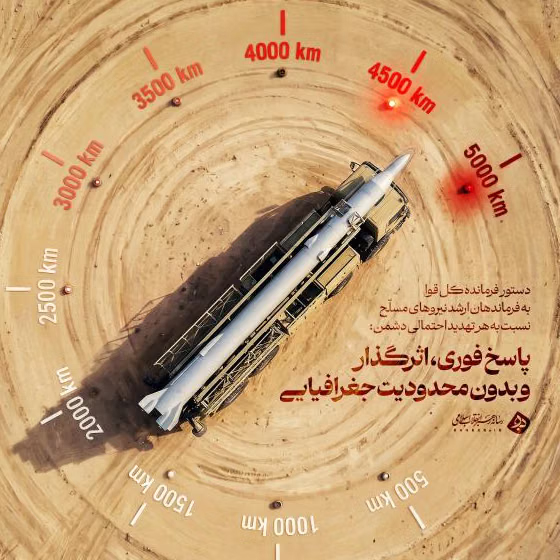
Tehran, November 21: Iran has the capability to strike US military bases in Europe if ordered to do so, and its armed forces can launch…

Tehran, November 20: Restarting its oil exports is now Iran’s primary objective, and Tehran will respond militarily if the US Navy attacks Iranian oil tankers…
New Delhi, November 20: A Pakistani federal minister has arrived in India’s capital, New Delhi, for the first time since the four-day conflict between the…

Darwin, November 18: Following the United Kingdom’s lead, Australia has announced sanctions against three Israeli individuals and four organisations over alleged involvement in the “illegal…
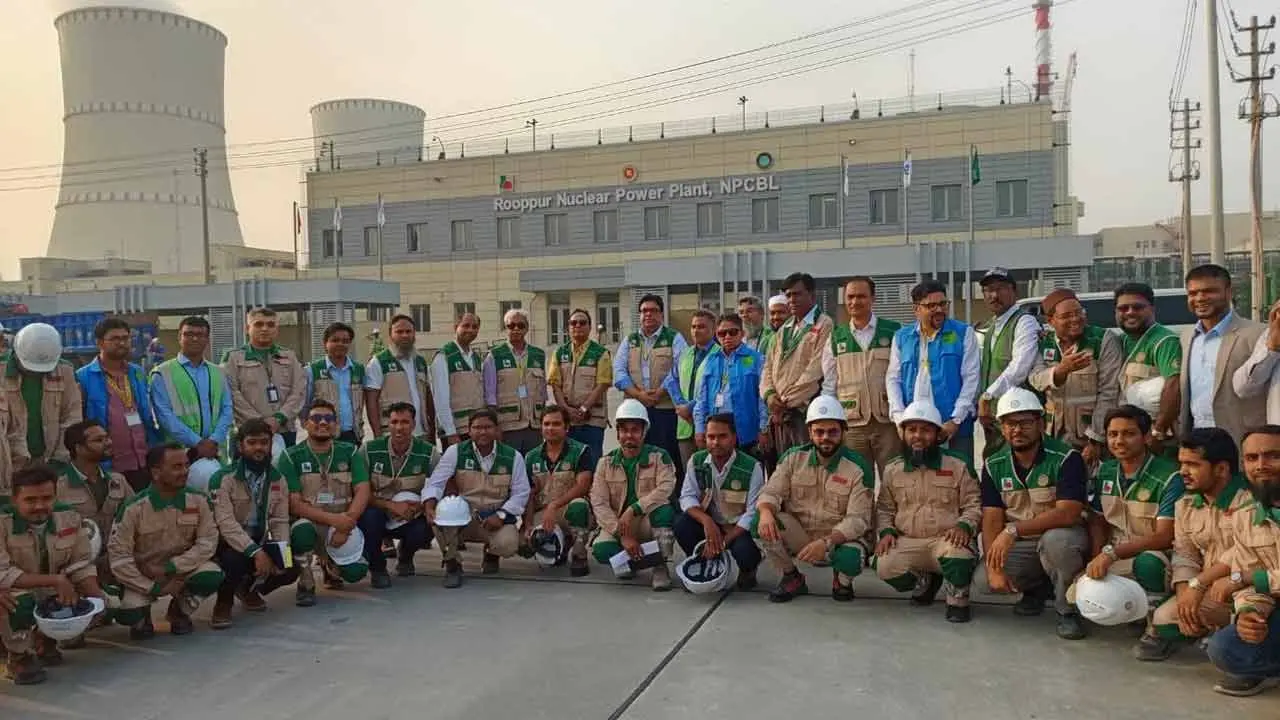
Darwin, November 17: Following years of anticipation, extensive technical work and multiple stages of complex testing, Bangladesh has opened a new chapter in its power…

Darwin, November 17: A powerful earthquake measuring 6.6 on the Richter scale has struck Indonesia, with tremors also felt in neighboring Australia. According to Geoscience…