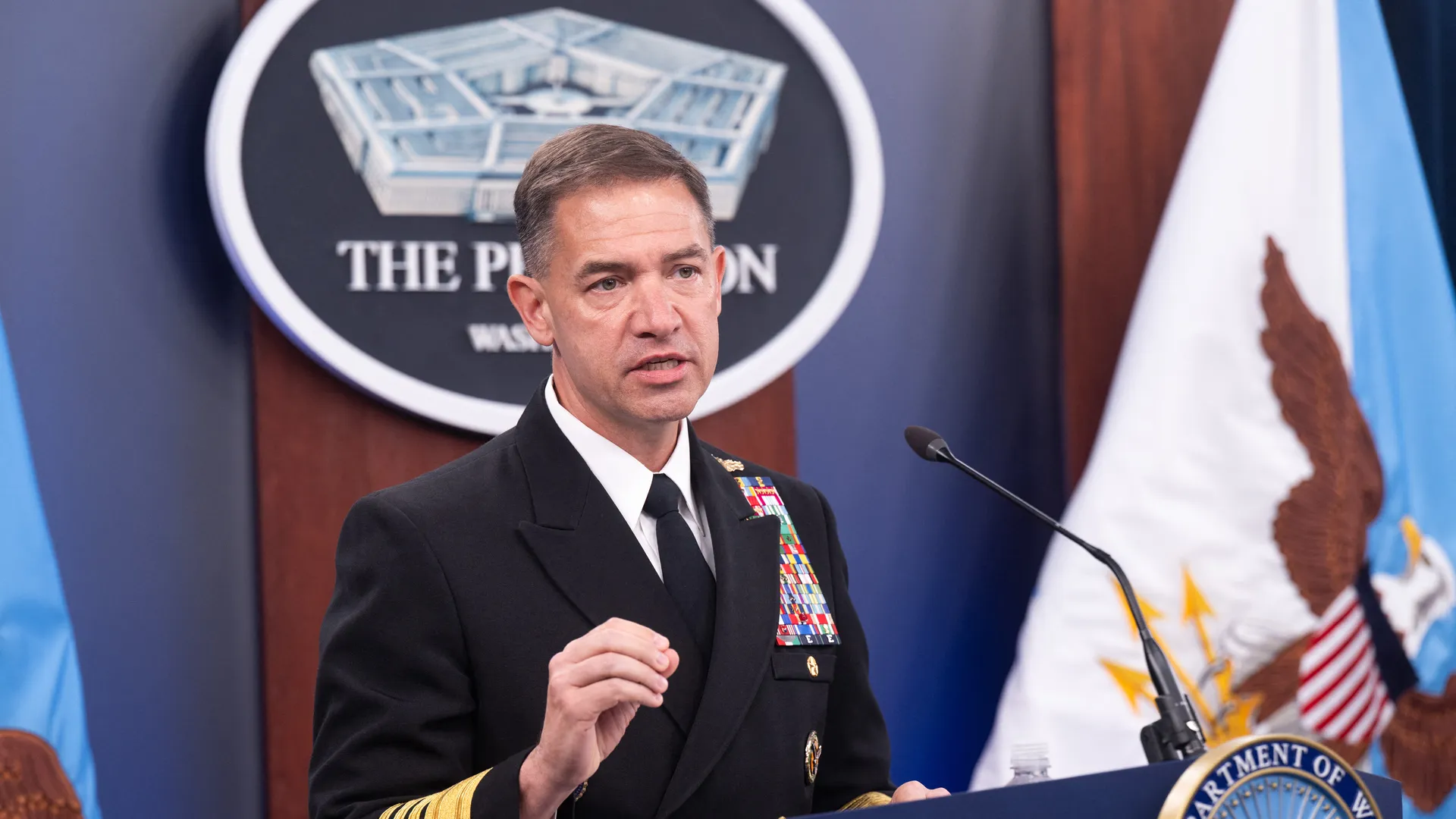
Darwin, October 17: Iran-aligned armed groups across the Middle East are reportedly sending money back to Iran’s Islamic Revolutionary Guard Corps (IRGC), which is facing mounting financial pressure after nine months of war. US Central Command (CENTCOM) chief Admiral Brad Cooper disclosed the development on Friday, October 16, local time, according to Axios.
Cooper said the IRGC’s financial crisis had become so severe that several armed groups affiliated with Iran across the region were withholding salaries from their own fighters and transferring the money to the IRGC. The IRGC itself, however, is also struggling to pay its personnel.
The US military is preparing for the possibility of renewed large-scale military operations against Iran. Meanwhile, President Donald Trump’s administration continues to exert pressure on Tehran through a naval blockade and stringent sanctions.
US officials claim the economic blockade has pushed Iran and its security forces into a severe crisis, increasing frustration and aggression among the Iranian leadership. Washington hopes the pressure will persuade Tehran to make concessions on its nuclear programme and agree to a deal. So far, however, little progress has been made.
In a video message released on Friday, Cooper said Iran had lost $25 billion in oil revenue because of the US naval blockade.
He also revealed that CENTCOM and the US Treasury Department had jointly seized $350 million worth of Iranian cryptocurrency in recent weeks.
Cooper said the IRGC had long funded Hezbollah, Hamas and Shiite armed groups in Iraq. Now, however, those same groups are reportedly having to return money to the IRGC.
He said reports indicated that Iran-aligned armed groups across the region were withholding payments to their fighters and sending the funds to the IRGC because the Iranian military was facing an increasingly severe financial crisis. The IRGC, meanwhile, was also failing to pay its own personnel.
According to Cooper, the Iranian government has withheld salaries, pensions and other benefits from public-sector employees, including members of domestic security forces and the IRGC.
Cooper suggested that frustration within the IRGC was contributing to a significant increase in Iranian attacks on vessels in the Strait of Hormuz.
Despite the attacks, he claimed the strait remained open. According to his figures, 400 vessels had passed through the waterway over the past week, transporting 100 million barrels of oil.
However, US strikes against Iran’s anti-ship missile systems and attack-drone launch capabilities around the strait have largely ceased in recent weeks.
A US official claimed the White House had ordered a pause in the strikes to prevent further escalation ahead of the US midterm elections. The official said the pause had emboldened Iran to launch more attacks on vessels.
CENTCOM is concerned that continued attacks could prompt shipping companies to reconsider using the Strait of Hormuz. Any resulting reduction in global oil supplies could drive up prices on international markets.
US officials also allege that Iran is intensifying attacks on vessels to increase pressure on Trump ahead of the midterm elections and push oil prices higher.
Meanwhile, the White House and Qatari mediators are awaiting Iran’s response to a US counterproposal aimed at ending the war.
A US official said the matter was still under internal discussion in Tehran.
A regional source directly familiar with the issue said mediators had recently urged Iranian Foreign Minister Abbas Araghchi to respond now rather than wait until after the US midterm elections.
The mediators also warned that there was no guarantee Trump would adopt a more flexible position after the elections. Instead, they feared he could take an even tougher stance.
Source: Axios