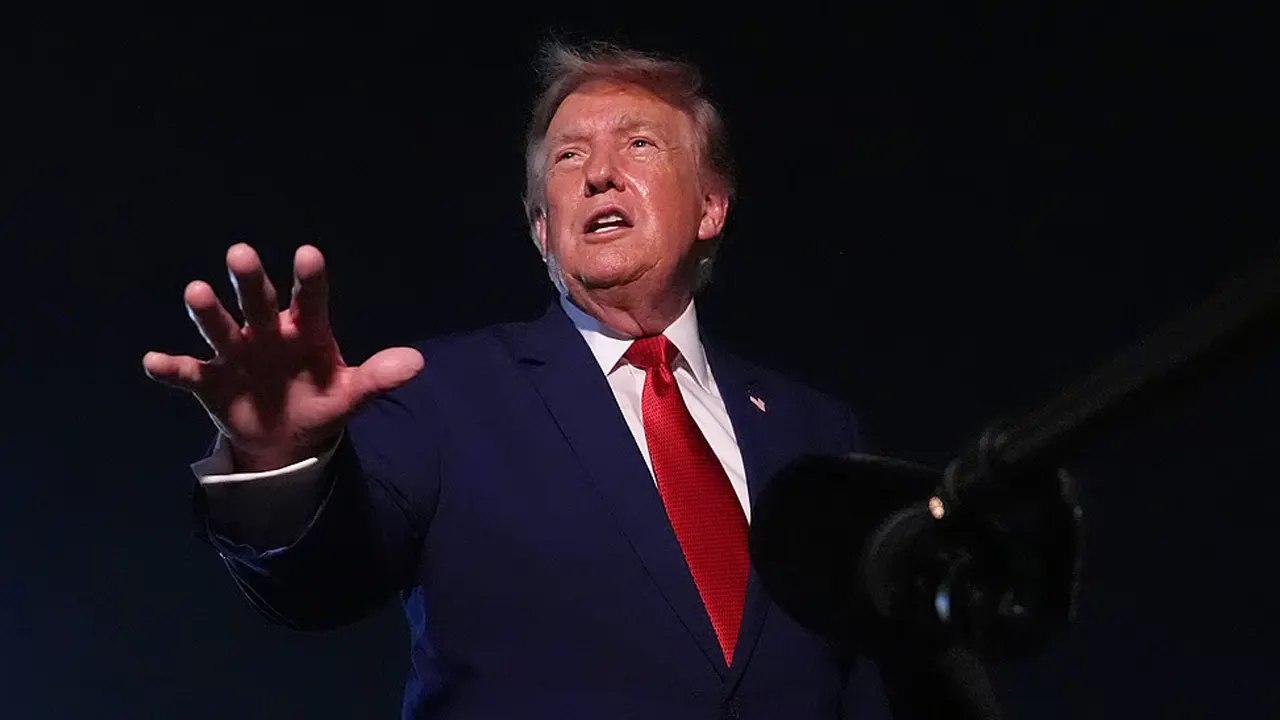
Trump: I Would Have Won by a Landslide If My Name Had Been on the Ballot
Darwin, November 4: US President Donald Trump has said he is prepared to accept the results of the country’s midterm elections. He has also expressed…




Darwin, November 4: The Democratic Party has secured a major victory in the US midterm elections, taking control of the Senate following an unexpected win in Iowa. The party also scored victories in Republican strongholds such as Texas, Kansas and South Carolina, significantly reshaping the political landscape in Washington.
Democrats gained a total of six Senate seats, securing a majority in the chamber. Although the party lost two previously held seats in Michigan and Minnesota, victories elsewhere helped it retain enough seats to take control of the Senate.
The results mark a significant setback for President Donald Trump and his Republican Party, which previously controlled both chambers of Congress. With Democrats now controlling the Senate, the Trump administration could face greater opposition to its legislative agenda and key policy decisions.
The Democratic victory in Iowa played a crucial role in securing control of the Senate. Despite being considered a Republican stronghold, the state delivered an unexpected result in favour of the Democrats.
Before the election, Republicans were considered firmly established in Iowa. Trump had won the state by a 13-percentage-point margin in the 2024 presidential election.
However, concerns over the cost of living, inflation, the Iran war and dissatisfaction with the federal government’s policies reportedly influenced the electoral landscape.
The victory in Iowa proved particularly important in the Democrats’ efforts to regain control of the Senate.
One of the biggest Democratic victories came in Texas, where the party had not won a statewide election since 1994.
Democratic candidate James Talarico ended that 32-year drought by defeating Republican candidate Ken Paxton by a wide margin.
Paxton, a Trump-backed candidate, previously served as Texas Attorney General.
During the campaign, Talarico focused on the rising cost of living, political corruption and the economic challenges facing ordinary Americans. Paxton, meanwhile, sought to maintain Republican support by presenting himself as a champion of conservative politics.
The victory represents a major breakthrough for Democrats in Texas, which has long been regarded as a Republican stronghold.
Democrats also secured a significant victory in another traditionally Republican state, South Carolina.
Democratic candidate Annie Andrews defeated Republican candidate Darlene Graham.
Darlene Graham is the sister of the late Republican Senator Lindsey Graham. Following his death earlier this year, Trump had selected Darlene as the candidate for the seat.
Despite Trump’s strong political position in South Carolina, the Democratic victory marked another notable setback for Republicans.
Trump had won the state by an 18-percentage-point margin in the 2024 presidential election.
In Ohio, Democratic candidate Sherrod Brown defeated Republican Senator Jon Husted, reclaiming an important seat previously held by Republicans.
Brown had previously served as a senator from Ohio, while Husted took office in the Senate in 2025 after serving as the state’s lieutenant governor.
Brown’s victory further strengthened the Democratic position in the Senate and contributed to the party’s efforts to secure a majority.
The US Congress consists of two chambers: the Senate and the House of Representatives. The Senate has 100 seats, and a party generally needs 51 seats to secure a majority. However, the vice president can cast a tie-breaking vote when the chamber is evenly divided.
With Democrats taking control of the Senate, the Trump administration could face significant political challenges in several areas.
Key appointments: The Senate plays a crucial role in confirming cabinet members, ambassadors and federal judges. Democratic control could make it more difficult for Trump’s nominees to secure approval.
Legislation: The administration may need Democratic support to pass major bills and implement key policies.
Investigations and oversight: Democratic-controlled Senate committees could investigate administration activities and demand greater accountability from government officials.
Budget and foreign policy: Government spending, defence budgets and international policy decisions could become subjects of greater political debate.
In particular, disagreements over the Trump administration’s policies on Iran, the economy and federal spending could create further political tensions.
Following the election results on Tuesday night, Trump said he wanted to work with Democrats. However, he warned that he would use his presidential veto power if necessary.
Earlier, Trump had blamed his absence from the ballot for the Republican Party’s disappointing performance. He argued that Republicans would have won by overwhelming margins if he himself had been a candidate.
Democratic leaders, meanwhile, view the victory as an important opportunity to reshape the balance of power in Congress.
The election results have created a new political landscape for the final two years of Trump’s second term. With Republicans losing control of the Senate and facing uncertainty over the House of Representatives, the administration may have to negotiate more extensively with Democrats to advance its legislative agenda and implement key policies.
Sources: Reuters, Associated Press
Darwin, November 4: US President Donald Trump has said he is prepared to accept the results of the country’s midterm elections. He has also expressed…

Darwin, November 4: Former North Carolina Governor Roy Cooper is a prominent Democratic politician who served two terms as the state’s governor. By winning a…

Democrats are poised to make significant gains in the US midterm elections. CBS News has projected that the Democrats will take control of the House…

Darwin, November 2: Russian President Vladimir Putin and Mohsen Rezaei, secretary of Iran’s Supreme National Security Council, held a telephone conversation to discuss developments in…

Darwin, October 29: Australia is considering purchasing missile interceptor systems developed for Israel’s Iron Dome air defence system as the country moves to strengthen its…

Darwin, October 28: The death toll from a collision involving two high-speed trains in central Spain has risen to 64, the regional government of Castilla-La…

Darwin, October 28: Israeli Prime Minister Benjamin Netanyahu’s right-wing bloc has suffered a major setback in the country’s elections, according to preliminary exit polls. The…
Darwin, October 27: Saudi Arabia plans to store crude oil at Singapore’s Jurong Rock Caverns to strengthen the security of energy supplies across Asia. The…