G7 to Release Up to 100 Million Barrels of Oil From Reserves to Lower Prices
Darwin, October 3: Under pressure from US President Donald Trump to bring down rising fuel prices, G7 leaders are set to release up to 100…



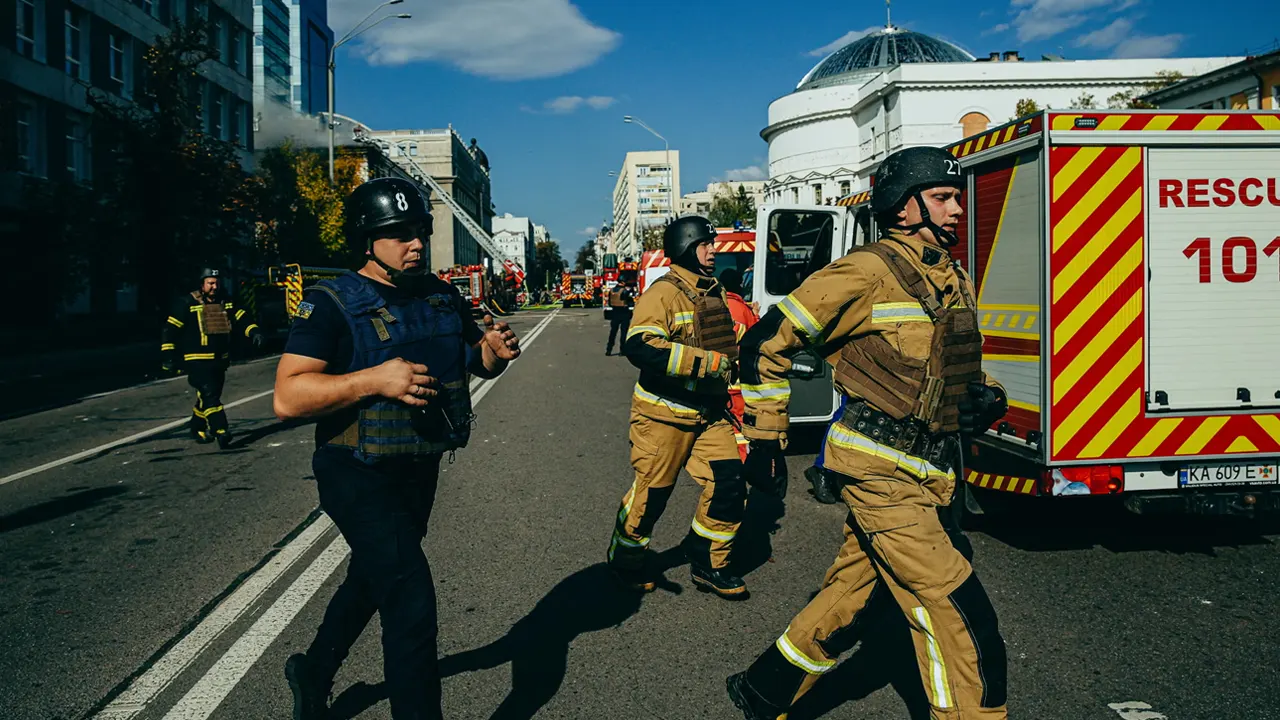
Darwin, October 3: Russia’s daily attacks are filling the lives of Kyiv residents with fear and uncertainty. From schools and hospitals to bridges, power plants and residential areas, nothing appears to be beyond the reach of the attacks.
Kyiv resident Valeriia Tkachenko had gone to drop her son off at school when an air-raid alert was suddenly issued. Teachers took the children and their parents to a shelter, where she spent nearly two hours with her son.
Valeriia said she spends the entire day worrying about what might happen to her son. Just the previous day, a Russian jet-powered drone had struck a nearby school. Under such circumstances, she said, it has become impossible to plan anything normally.
Another Kyiv resident, Artem Marchenko, abandoned his car and walked across the Pivdennyi Bridge on Friday morning while heading to work. The bridge was damaged in a Russian attack, forcing him to walk for about 20 minutes.
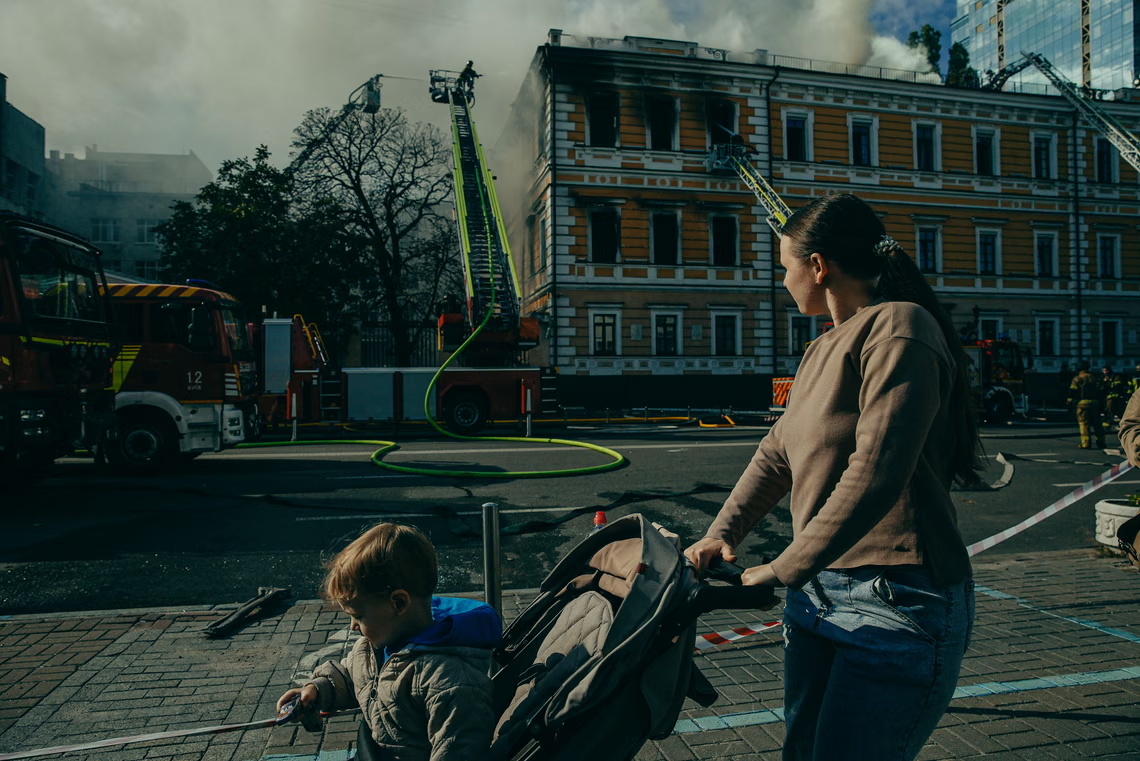
A woman and child passing the site of a Russian drone strike in Kyiv city centre this week. Photograph: Julia Kochetova/The Guardian
He fears that if other bridges in Kyiv are also attacked, the transportation system of the city of nearly three million people could grind to a halt. The Dnipro River divides Kyiv into two parts.
Kyiv Mayor Vitali Klitschko said the situation in the capital had become extremely serious. There is now no longer any possibility of pretending that life can continue as it did during peacetime. “The enemy is destroying Kyiv,” he said.
In recent days, Russian missile and drone attacks have damaged offices, information centers, schools, hospitals and a key bridge in Kyiv. Attacks have also targeted energy infrastructure. After strikes on various energy facilities, including a thermal power plant, electricity and water supplies were cut off in several parts of the city.
Previously, daily life in Kyiv had remained relatively normal. Frontline cities such as Kharkiv and Dnipro had borne the brunt of Russian attacks. Now, however, that pressure is increasingly being felt in Kyiv.
Ukrainian President Volodymyr Zelenskyy said Russia wants to force the people of Kyiv to leave the capital. In his view, there is no country without its capital, and sending such a message could be one of Russia’s objectives.
The situation has become even more difficult for the city because of shortages of Patriot missiles for air defense. At the same time, Russia is using a new type of fast-moving, jet-powered drone that is relatively more difficult to intercept.

Smoke rises after a Russian drone hit the Academy of Sciences building in Kyiv on Monday. Photograph: Julia Kochetova/The Guardian
Kyiv is now trying to rapidly deploy a new type of interceptor drone to counter these weapons. However, several defense-sector sources said it could take several weeks or even months before the new systems can be deployed at the required scale.
Ukraine’s Energy Minister Denys Shmyhal has warned European officials about the possibility of a major Russian attack. Citing The New York Times, The Guardian reported that Ukraine has information suggesting Russia is planning to use around 1,000 missiles, drones and bombs simultaneously against Ukraine’s energy infrastructure.
Such an attack could target electricity substations, hydroelectric and thermal power plants, and boiler facilities. There are concerns that this could cut off electricity and heating supplies in Ukrainian cities and create a humanitarian crisis.
A Western diplomat based in Kyiv said Russia was seeking to push the capital into such extreme cold and darkness that the city would face a severe crisis.
Despite the intensification of Russian attacks, Western diplomats have publicly said they have no plans to leave Kyiv. However, two senior diplomats said preparations were quietly being made to relocate embassies to Lviv or eastern Poland if the situation deteriorates further.
Source: The Guardian

Darwin, October 3: Under pressure from US President Donald Trump to bring down rising fuel prices, G7 leaders are set to release up to 100…

Darwin, October 3: At least 80 fighters have been killed over the past 24 hours in fierce fighting between Iran-backed Houthi rebels and Saudi-backed government…
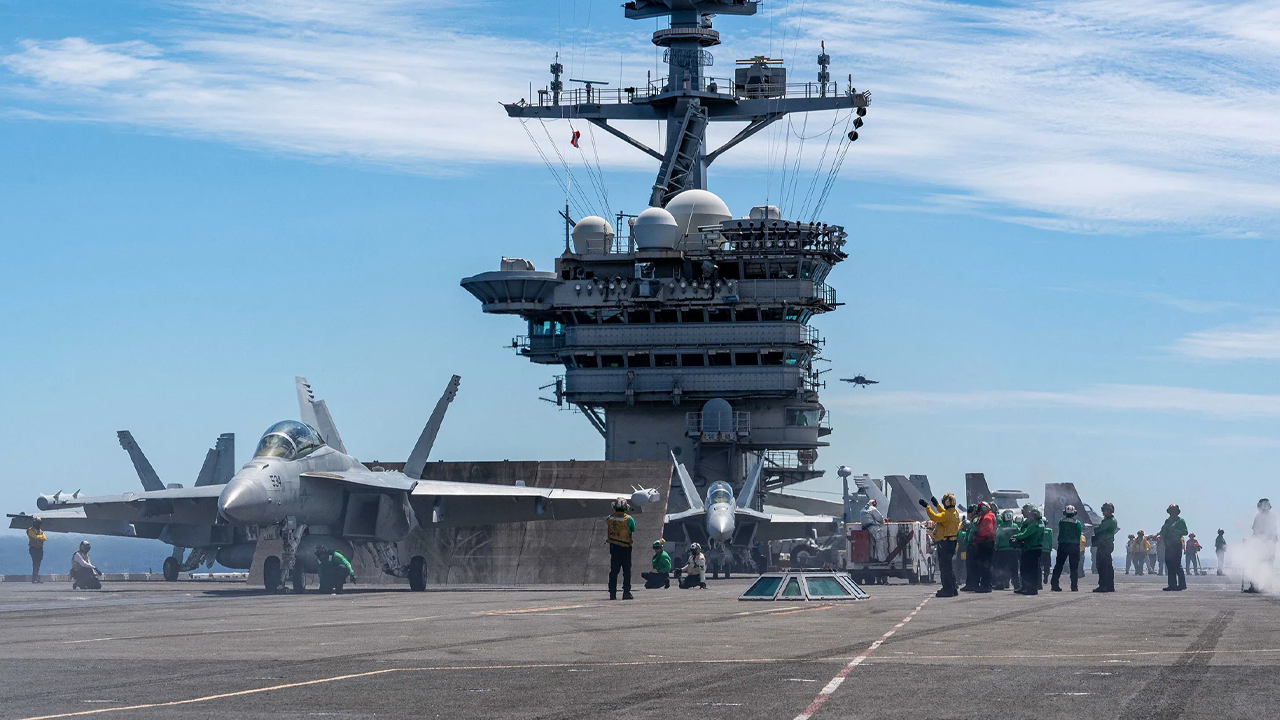
Darwin, October 3: As the Iran war enters its eighth month, the United States is sending a third aircraft carrier strike group to waters near…

Darwin, September 30 : The United States is preparing to withdraw its military forces from Iraq after more than two decades of war and the…

Darwin, September 30: Russia has urged Iran not to withdraw from the Treaty on the Non-Proliferation of Nuclear Weapons (NPT), calling on Tehran to remain…

Darwin, September 30: Russia currently lacks sufficient military capability to launch a major attack against NATO because its forces are engaged in the war in…

Four personnel of India’s Central Industrial Security Force (CISF), including an officer, were killed after a colleague allegedly opened fire on them at a hydropower…

Darwin, September 25: The Netherlands is seeking to build an international coalition to evacuate at least 1,000 sick and injured children from Gaza for medical treatment,…