Thousands Protest Across France for Fifth Consecutive Week
Thousands of people have once again taken to the streets across France to protest against the rising cost of living, demand increased funding for education,…



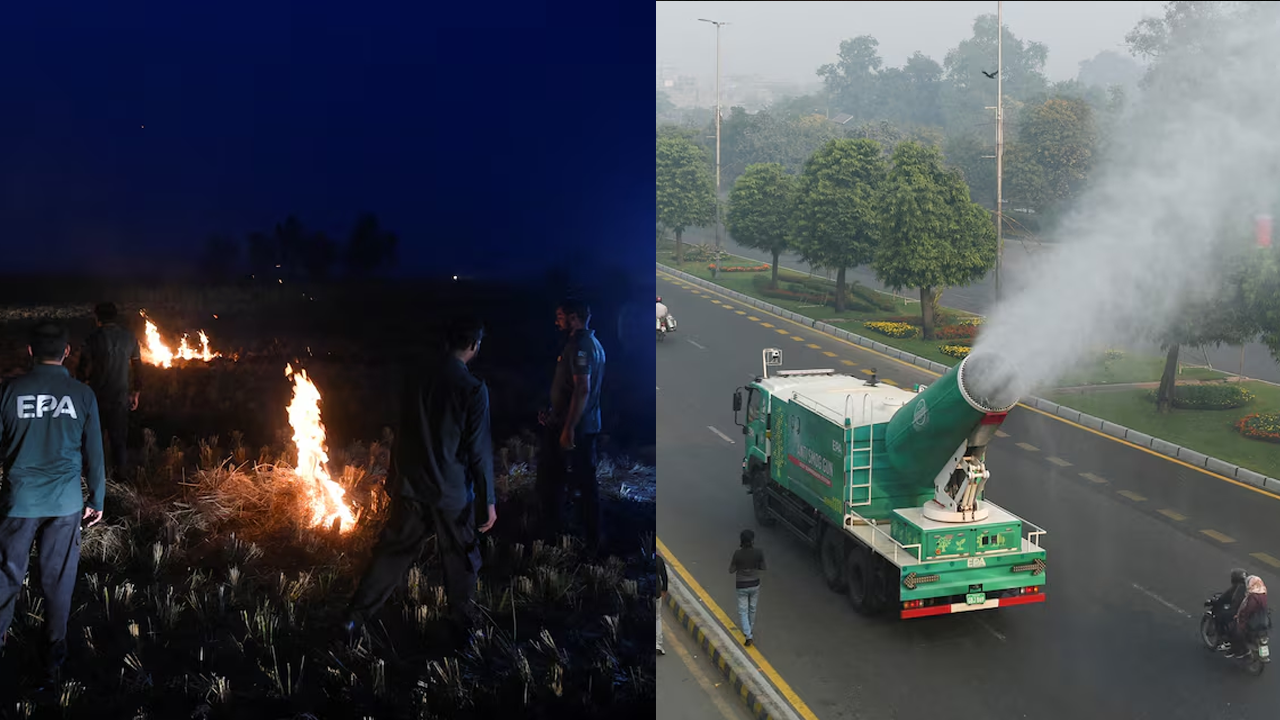
Thick smog has once again engulfed Lahore, Pakistan. Amid the worsening air quality, authorities have intensified efforts to stop farmers from burning leftover crop stubble and straw in fields after harvesting. A special task force has been formed to respond quickly and extinguish field fires. However, despite various government initiatives, the benefits of efforts to reduce air pollution are still not clearly visible to ordinary residents. Reuters reported.
On November 12, members of a newly formed rapid-response unit carried out an operation in a rice field on the outskirts of Lahore. After spotting smoke rising from burning crop residue, the team members quickly got out of their vehicles and brought the fire under control. Their swift action helped prevent further deterioration of the smog spreading over the city. Earlier this week, Swiss-based air quality monitoring organization IQAir classified Lahore’s air quality as “very unhealthy.”
Burning leftover rice straw and stubble after the October rice harvest is a common practice among farmers in the region. The smoke combines with industrial emissions, vehicle exhaust and construction dust, creating a toxic layer of pollution. During winter, cold air traps these pollutants close to the ground, pushing air quality to dangerous levels.
Officials say this is the first special force of its kind in Pakistan. Punjab officials describe the initiative as one of the government’s most visible measures to tackle air pollution.
Satellite data indicate that the amount of agricultural land burned in India and Pakistan has been lower than the historical average for this time of year. However, many Pakistani residents say they have yet to notice any significant improvement in air quality.
Silwat Saeed, head of Punjab’s Environment Protection and Climate Change Department, said the government had established a 750-member force this year. The force operates through 67 rapid-response units across major rice-producing districts.
The units aim to reach the scene within 10 to 15 minutes of receiving reports of field fires. Officials are also conducting regular surveillance of rice fields, while local residents have been given opportunities to report incidents.
Ashfaq Hussain, deputy director of the task force, said, “We receive complaints through various channels and take action on them as quickly as possible.”
In just 24 hours this week, the department received reports of 679 field fires across Punjab. It claimed to have extinguished 650 of them.
Farmers caught burning crop residue face fines, arrest or both. Muhammad Farooq, assistant director of Punjab’s Agriculture Department, said farmers caught burning stubble are fined 15,000 Pakistani rupees (approximately $54) per acre. Those unable to pay the fine may face legal proceedings and imprisonment of up to six months.
Alongside penalties, the government is also encouraging farmers to adopt alternative methods. More than 10,000 subsidized “Super Seeder” machines have been distributed so far. The government covers 60 percent of the total cost, while farmers pay the remaining 40 percent.
Muhammad Ismail, a farmer who owns 50 acres of land, said his wheat production per acre had increased significantly after he started using subsidized Super Seeder machines and other agricultural equipment instead of burning crop residue.
However, not all farmers have adopted the new method. Local farmer Saleem Abbas said that although he had stopped burning stubble, many farmers continued the practice because they considered it the cheapest and easiest way to clear fields quickly for the next crop.
In recent years, Pakistan and India have repeatedly blamed each other over air pollution. Saeed said the issue remains a major challenge for both countries. Pakistan has discussed the matter with Indian officials at various international forums. However, India’s Ministry of External Affairs did not respond to requests for comment.
Meanwhile, hospitals across Lahore have witnessed an increase in patient numbers in recent days. Patients have been seen waiting on benches and in hospital corridors.
Abdullah Nayyar, Director General of Punjab’s Environment Protection Department, said health department data showed that hospital admissions related to smog-induced throat problems last month had fallen to 69 percent of the figure recorded in October 2025.
However, Ahmed Abubakar, a heart patient at Sir Ganga Ram Hospital in Lahore, said the smog had caused him breathing difficulties and an eye infection. He has undergone bypass surgery and also suffers from diabetes.
Another patient, Mohammad Niaz Butt, said his nose and throat were becoming congested. Expressing frustration, he said, “They are burning crop residue, yet no action is being taken.”
Source: Reuters

Thousands of people have once again taken to the streets across France to protest against the rising cost of living, demand increased funding for education,…

Dubai in the United Arab Emirates has taken an extraordinary initiative to attract tourists. The city is developing a special pedestrian walkway made of pure…

Darwin, November 14: A senior German intelligence official has warned that the United States could potentially use internet-connected Tesla vehicles to conduct espionage in Germany,…

Darwin, November 14: Microsoft has fully restored its Teams, Outlook, Copilot and other services following a global disruption that lasted more than a day and…
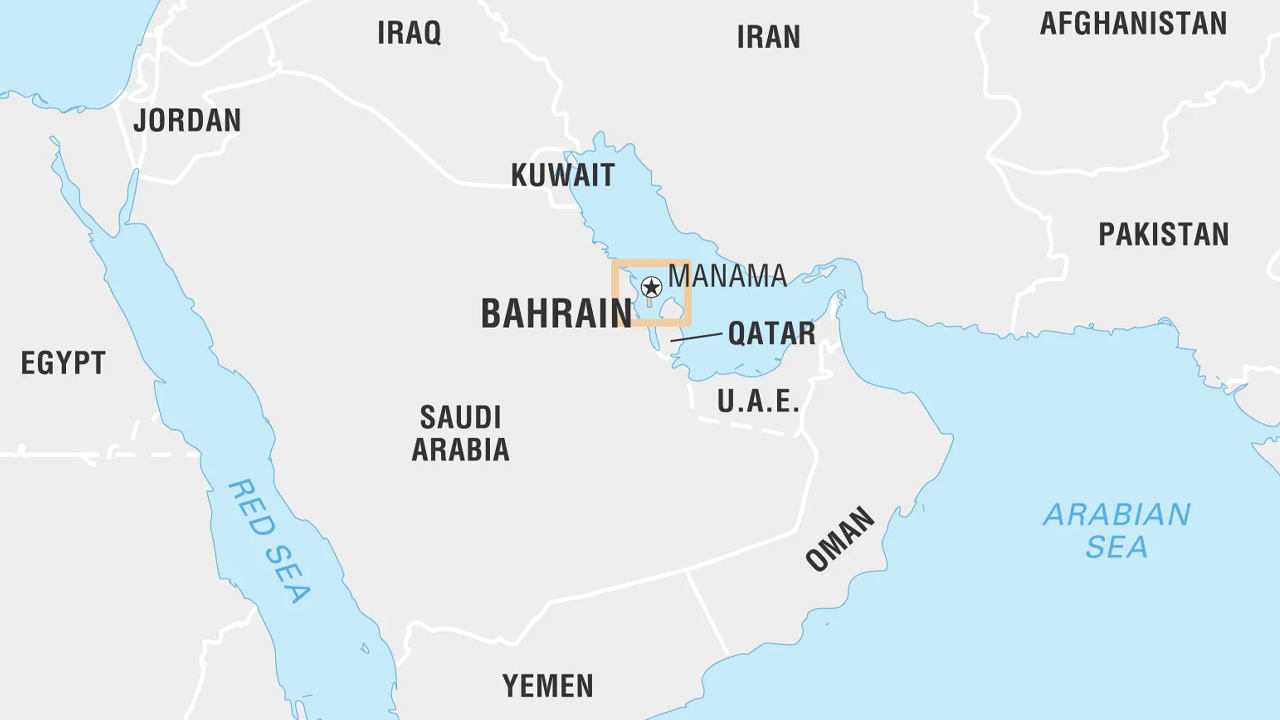
Darwin, November 13: Iran’s Islamic Revolutionary Guard Corps (IRGC) has claimed that it targeted and destroyed a US early-warning radar installation in Bahrain, marking the…

Darwin, November 13: Elon Musk, CEO of Tesla and founder of SpaceX, has said he would feel honoured to hire Nvidia chief executive Jensen Huang…

Darwin, November 13: Jensen Huang, chief executive officer of global technology giant Nvidia, has resigned amid allegations of two extramarital relationships and growing national security…

Darwin, November 11: The Islamic Revolutionary Guard Corps (IRGC) Aerospace Force of Iran has unveiled a new missile city, showcasing various types of ballistic and…