I Have Two Options Open on Iran: Trump
Darwin, September 21: US President Donald Trump has said that he has two options regarding Iran: allowing the country to be completely destroyed and economically…



After completing a historic mission orbiting the Moon, four astronauts of Artemis II have returned safely to Earth. They were recovered from the Pacific Ocean at the landing site, and all are reported to be in good health. The mission completed a total journey of 694,481 miles (1,117,659 kilometers) to the Moon and back.
According to BBC live reports, the Orion spacecraft carrying the astronauts successfully splashed down in the Pacific Ocean off the coast of San Diego, California, at 6:07 a.m. Saturday (8:07 p.m. Friday Eastern Time).
After landing, mission commander Reid Wiseman said the entire journey was extraordinary and confirmed that all four astronauts were in good condition, indicating that their physical health remained stable despite the long spaceflight.
How the Landing Took Place
The Orion spacecraft hit the Pacific Ocean near San Diego at a speed of about 20 miles per hour. While this may seem relatively slow, hitting water at that speed is extremely intense—astronauts described it as similar to crashing into a hard wall.
During re-entry, communication with Earth was lost for several minutes due to a plasma blackout. Once the plasma dissipated, communication was restored and telemetry returned to the Johnson Space Center.
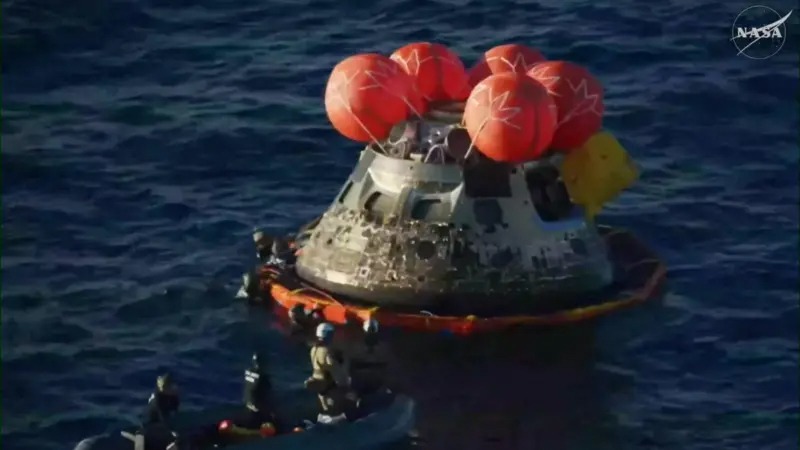
To slow the descent, parachutes deployed in stages. First, drogue parachutes opened at around 22,000 feet to reduce speed. Then, at 6,000 feet, three main parachutes deployed to stabilize the capsule. Controlled explosions (pyrotechnics) were used to rapidly deploy the parachutes.
After splashdown, five airbags around the capsule automatically inflated to keep it upright. U.S. Navy divers then approached to check for any hazardous gases and ensure the temperature was safe.
A “stability collar” was attached around the capsule to keep it steady in the ocean waves.
Once stabilized, a floating platform called the “front porch” was connected. This serves as a waiting area where astronauts stay before being lifted by helicopter.
The crew exited step by step—first two astronauts, followed by the third, and finally commander Reid Wiseman.
They were then transported by helicopter to the U.S. Navy ship USS John P. Murtha.
A medical officer inside the Orion capsule confirmed that all four astronauts were “green,” meaning they were in excellent health. NASA humorously clarified that “green” referred to their condition, not their skin color.
U.S. President Donald Trump congratulated the astronauts, calling the mission “spectacular” and the landing “perfect.” He also invited them to the White House and mentioned future plans for Mars missions.
NASA Administrator Jared Isaacman described the mission as “just the beginning,” emphasizing that humanity has re-entered an era of sending astronauts to the Moon and bringing them back safely.
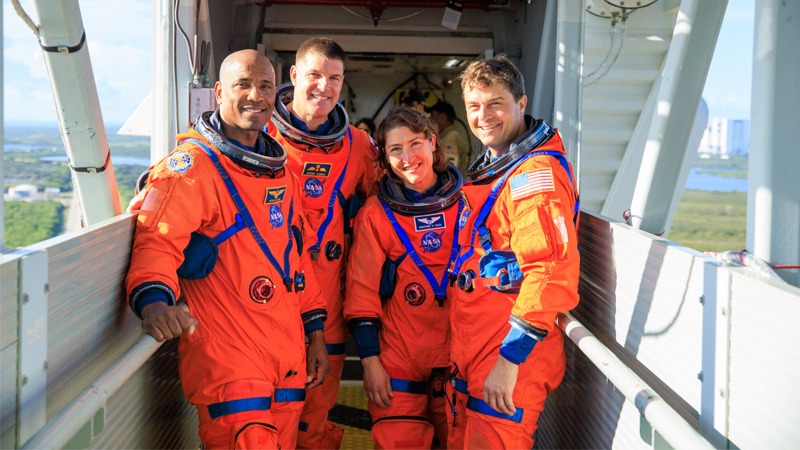
Four Astronaut.
The approximately 10-day mission began on April 1. The crew included Reid Wiseman, Christina Koch, Victor Glover, and Canadian astronaut Jeremy Hansen. They reached a distant lunar orbit and set a new record, traveling as far as 252,757 miles from Earth—surpassing the previous record held by the Apollo 13 mission.
This mission is also historically significant for several reasons. Victor Glover became the first person of color, Christina Koch the first woman, and Jeremy Hansen the first non-American to travel around the Moon. During the mission, they also witnessed rare meteor impacts on the lunar surface.
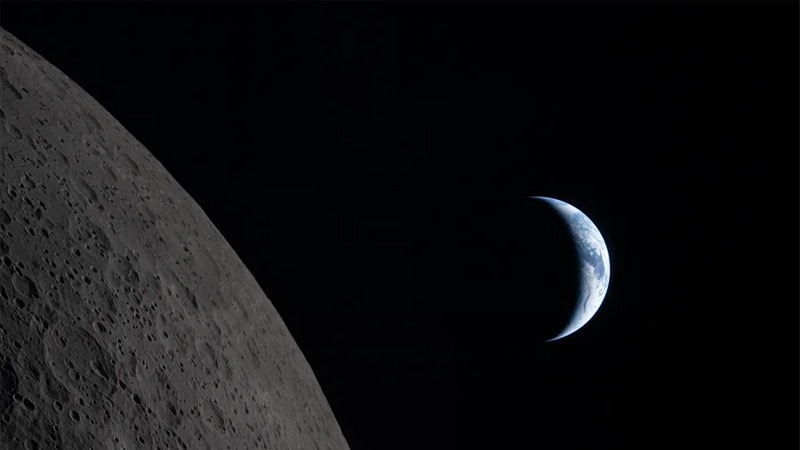
In a photo taken during Artemis II on April 6, Earth is seen as the spacecraft orbited the Moon.
Artemis II is a crucial step toward future missions. NASA aims to land humans on the Moon’s south pole by 2028, and this mission serves as a key test for that goal.

Darwin, September 21: US President Donald Trump has said that he has two options regarding Iran: allowing the country to be completely destroyed and economically…

Darwin, September 21: The Strait of Hormuz will remain closed until the United States fulfills its commitments under the agreement reached in June and accepts…

Darwin, September 18 : China has privately urged Iran to rein in Yemen’s Houthis following an appeal from Saudi Arabia, according to three Iranian sources…

Darwin, September 18: The U.S. Federal Reserve has raised its benchmark interest rate in an effort to bring inflation under control. The central bank increased…
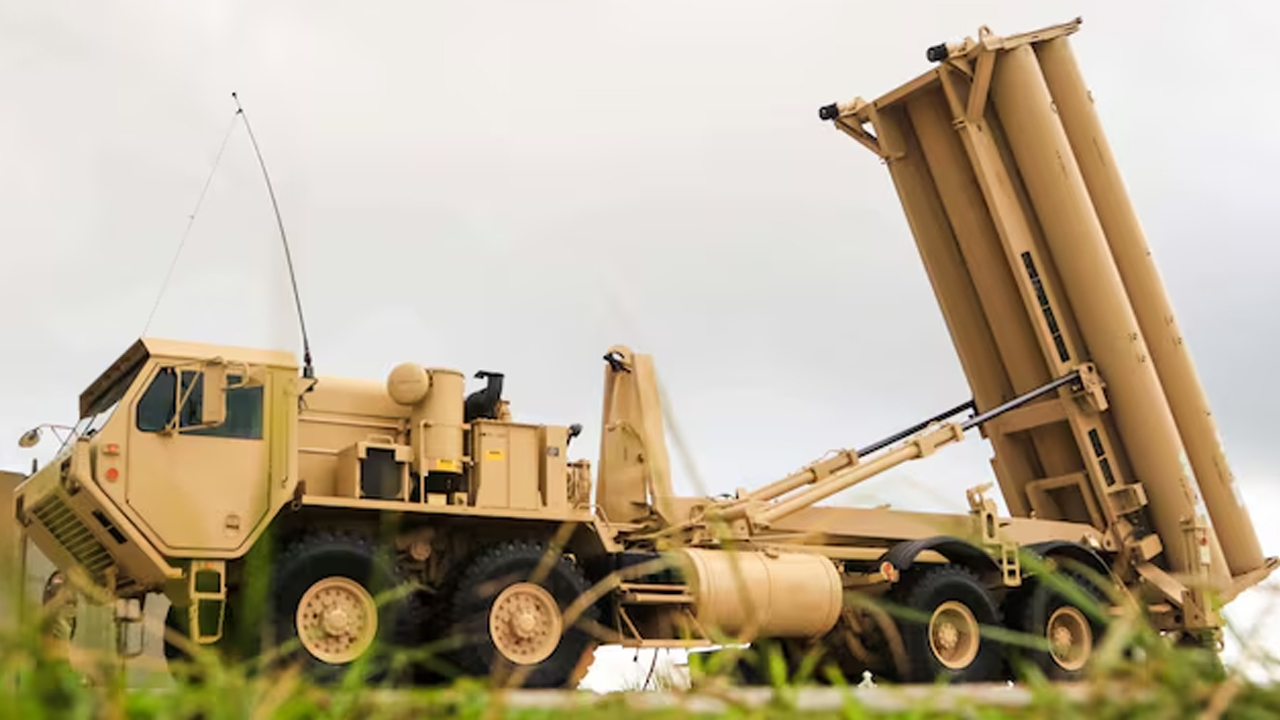
Darwin, September 18: Saudi Arabia is running short of missile interceptors as its conflict with Yemen’s Houthi rebels drags on, prompting Riyadh to seek air…

Darwin, September 14: At a time when the global diplomatic landscape is marked by deep instability and mounting tensions—with a raging war in the Middle…

Darwin, September 13 : Iraq has closed a key border crossing with Iran following a drone attack launched from Iraqi territory that targeted Saudi Arabia’s…

Darwin, September 11 : The ongoing conflict in Yemen could escalate into a major new war, as Iran-backed Houthi forces are allegedly advancing to seize…