Navi Pillay, Who Fought for Gaza, Wins Nobel Peace Prize
Darwin, October 09: Navanetham “Navi” Pillay, a South African jurist who led a United Nations investigative commission that described Israel’s actions in Gaza as genocide,…




GAZA, Palestine: As a new ceasefire took effect on Friday, thousands of Palestinians began the long and difficult journey back to northern Gaza from the south, only to find their city reduced to rubble. Despite the devastation, many expressed overwhelming joy at the prospect of returning home, even if little remains of what they once knew.
The northern part of Gaza, which was a primary target of Israel’s war in the enclave, now lies in ruins. Aerial footage and reports from returning residents show a landscape of flattened buildings and destroyed infrastructure, with no electricity or running water.
“I pray that God relieves our sorrow and distress and that people return to their homes. Even if the houses are destroyed, we will return, God willing,” said Ahmad Abu Watfa, who was making the trek back to his home in Sheikh Radwan.
For many, this is the second time they have attempted to return. Israel had previously allowed a brief homecoming during a ceasefire in January, but residents were forced to evacuate again in early September ahead of a ground invasion. An Israeli Defense Forces (IDF) spokesperson confirmed that movement from south to north was permitted via the coastal Al-Rashid Street and the central Salah al-Din Road.
The homecoming was filled with heartbreak and grim discoveries. Footage shows widespread destruction, and according to Mohammed Abu Salmiya, director of Al-Shifa hospital, at least 33 bodies were recovered from Gaza City on Friday after the IDF’s withdrawal from some areas.
Majdi Fuad Mohammad Al-Khour, a 70-year-old resident of Tal el Hawa, stood amid the ruins of his house and shared his story of loss. He said he had lost two children and his home of 40 years. “Now I cannot work, and my health does not allow me to. Where should I go?” he said.
The situation was already dire before the latest ground offensive, with the UN-backed Integrated Food Security Phase Classification (IPC) reporting that famine had taken hold of Gaza City in August. Medical teams returning to Al Rantisi hospital found it completely destroyed, with all equipment burned and ruined.
While many were relieved to be returning, some remained cautious. Sair Hikmat Subh from Beit Lahiya, who has been displaced nearly 20 times, said he was “tired and fed up” but happy the roadblock had been removed.
His caution proved justified. The IDF spokesperson warned that Israeli troops would still be present in parts of Gaza, including Beit Hanoun, Beit Lahia, and Shuja’iyya, and advised residents to avoid these “extremely dangerous” zones.
Under the ceasefire agreement, a 72-hour period for the release of hostages held by Hamas began on Friday, along with the release of nearly 2,000 Palestinian prisoners.
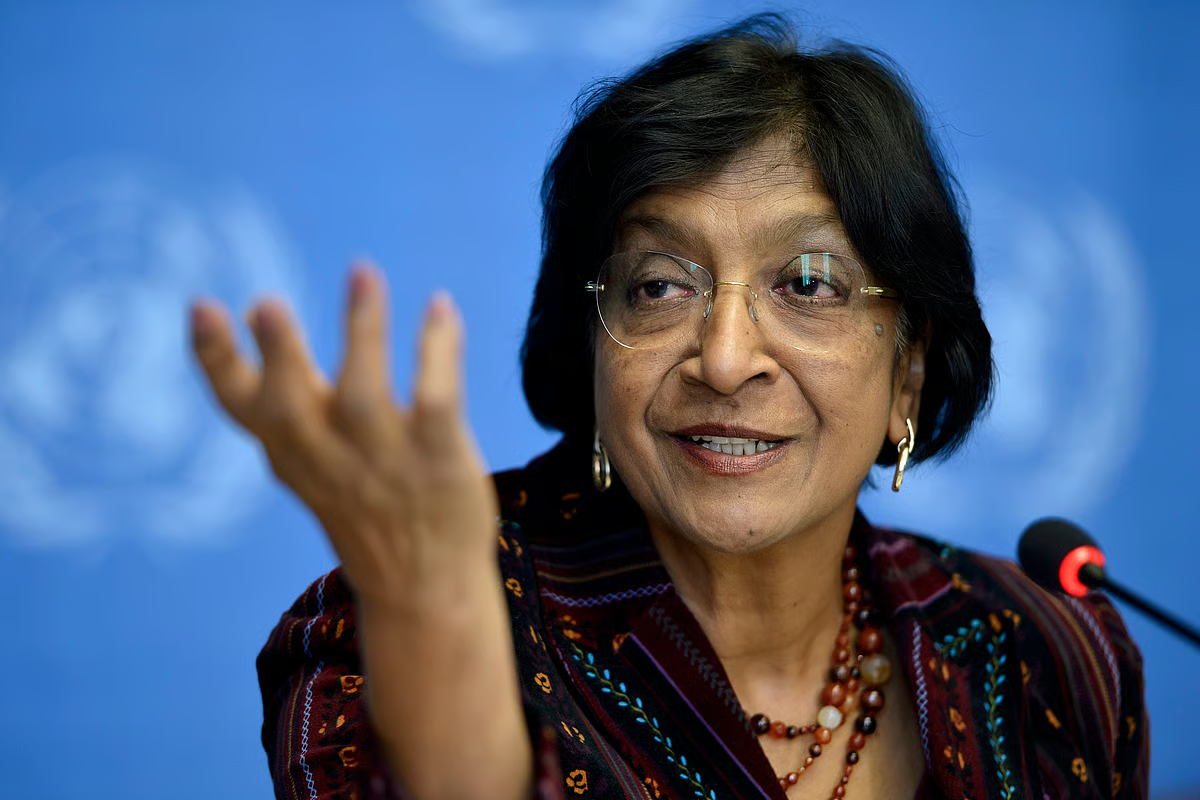
Darwin, October 09: Navanetham “Navi” Pillay, a South African jurist who led a United Nations investigative commission that described Israel’s actions in Gaza as genocide,…

Darwin, October 08: U.S. President Donald Trump said on Wednesday that he deserves to win the Nobel Peace Prize, while expressing doubts that he would…

Darwin, October 07: Russia has finalized preparations to provide Iran with a $1 billion loan. The funds will be transferred once Tehran provides the necessary…

DARWIN, October 7: Iran has warned that it will deliver a stronger response if the United States or Israel launches another attack. The country also…

Darwin, October 05: Deaths in Australia are expected to outnumber births by the 2060s, according to a government report, marking a demographic milestone that countries…

Darwin, October 04: Ten people, including three children, have been injured after a car crashed into a crowd of rugby league fans in Newcastle, eastern…

Darwin, October 4: Australia’s central bank has raised interest rates to their highest level in 15 years, increasing mortgage repayments for millions of Australian households….

Darwin, October 3: Under pressure from US President Donald Trump to bring down rising fuel prices, G7 leaders are set to release up to 100…