Oil Prices Rise in Global Markets on Fears of Middle East Supply Disruptions
Darwin, October 21: Oil prices rose in global markets on Wednesday as traders grew concerned about potential disruptions to oil supplies in the Middle East,…



Darwin, 28 October-
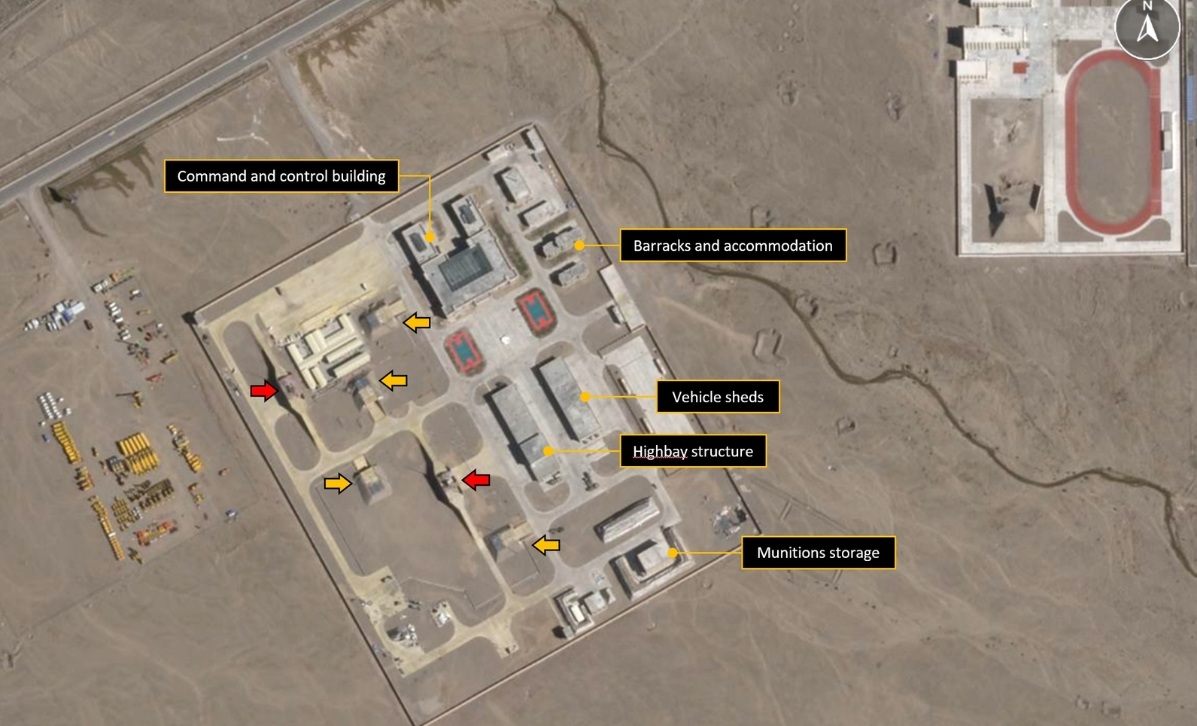
China has built 36 aircraft bunkers at the Lhunze airbase in Tibet, close to the Indian state of Arunachal Pradesh.
According to a special report published by NDTV on Tuesday, new administrative buildings and a new apron have also been completed at this base.
The Lhunze airbase is located about 107 kilometers from Tawang, a key town in Arunachal Pradesh. Experts say the expansion will allow China to deploy fighter jets and advanced drones there, reducing India’s response time in the event of a conflict.
“Clear Sign of War Preparation”
Former Indian Air Chief Marshal B. S. Dhanoa (Retd) told NDTV,
“Building 36 hardened aircraft bunkers in Lhunze means that in any future conflict, China’s strategic fighter jets and attack helicopters will operate from here.”
He added,
“Underground tunnels in the area are already being used to store ammunition and fuel. I had said back during the 2017 Doklam standoff — the day China starts building such bunkers in Tibet, it should be understood that they are preparing for war.”
A Serious Strategic Threat for India
Former Vice Chief of Air Staff Air Marshal Anil Khosla said,
“The development and expansion of bases like Lhunze support China’s future war plans and pose a serious strategic threat to India.”
He explained that these bunkers allow aircraft to be dispersed for protection, enable sustained operations at high altitudes, and defend against precision-guided weapons or Indian air and missile strikes, making it difficult to neutralize the base at the outset of a conflict.
Khosla noted that airbases such as Tingri, Lhunze, and Burang are located only 50 to 150 kilometers from the Line of Actual Control (LAC), allowing China’s air force to deploy rapidly and respond instantly to any border escalation.
Drone Deployment and New Technology
Satellite imagery released by Vantage (formerly Maxar) shows several CH-4 drones parked on Lhunze’s tarmac.
These Chinese-made CH-4 drones are capable of operating at high altitudes and can launch missiles from an altitude of 16,000 feet.
They are equipped with electro-optical sensor turrets and are controlled via data links from ground stations.
In response to the drone threat, India will begin acquiring U.S.-made General Atomics Sky Guardian drones from 2029.
The Indian Air Force and Army will each receive eight drones.
The Sky Guardian is a variant of the Sea Guardian drone already being procured by the Indian Navy (15 units), under a $3.5 billion deal.
These drones will significantly enhance India’s surveillance and reconnaissance capabilities and, when necessary, can carry out precision strikes.
Currently, India’s forces rely mainly on less advanced Israeli Heron and Searcher drones.
India’s ‘Geographical Advantage’ Diminishing
Former Vice Chief of Air Staff Air Marshal S. P. Dharkar said,
“For years, we believed our geography and altitude gave us an advantage. But China’s modern infrastructure, long runways, and powerful airbases are steadily eroding that edge.”
He added,
“These hardened aircraft bunkers pose a greater challenge now, as they make Chinese air operations much easier.”
Geo-intelligence analyst Damien Symon observed that,
“The rapid construction of aircraft bunkers opposite Tawang indicates China’s intent to expand its military footprint in a historically sensitive region.”
Development of Six Other Airbases
Apart from Lhunze, China is also modernizing six other airbases along the Tibetan border — Tingri, Burang, Hotan, and Yarkant among them.
These upgrades include new hangars, runway extensions, engine test pads, and supporting infrastructure.
The Indian Air Force has stated that,
“Our surveillance systems are active, and we remain fully aware of the situation.”
Context: A New Strategic Reality
Since the 2020 Galwan clash, India and China have attempted to rebuild ties, but the rapid military infrastructure buildup along the border has created a new strategic reality.
India operates 15 major airbases from Leh to Chabua, forming the backbone of Himalayan defense.
Meanwhile, China’s parallel expansion of its own airbases is seen as an attempt to undermine India’s traditional strategic advantage.
In August, Indian Prime Minister Narendra Modi visited Tianjin, China — his first visit in seven years — and held a “fruitful meeting” with President Xi Jinping. However, the ongoing military activity along the border continues to test the resilience of bilateral relations.

Darwin, October 21: Oil prices rose in global markets on Wednesday as traders grew concerned about potential disruptions to oil supplies in the Middle East,…

Darwin, October 21: Iran is prolonging negotiations with Washington in an attempt to politically weaken President Donald Trump ahead of the US midterm elections, according…

Darwin, October 21: Today is the auspicious occasion of Bijaya Dashami. The five-day Sharadiya Durga Puja, the biggest religious festival of the Hindu community, officially…

Darwin, October 20: Today is Maha Navami, the ninth day of Sharadiya Durga Puja. Members of the Hindu community will observe the day through religious…

Darwin, October 20: Protests and violence over the rising cost of living have erupted in Italy, one of Europe’s largest economies, following similar unrest in…

Darwin, October 20: US President Donald Trump has warned that protests and violence similar to those in France could spread across the United States if…

Darwin, October 20: Moscow has reaffirmed its full support for Tehran just hours after US President Donald Trump remarked that Russia was doing very little…

Darwin, October 19: Former Manchester City manager Pep Guardiola has urged the world not to forget the Palestinians in Gaza. In a video for the…