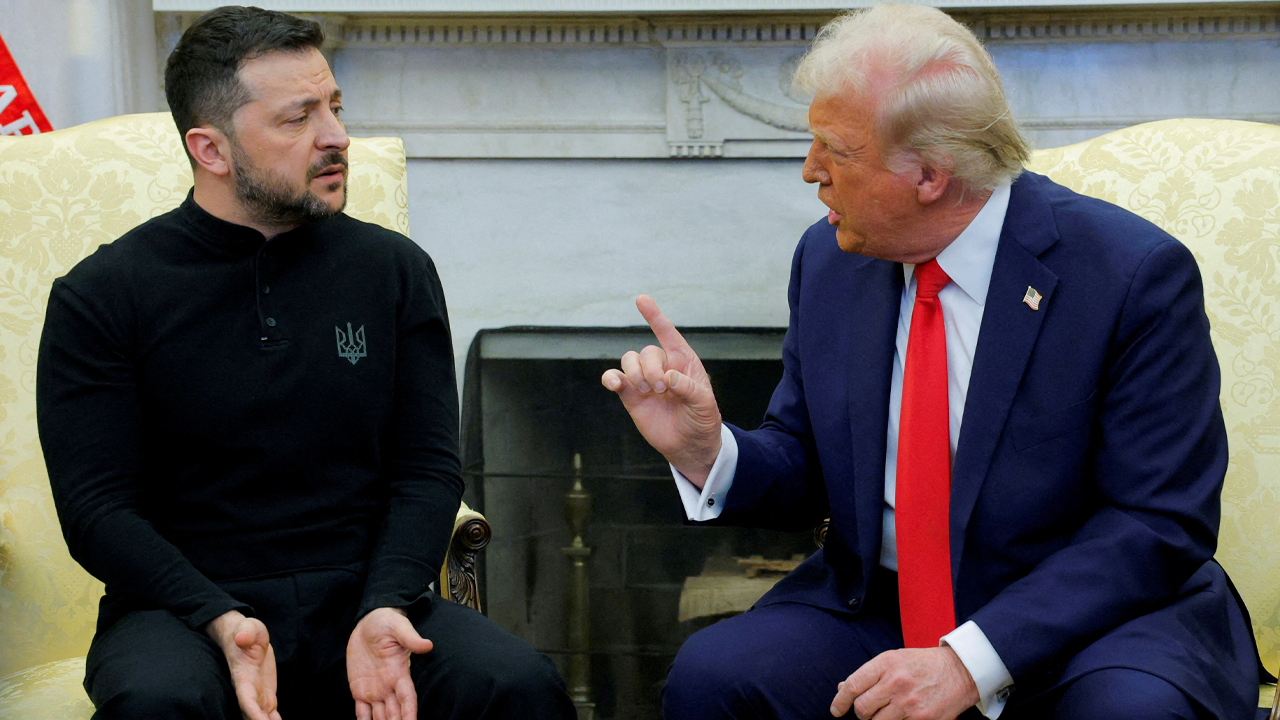
U.S. President Donald Trump and Canadian Prime Minister Mark Carney.
Photo: BBC
Darwin, 21 July : The United States has imposed a 50% tariff on a range of goods imported from Canada. The White House announced that the new tariff will take effect within the next 30 days. Analysts believe the move is likely to further escalate the ongoing trade tensions between the two North American neighbors.
According to a BBC report published on Tuesday, President Donald Trump had threatened to impose tariffs on Canada a few days earlier after smoke from Canadian wildfires spread across several U.S. cities. However, the executive order signed on Monday makes no mention of the wildfires.
President Trump has accused Canada of treating the United States unfairly in the import of automobiles, dairy products, and alcoholic beverages.
The new tariffs cover consumer goods such as wine and hockey sticks, as well as industrial products like cement. However, several of Canada’s key exports—including energy products, potash, critical minerals, and fish—have been exempted. The tariffs will apply to Canadian goods regardless of whether they are covered under the United States–Mexico–Canada Agreement (USMCA).
Canadian Prime Minister Mark Carney said his government is prepared to intensify trade negotiations with the United States in the coming weeks.
In a statement posted on X, Carney said, “This is the latest example of a unilateral U.S. trade action. The United States has previously imposed multiple rounds of tariffs in violation of the USMCA.”
Referring to Trump’s remarks about making Canada the 51st U.S. state, Carney added, “U.S. threats against Canada’s sovereignty are also deeply concerning.”
The United States and Canada have already imposed retaliatory tariffs on each other’s goods. The U.S. currently levies tariffs ranging from 15% to 50% on Canadian steel, aluminum, and copper. It also imposes a 35% tariff on softwood lumber and a 25% tariff on foreign-made auto parts used in vehicles.
In response, Canada has imposed a 25% retaliatory tariff on certain imports of U.S. steel, aluminum, and vehicles.
The new executive order reiterates long-standing U.S. complaints regarding automobiles, dairy products, and alcoholic beverages, signaling that trade negotiations between the two countries have reached an impasse.
Regarding the automotive sector, Trump argues that Canada imposes taxes on U.S. vehicles and auto parts that fall outside the USMCA framework. He claims this is unreasonable and discriminatory compared with Canada’s treatment of other countries.
Although North America’s automotive manufacturing industry is highly integrated across Canada, the United States, and Mexico, U.S. Commerce Secretary Howard Lutnick has previously said that Canada’s role in the industry should come second to that of the United States.
The dairy sector has long been another source of friction between the two countries. Under Canada’s supply management system, imports of foreign dairy products are subject to quota limits. Imports exceeding those quotas face tariffs of more than 300%.
Canadian negotiators are currently seeking a compromise aimed at reducing at least some of the U.S. tariffs.
The BBC said it contacted both the White House and the Canadian government for comment, but neither had responded at the time of publication.
Earlier this year, the United States decided not to renew the existing USMCA agreement. While Canada and Mexico want to keep the agreement in place, the United States is seeking changes. The agreement was originally negotiated during Trump’s first term in office.
Meanwhile, in February this year, the U.S. Supreme Court ruled that Trump’s broad use of the International Emergency Economic Powers Act (IEEPA) of 1977 to impose sweeping tariffs exceeded the limits of the law. Following the ruling, the White House said it would pursue tariffs under a different legal framework.
Monday’s new tariffs were imposed under Section 338 of the Tariff Act of 1930, which authorizes the United States to impose tariffs in response to discriminatory trade practices by other countries.
Candace Laing, President of the Canadian Chamber of Commerce, described the new decision as “regrettable” and urged both countries to make meaningful progress through negotiations before the tariffs take effect.