Conservatives Hope to Win Key Australian State of Victoria
Conservative political parties in Australia are hoping to defeat the ruling Labor Party by a wide margin in Victoria, home to the country’s second-largest city,…



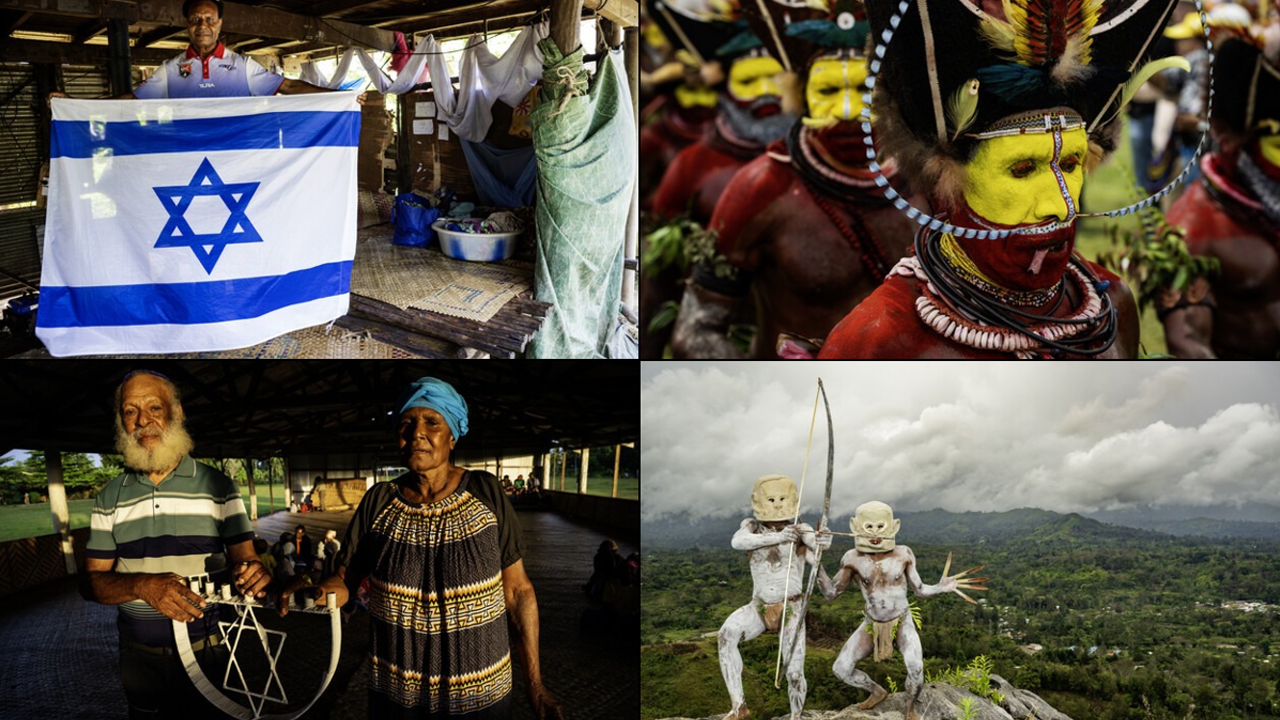
A remote community in Papua New Guinea claims its ancestral roots are connected to an ancient Jewish population. Its members not only identify themselves as being of Jewish descent but also observe various Jewish religious traditions and festivals.
Some believe their ancestors left Spain several centuries ago and eventually reached the Pacific island nation of Papua New Guinea.
Israeli photographer, lecturer and cultural researcher Naftali Hilger recently travelled to the country’s remote regions to meet the community and explore its history.
Born in Germany, Hilger is a former photographer for Masa Aher, an Israeli travel, nature and geography magazine. He has visited around 80 countries, searching on each trip for stories connected to Jewish history and culture.
His travels have taken him to countries including North Korea, Iran, Iraq, Yemen, Afghanistan, Pakistan and Indonesia. However, Hilger considers his trip late last year to find a remote community in Papua New Guinea one of his most fascinating journeys.
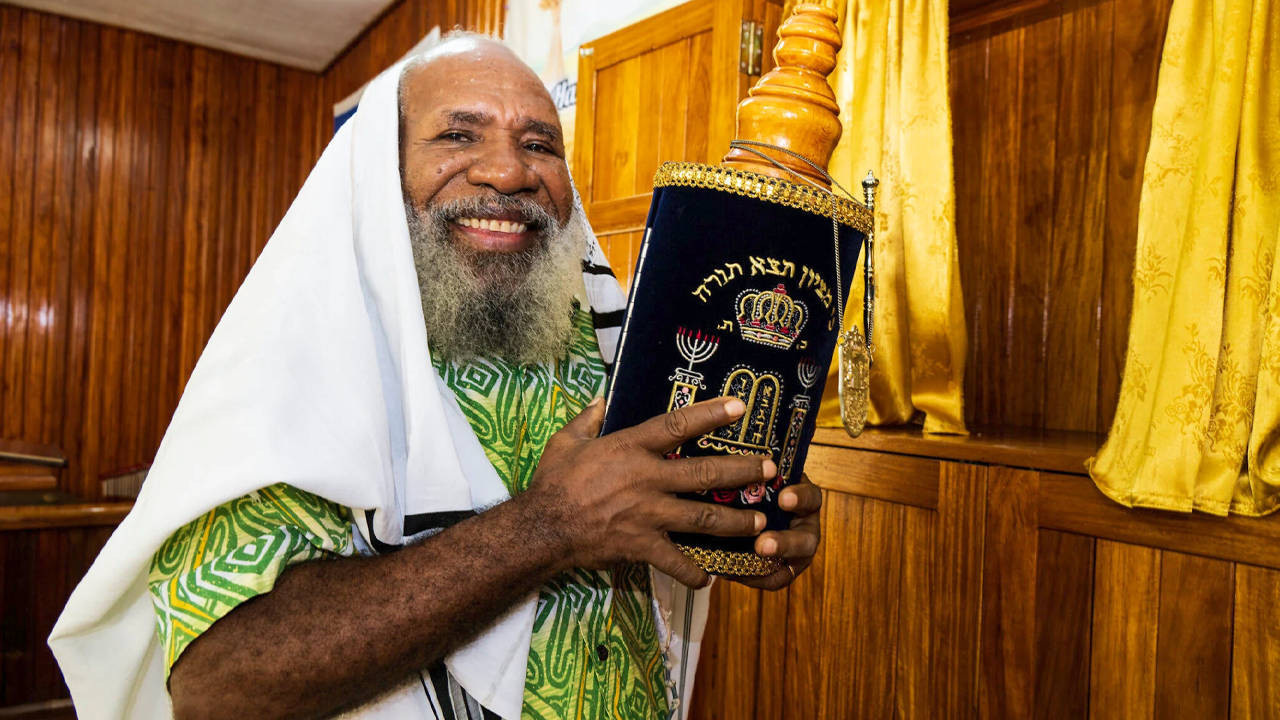
The Jewish community of Lae, Papua New Guinea: Rabbi Eric Shlomo Ben Efore with his synagogue’s only Torah scroll, September 2025. (Naftali Hilfiger)
He first heard about the Gogodala people from a friend around 15 years ago. British professor Tudor Parfitt, who researches marginalised and lesser-known Jewish communities, brought the group to the attention of the Jewish world in the early 2000s.
Gogodala leaders in Papua New Guinea told Hilger that their ancestors left Jerusalem in the 11th century. In their local language, they refer to Jerusalem as “Yabi Saba.”
According to their oral history, they travelled to Spain and lived there for 406 years. After Jews were expelled from Spain in 1492, they returned to Jerusalem. They later lived near the Sea of Galilee and along the Red Sea coast before embarking on a sea journey that eventually brought them to Papua New Guinea.
“I was told that they spent 406 years in Spain and have been in Papua for almost the same length of time. So they feel that now it is time to return to Jerusalem,” Hilger said.
There is, however, no historical evidence to support this account.
Hilger said the community has a sense of Jewish identity that has been passed down through generations. Its members observe the Sabbath—the seventh day of the week, which begins before sunset on Friday and ends after nightfall on Saturday—and celebrate the Jewish New Year and Passover. They also fast on Yom Kippur, refrain from eating pork and circumcise their sons.
“They claim that they have always been Jewish, but that the identity was forgotten,” Hilger said. “However, there is no specific scientific evidence to support these claims. Some of them also consider the New Testament to be part of Judaism.”

Aerial view of Balimo and the Aramia River swamps, Western Province, Papua New Guinea, September 2025. (Naftali Hilger)
Hilger believes the Gogodala learned about Jewish religious practices from the Old Testament brought by Christian missionaries during the past century.
He thinks their knowledge of the Hebrew prayer “Shema,” their performance of the song “Am Yisrael Chai” and their familiarity with the Israeli flag came from YouTube.
“What I found most mysterious were their stories about Yabi Saba, or Jerusalem, and their account of living in Spain. I have no explanation for them,” Hilger said.
Papua New Guinea’s history includes accounts of cannibalism associated with spiritual beliefs, social customs and religious practices.
Hilger said it was unclear whether the Gogodala had ever been involved in hunting or collecting human heads. However, documented cases of cannibalism have occurred in the West Papua region where they live. The most recent such incident was recorded in 2016.
Hilger said the first Christian missionary arrived in Papua in 1901 but never returned.
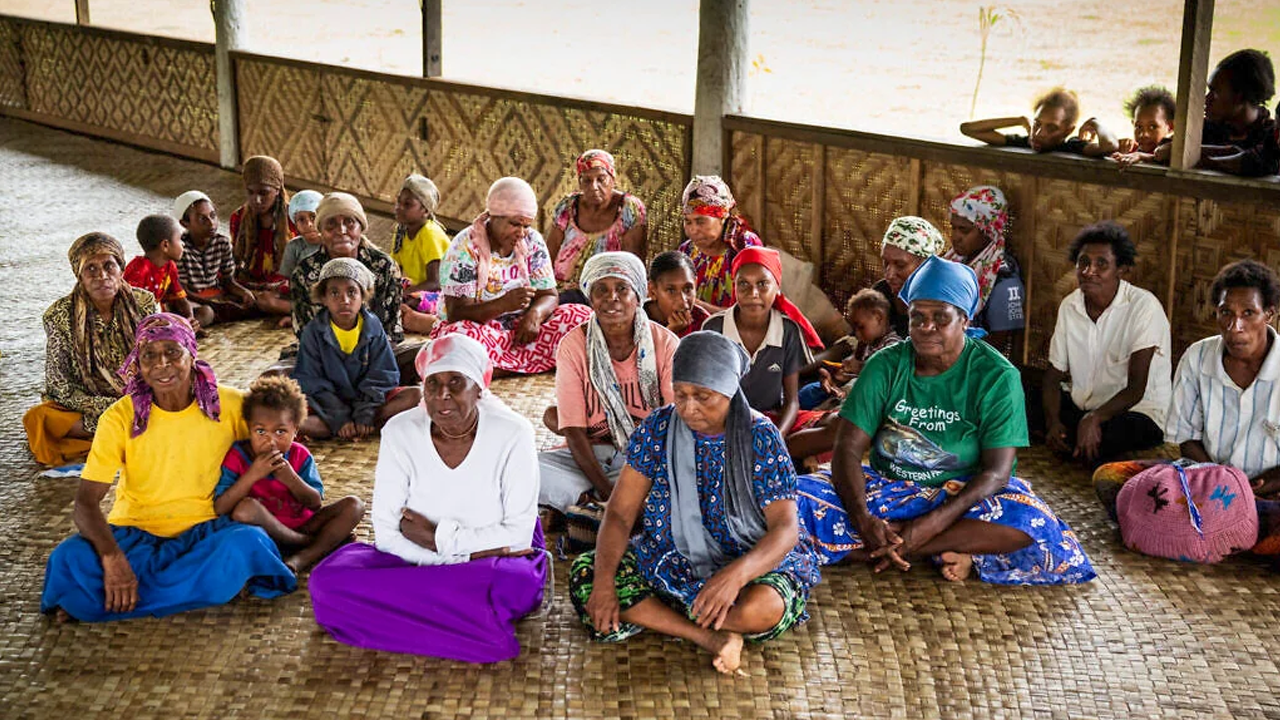
The Gogodala Jewish community of Balimo, Western Province, Papua New Guinea, September 2025. (Naftali Hilger)
“They ate him,” he said.
A second missionary was more successful, to some extent. However, he reported that some tribal people prayed only on the Sabbath. When he asked them to pray on Sunday, they protested loudly.
The exact population of the Gogodala is unknown. Estimates range from 25,000 to 50,000, while Papua New Guinea’s total population is approximately 11 million.
The country lacks comprehensive population data, particularly for people living in remote rural areas, where keeping accurate records is difficult.
Hilger learned that around 30 per cent of the Gogodala actively practise Judaism. The rest identify themselves as having Jewish roots but follow Christianity.
Most of the community lives in small towns and villages in the country’s Western Province. The settlements are scattered across islands surrounded by wetlands. Indonesia lies along the province’s western border.
Fishing and subsistence farming are the main sources of livelihood. Most people have smartphones, but electricity and internet connections are unreliable.
Hilger found the most organised group of Gogodala practising Jewish traditions in the Balimo area.
There, he received a lavish welcome at a place of worship built in the jungle. Local people also performed songs in Hebrew.
They claimed Hilger was the first Jewish visitor from abroad to visit them in a decade. They enthusiastically welcomed the idea of returning to Jerusalem.
Another small group has a synagogue in the Kavito area, while a third group in Baro reportedly gathers for prayer in a private home.
Not all Gogodala are interested in moving to Israel.
In the capital, Port Moresby, Hilger met a man who described himself as the “chief of chiefs.” He said he was working to reconnect the Gogodala with their Jewish roots and establish an “State of Israel” in Papua New Guinea.
Hilger also met another group in the country whose members had independently left Christianity and converted to Judaism.
In Lae, Papua New Guinea’s second-largest city, he spoke with a man known as “Rabbi Shlomo.”
The man said he became acquainted with Jews while studying at a university in Texas, United States. He later studied Judaism on his own, established a synagogue and converted himself, along with dozens of members of his extended family.
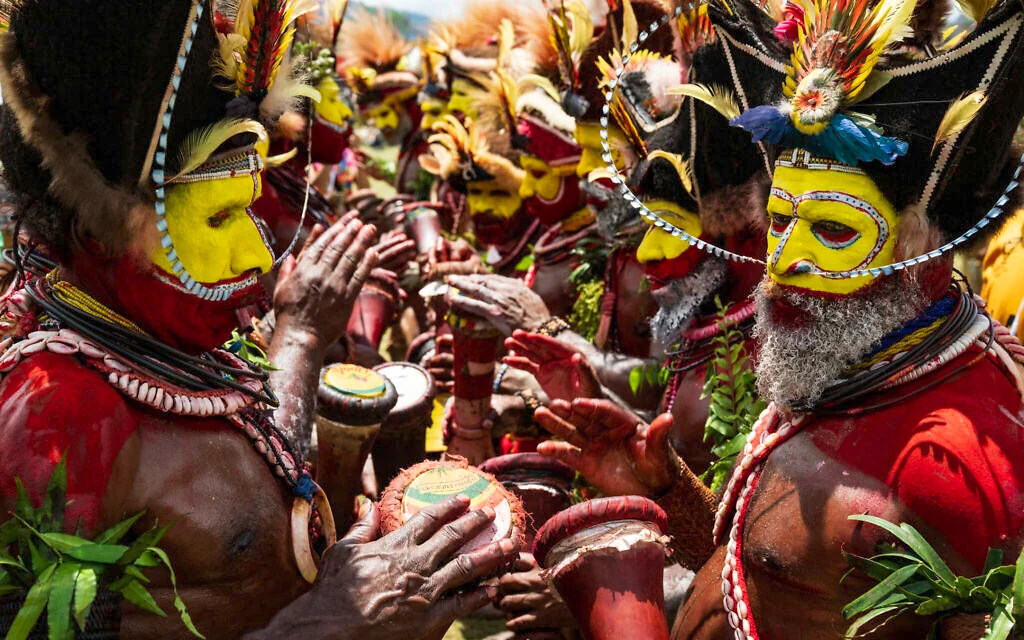
At the Goroka Festival in the Eastern Highlands of Papua New Guinea, the Huli Wig Men don traditional attire. They are one of the country’s largest ethnic groups, numbering over 250,000 people. Europeans did not know of them until 1934. (Naftali Hilger)
Hilger said people’s relationship with Judaism in the country takes many different forms.
“There are people here who call themselves Jewish. Some celebrate Jewish festivals while remaining Christian. Others claim to be Jewish while being Christian, but their activities are more like those of Christian missionaries,” he said.
Hilger had to plan his month-long trip carefully and enlisted the help of a trusted local guide.
Papua New Guinea is considered one of the world’s dangerous countries because of conflicts among thousands of tribal groups. Around 840 languages are spoken in the country.
After arriving in Port Moresby by air, Hilger took a domestic flight to Balimo. He jokingly named the aircraft “Air Maybe” because it departed 24 hours later than scheduled.
From there, he travelled by boat through the floodplains of the Aramia River to reach his destination.
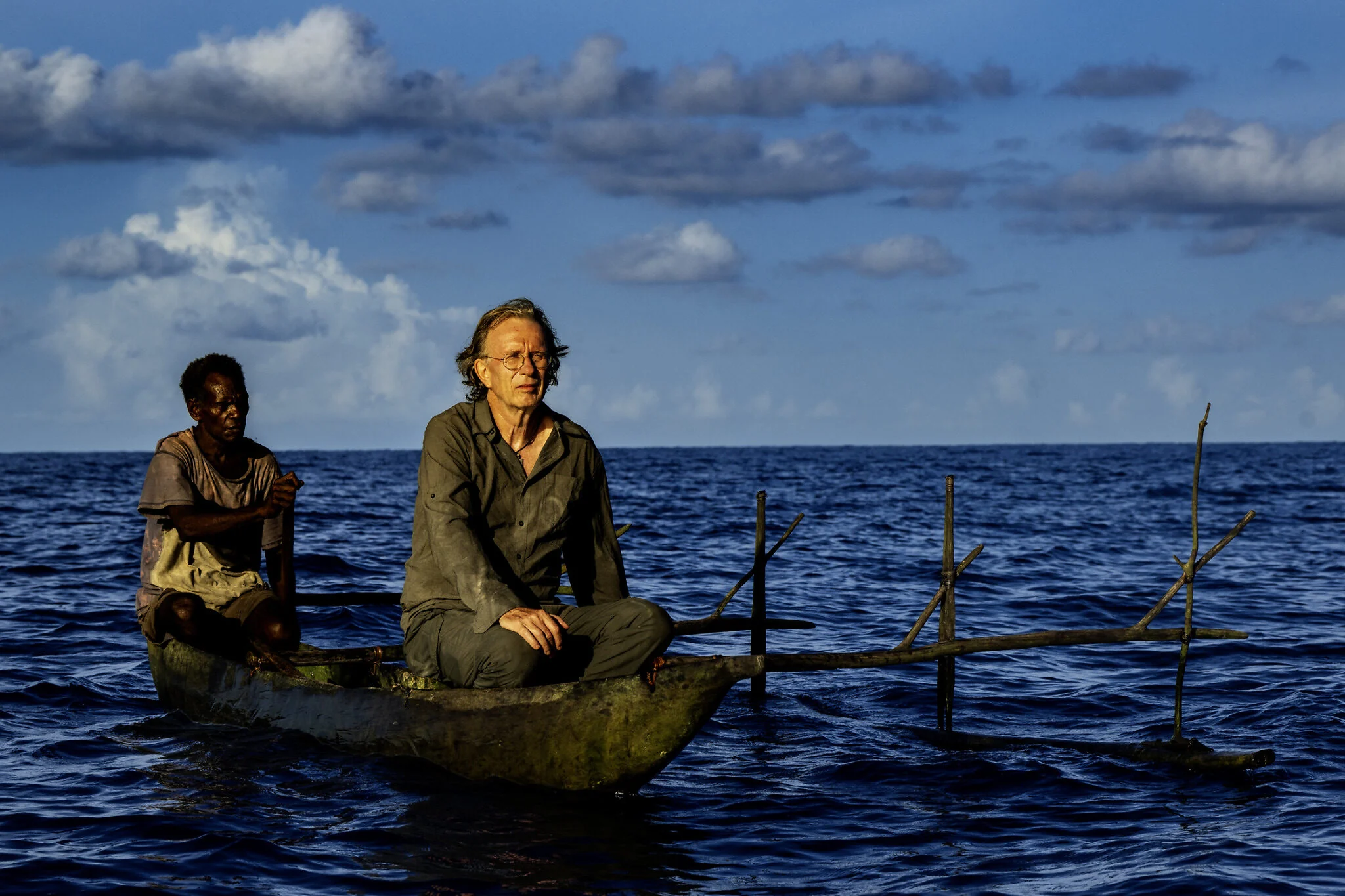
Naftali Hilger on a canoe in Papua New Guinea. (Galia Bazak Hilger)
Hilger immigrated to Israel in 1978 and now lives in the country’s north. Every year, he undertakes a major expedition and gives lectures on photography in Hebrew.
He recently returned from trips to Vanuatu, Samoa and Fiji.
“Wherever you speak to people in Papua or Oceania as a whole, their love for Israel is immense. They have grown up through Christianity and see us as God’s chosen people,” Hilger said.
Source: The Times of Israel

Conservative political parties in Australia are hoping to defeat the ruling Labor Party by a wide margin in Victoria, home to the country’s second-largest city,…

The US military has attacked an Iranian vessel after it attempted to breach a naval blockade and leave Iranian waters. The attack targeted the Palau-flagged…

November 29: Amid political negotiations over forming a new government in Israel, Prime Minister Benjamin Netanyahu is reportedly preparing to offer opposition leader Gadi Eisenkot…

November 27: Two Italian nationals have been killed in an attack on a facility in Kuwait, with Italy and Kuwait blaming Iran. Tehran has denied…

Jewish and Hindu organizations in Australia have demanded accountability from the Australian government over the issuance of a visa to Bangladesh Jamaat-e-Islami leader Shafiqur Rahman….

November 24: Just 11 days after losing his position amid a series of allegations, Jensen Huang has returned as chief executive officer of Nvidia. The…

November 24: Nvidia co-founder Jensen Huang has returned as the chipmaker’s chief executive officer, just 12 days after stepping down amid a controversy. News of…

Antalya, November 23: The European Union, the United Kingdom and several developing nations have rejected the proposed outcome of the COP31 climate summit in Turkey,…