Oil Prices Rise in Global Markets on Fears of Middle East Supply Disruptions
Darwin, October 21: Oil prices rose in global markets on Wednesday as traders grew concerned about potential disruptions to oil supplies in the Middle East,…



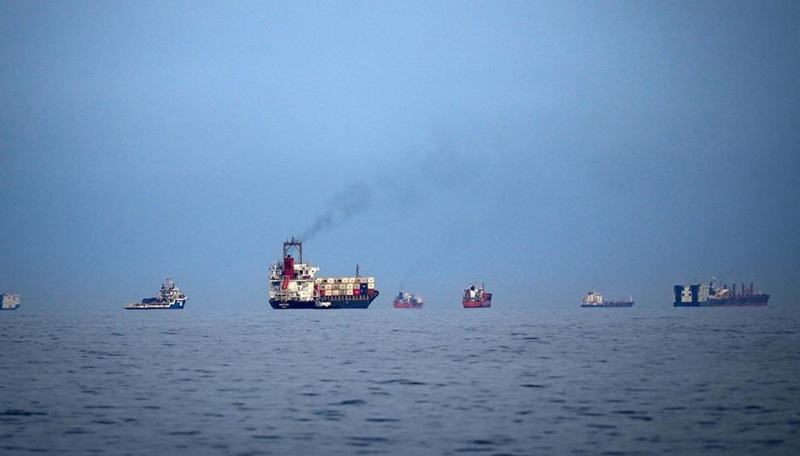
Darwin, 27 May : Iran will remove its blockade from the strategically vital Strait of Hormuz 30 days after signing a final peace agreement with the United States, Japanese media outlet Nikkei Asia reported on Tuesday.
According to the report, citing multiple diplomatic sources in the Middle East, Iran’s defense forces are expected to begin clearing naval mines from the waterway one month after a peace treaty is finalized with Washington.
The move would restore safe passage for international commercial shipping through one of the world’s most important trade routes.
Diplomatic sources also said the United States and Iran have agreed to extend their ceasefire by an additional 60 days to allow more time for negotiations over the terms of a comprehensive peace agreement.
The Strait of Hormuz, a 167-kilometer-long waterway connecting the Persian Gulf to the Gulf of Oman and the Arabian Sea, is considered one of the world’s most critical maritime trade corridors.
Roughly one-fifth of global energy supplies pass through the strait, making its security essential for international markets.
Iran imposed the blockade after war broke out with the United States and Israel on February 28. To reinforce the closure, the elite branch of Iran’s military, the Islamic Revolutionary Guard Corps (IRGC), reportedly deployed naval mines across multiple sections of the strait. The Pentagon estimated that the IRGC had planted at least a dozen mines in the area.
The blockade disrupted energy shipments worldwide, contributing to rising prices of oil, liquefied natural gas, and other fuel products in multiple countries.
Following 40 days of fighting, U.S. President Donald Trump announced a ceasefire with Iran on April 8. However, despite the truce, Tehran kept the Strait of Hormuz closed, prompting Washington to impose retaliatory restrictions on Iranian maritime ports.
The U.S. Navy had attempted to remove the mines from the waterway but reportedly failed, as the IRGC kept the exact locations of the explosives confidential.
Source: Reuters / Nikkei Asia
Darwin, October 21: Oil prices rose in global markets on Wednesday as traders grew concerned about potential disruptions to oil supplies in the Middle East,…
Darwin, October 21: Iran is prolonging negotiations with Washington in an attempt to politically weaken President Donald Trump ahead of the US midterm elections, according…

Darwin, October 21: Today is the auspicious occasion of Bijaya Dashami. The five-day Sharadiya Durga Puja, the biggest religious festival of the Hindu community, officially…

Darwin, October 20: Today is Maha Navami, the ninth day of Sharadiya Durga Puja. Members of the Hindu community will observe the day through religious…

Darwin, October 20: Protests and violence over the rising cost of living have erupted in Italy, one of Europe’s largest economies, following similar unrest in…

Darwin, October 20: US President Donald Trump has warned that protests and violence similar to those in France could spread across the United States if…
Darwin, October 20: Moscow has reaffirmed its full support for Tehran just hours after US President Donald Trump remarked that Russia was doing very little…

Darwin, October 19: Former Manchester City manager Pep Guardiola has urged the world not to forget the Palestinians in Gaza. In a video for the…