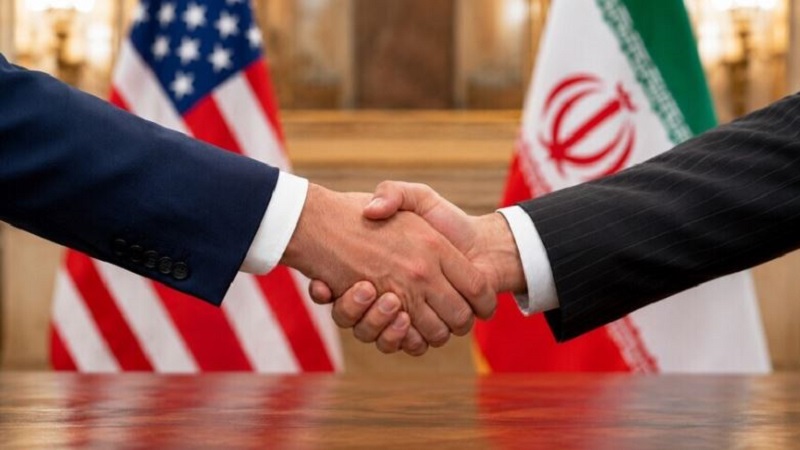
Darwin, 29 June : Iran and the United States have agreed to halt their tit-for-tat attacks and resume talks in Doha on Tuesday regarding the Strait of Hormuz.
According to Axios, citing U.S. officials and sources familiar with the matter, the meeting was originally scheduled to take place in Switzerland but was moved to Qatar’s capital due to the deteriorating security situation. The agenda was also shifted to focus on the Strait of Hormuz, as disputes and differences remain over the waterway despite a memorandum of understanding (MoU) signed earlier this month.
Confirming the agreement to suspend hostilities and restart negotiations, a U.S. official told Reuters that discussions would not be limited to the Strait of Hormuz. “Technical talks will continue on all aspects of the memorandum of understanding,” the official said.
“Both sides will refrain from further attacks for now, and ships will be able to navigate freely,” the official added.
The Axios report comes after an Iranian official stated that Tehran had skipped technical talks scheduled for Sunday because of recent attacks on Iran and what it described as the failure to fulfill the conditions of the memorandum of understanding. The MoU was intended to establish a ceasefire and reopen the Strait of Hormuz, enabling broader discussions on issues such as Iran’s nuclear program.
“For example, one issue is whether we actually have access to our unfrozen funds. If we do not have access, then that condition has not been met,” Mehdi Fazaili, a member of the Office for the Preservation and Publication of the Works of Iran’s Supreme Leader, told state television.
Despite the ceasefire that took effect in April and the recently signed memorandum of understanding, sporadic violence has continued in the Gulf region. Many incidents have involved Iranian attacks on vessels transiting the Strait of Hormuz.
Tehran has also expressed anger over Oman’s announcement last week of an alternative shipping route along the Omani coast, which Muscat said had been developed in coordination with the International Maritime Organization (IMO).
Iran continues to assert control over the strategically vital waterway, through which roughly one-fifth of the world’s oil and liquefied natural gas supplies pass. Before the war, it did not exercise such control.
The Strait lies within both Iranian and Omani territorial waters, but under international law, neither country is generally permitted to obstruct navigation or impose transit tolls. Nevertheless, during the conflict, Iran prevented most vessels from using the narrow waterway, a move that reportedly provided Tehran with significant economic benefits and one it now appears reluctant to abandon.
Iran’s efforts to strengthen its control have repeatedly triggered exchanges of military strikes with Washington. The latest occurred early Sunday when U.S. Central Command announced strikes on 10 Iranian military targets in response to what it described as “Iran’s continued aggression against commercial shipping” following another attack on a tanker in the region.
Iran’s Islamic Revolutionary Guard Corps (IRGC) said it had retaliated by launching attacks on U.S. military bases in Kuwait and Bahrain. Both countries condemned the strikes.
State-owned Press TV reported that the IRGC claimed the U.S. attacks had violated the ceasefire and declared that “all diplomatic processes will be completely suspended.” The IRGC Navy also warned that U.S. bases in the region would face “grave consequences” in the coming days.
Iran now insists that ships transiting the Strait must use a corridor close to its own coastline, although dozens of vessels this week traveled through the opposite side of the waterway, near Oman’s coast.
“Any attempt to introduce new or different arrangements from those adopted by the Islamic Republic of Iran will only complicate the situation further, delay the reopening of the Strait of Hormuz, and increase tensions,” Iranian Foreign Minister Abbas Araghchi said.
The published text of the memorandum of understanding states that Iran will determine the future administration of the Strait through consultations with Oman and other Gulf states, while ensuring compliance with international law.
Meanwhile, the IRGC announced that it is implementing measures to regulate navigation through the Strait and warned that vessels violating those rules would face stricter action than before.
Mohammad Mokhber, an adviser to Iran’s Supreme Leader, wrote on X that as long as Iran controls the Strait, Washington’s “hegemonic ambitions” in the region would not succeed.
Experts say further incidents in the Strait of Hormuz remain possible. H.A. Hellyer of the London-based Royal United Services Institute said, “A prolonged period of negotiations, accompanied by controlled pressure in the Strait, could work to Iran’s advantage.”
Although no casualties have been reported from the recent exchanges, Qatar’s Ministry of Interior said one of its citizens was killed after being struck by shrapnel while aboard a boat as a result of “military operations in the area.” The ministry did not provide further details. The victim’s body was recovered on Sunday after his boat failed to return to port as expected on Saturday.