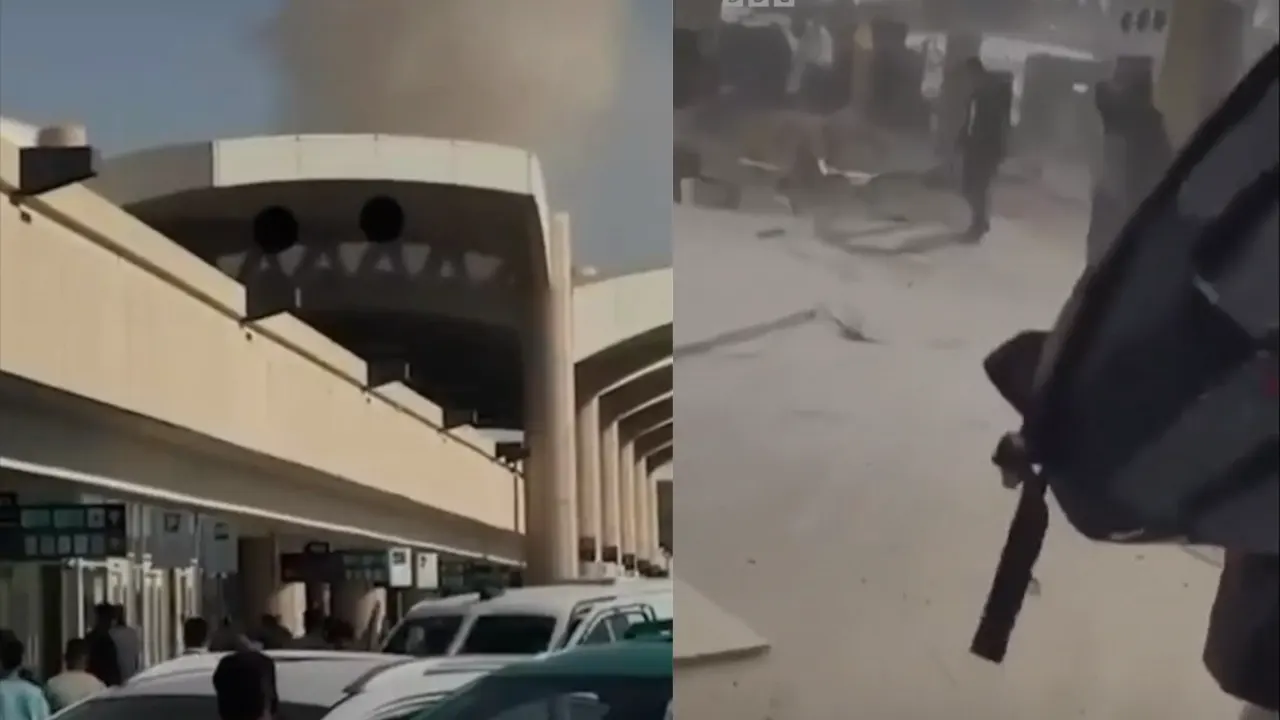
Darwin, 28 June : Iran and the United States have continued exchanging attacks in the Gulf region, each accusing the other of violating a recently signed interim agreement aimed at ending months of conflict.
Shortly after President Donald Trump warned that the United States could “get the job done militarily,” Iran launched missile and drone strikes early Sunday targeting US military installations in Kuwait and Bahrain, marking the latest escalation in the widening confrontation.
The US military had earlier reported renewed strikes on Iran following an attack on a tanker in the Strait of Hormuz, one of the world’s most critical energy shipping routes, which Iran has largely disrupted during the conflict.
The 14-point US–Iran interim agreement, signed less than two weeks ago, was intended to halt the war that began on February 28 between the United States and Israel and to reopen maritime traffic through the Strait, while paving the way for broader negotiations on Iran’s nuclear program and other issues.
Tensions have continued to rise despite diplomatic efforts, including a round of mediated talks in Switzerland involving US Vice President JD Vance and Iranian Parliament Speaker Mohammad Bagher Ghalibaf. Washington also lifted sanctions on Tehran after the discussions, but hostilities and mutual accusations resumed soon after.
Trump posted on social media that there could come a point where the US would no longer remain “reasonable” and might be forced to complete its objectives militarily. He further warned that if that happens, “there will be no more existence of the Islamic Republic of Iran.”
Shortly after his remarks, Kuwaiti authorities said their air defenses were responding to “hostile” missile and drone attacks, while Bahrain reported air raid sirens.
Iran’s Islamic Revolutionary Guard Corps (IRGC) confirmed that it had carried out coordinated missile and drone strikes on US military sites in Kuwait and Bahrain, in response to recent US attacks on Iranian positions.
A US official confirmed that the situation remained ongoing but said there were no immediate reports of American casualties or significant damage to US facilities in the region.
Iran’s state media, Press TV, reported that the IRGC accused the US of violating the ceasefire agreement, warning that this would “completely halt all diplomatic processes” and that US bases in the region would face “severe consequences in the coming days.”
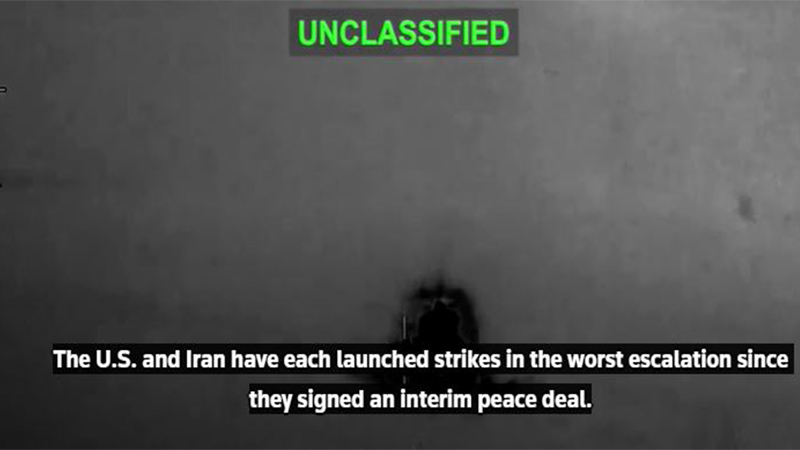
US Central Command stated that it had carried out fresh strikes after an Iranian drone reportedly hit a Panama-flagged tanker. It said Iran had been given a chance to comply with the ceasefire but chose not to do so.
According to CENTCOM, the strikes targeted Iranian military surveillance systems, communications infrastructure, air defenses, drone storage facilities, and mine-laying installations in response to continued aggression against commercial shipping.
Iranian state broadcaster IRIB reported explosions in Sirik in southern Iran, though no further details were provided. The IRGC said that US “aimless fire” in Sirik would not end Iran’s dominance over the Strait of Hormuz, warning that violations would serve as a reminder of the risks to maritime navigation.
Tensions escalated after attacks on commercial vessels in the Strait of Hormuz, including a tanker strike on Saturday and a cargo ship attack earlier in the week. Iran continues to seek greater control over the waterway, which before the conflict handled about one-fifth of global oil and LNG shipments.
Hundreds of oil tankers remain stranded in the Persian Gulf due to the conflict, although shipping has gradually resumed, helping oil prices fall closer to pre-war levels.
The United States has promoted an alternative southern shipping route along Oman’s coast, while Iran insists vessels should pass through waters under its control via a northern route in the Strait, allowing it to collect transit fees.
Outside the Gulf region, Iran has also accused the United States of violating ceasefire commitments in Lebanon, where Israel—Washington’s ally—conducted operations against Hezbollah earlier in the year.