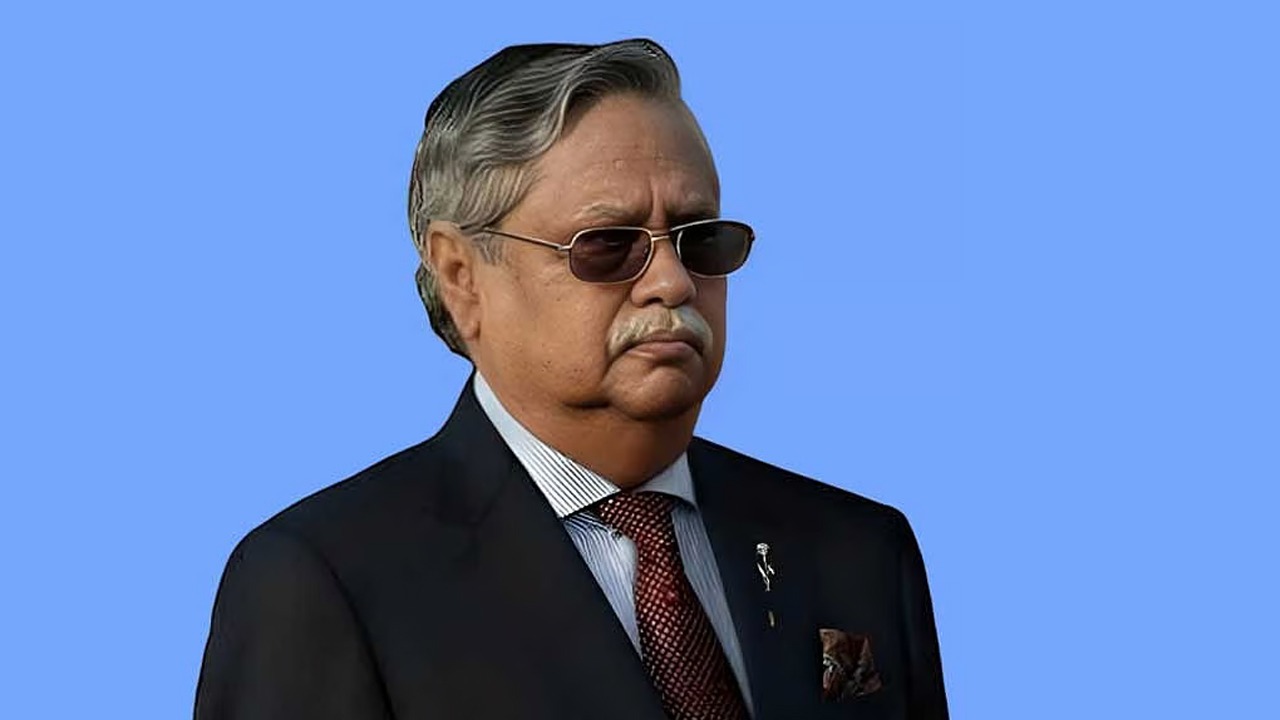
Darwin, 25 July: President of Bangladesh Mohammed Shahabuddin has resigned from office, citing health-related reasons. He personally confirmed his resignation to the media on Friday (July 24).
His resignation letter was submitted to the Speaker of the National Parliament, Hafiz Uddin Ahmed, at the Parliament Secretariat, where it was formally received.
Under the Constitution, the resignation takes effect immediately upon the Speaker’s receipt of the resignation letter.
Meanwhile, the Speaker called a press conference at the Jatiya Sangsad Bhaban at 5:00 p.m., where he officially announced the President’s resignation.
There had been widespread political speculation over the President’s resignation for several days. According to sources at Bangabhaban, he decided to resign late last week and had already prepared the resignation letter. However, he was unable to submit it because the Speaker was abroad. The Speaker returned to Bangladesh on Friday after cutting short an official visit to Bangkok, enabling the resignation to be formally submitted.
Following the President’s resignation, Speaker Hafiz Uddin Ahmed will perform the duties of the Head of State until a new President is elected. Under the Constitution, Parliament must elect a new President within 90 days of the office becoming vacant.
Mohammed Shahabuddin was sworn in as Bangladesh’s 22nd President on April 24, 2023. Nominated by the Awami League, he was elected unopposed. His five-year term was scheduled to expire in April 2028. He is the only President in Bangladesh’s history to have administered the oath of office to three different heads of government at different times.
Following the student-led mass uprising on August 5, 2024, which resulted in the fall of the Awami League government, Bangladesh’s political landscape changed dramatically. Various political groups and civil society organizations demanded the President’s resignation. Student leaders who spearheaded the mass uprising also called for his removal, and several organizations associated with the July Movement organized demonstrations, including a siege of Bangabhaban, to press for his resignation. Despite these demands, President Shahabuddin continued to perform his constitutional duties during several critical phases of the political transition, including the dissolution of Parliament and the formation of the interim government. The interim administration led by Muhammad Yunus did not take any steps to remove him from office.
President Shahabuddin’s resignation marks another significant constitutional transition following the mass uprising and the subsequent national election. It also gives the Bangladesh Nationalist Party (BNP), after assuming power, its first opportunity to nominate and elect a President of its choice.
Before becoming President, Mohammed Shahabuddin served as a District and Sessions Judge and later as a Commissioner of the Anti-Corruption Commission. During Bangladesh’s Liberation War in 1971, he served as the convener of the Independent Bangla Student Struggle Council in Pabna District. On April 9, 1971, he crossed into India, received military training, and actively participated in the armed resistance against the Pakistani occupation forces in various parts of Pabna District.