US Forces to Leave Iraq After Two Decades and 4,500 Military Deaths
Darwin, September 30 : The United States is preparing to withdraw its military forces from Iraq after more than two decades of war and the…



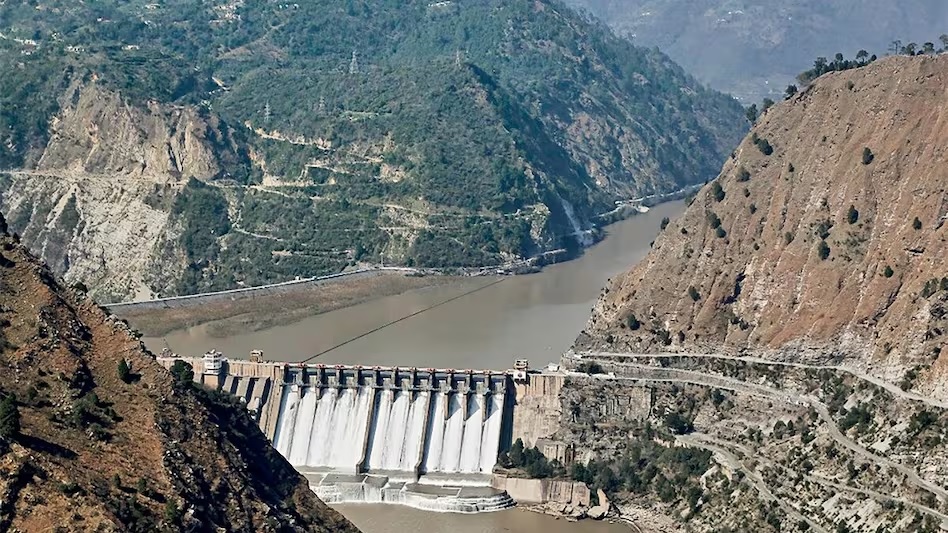
Darwin, 14 August – India must comply with the terms of the 1960 Indus Waters Treaty when designing any hydropower projects on rivers that flow into Pakistan, according to a ruling by the Permanent Court of Arbitration based in The Hague, Netherlands.
On Tuesday, a senior Pakistani official told Reuters that the ruling effectively supports Islamabad’s position. India’s Ministry of External Affairs has not yet commented on the decision.
Under the 1960 treaty, Pakistan has the rights to use the waters of three western rivers, while India has control over three eastern rivers. Islamabad has long expressed concern that India could restrict or divert the flow of the western rivers by building dams. Around 80% of Pakistan’s agriculture and hydroelectric power depend on these rivers.
In 2023, Pakistan raised objections regarding the design of India’s proposed hydropower projects and took the matter to the Permanent Court of Arbitration.
In its ruling issued Friday and published on the court’s website on Monday, the court stated that India cannot design and construct such projects on the western rivers at its sole discretion. The design must adhere to the conditions laid out in the Indus Waters Treaty.
Pakistan’s Attorney General said on Tuesday that the court made it clear that India cannot proceed with these projects in violation of the ruling. The river flows must be maintained for Pakistan’s unrestricted usage.
Pakistan’s Ministry of Foreign Affairs stated that the ruling is final and binding on both countries.
An Indian official told journalists that India has never accepted the jurisdiction of the arbitration court. India’s Ministry of External Affairs reiterated this stance in a statement issued in June.
Previously, following a terrorist attack in Indian-administered Kashmir that killed 26 people, New Delhi accused Pakistan of being involved and announced a unilateral suspension of the Indus Waters Treaty. Pakistan denied any involvement in the attack.
The following month, deadly clashes between the two nations resulted in the deaths of dozens of people. Eventually, both sides agreed to a ceasefire.

Darwin, September 30 : The United States is preparing to withdraw its military forces from Iraq after more than two decades of war and the…
Darwin, September 30: Russia has urged Iran not to withdraw from the Treaty on the Non-Proliferation of Nuclear Weapons (NPT), calling on Tehran to remain…

Darwin, September 30: Russia currently lacks sufficient military capability to launch a major attack against NATO because its forces are engaged in the war in…

Four personnel of India’s Central Industrial Security Force (CISF), including an officer, were killed after a colleague allegedly opened fire on them at a hydropower…

Darwin, September 25: The Netherlands is seeking to build an international coalition to evacuate at least 1,000 sick and injured children from Gaza for medical treatment,…

Darwin, September 25: Police arrested at least 100 people, including Oscar-winning actress Susan Sarandon, during a protest against Israeli Prime Minister Benjamin Netanyahu outside the…

Darwin, September 25: Representatives from Bangladesh and 76 other countries walked out of the United Nations General Assembly hall as Israeli Prime Minister Benjamin Netanyahu…

Darwin, September 25 : Israeli Prime Minister Benjamin Netanyahu brought a pager to the United Nations General Assembly while delivering a speech, using it to highlight…