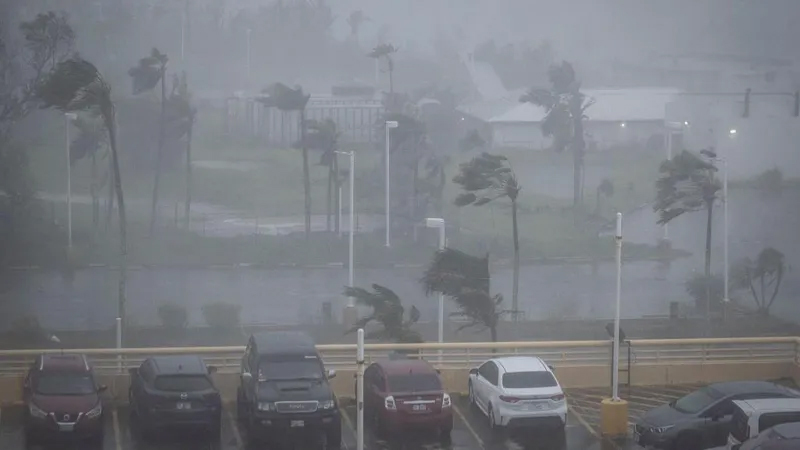
Darwin, 06 July : Super Typhoon Bavi has struck the U.S. Pacific territories of Guam and the Northern Mariana Islands, prompting authorities to issue the highest level of emergency warnings as the powerful storm brings destructive winds, torrential rain and the threat of a storm surge of up to 36 feet (11 metres). Initial reports indicate damage in several areas and significant disruption to daily life.
According to a report by the BBC on Monday, the U.S. National Weather Service (NWS) said Bavi is packing sustained winds of around 290 kilometres (180 miles) per hour, with gusts reaching as high as 350 kilometres (217 miles) per hour. The storm is currently moving across Guam and the Northern Mariana Islands.
The NWS warned that the typhoon could generate a storm surge of nearly 11 metres (36 feet), posing a serious threat of widespread coastal flooding and extensive damage.
Authorities in the Northern Mariana Islands said the storm has already caused damage in several locations. On the island of Rota, powerful winds, heavy rainfall and widespread flooding have severely disrupted normal life.
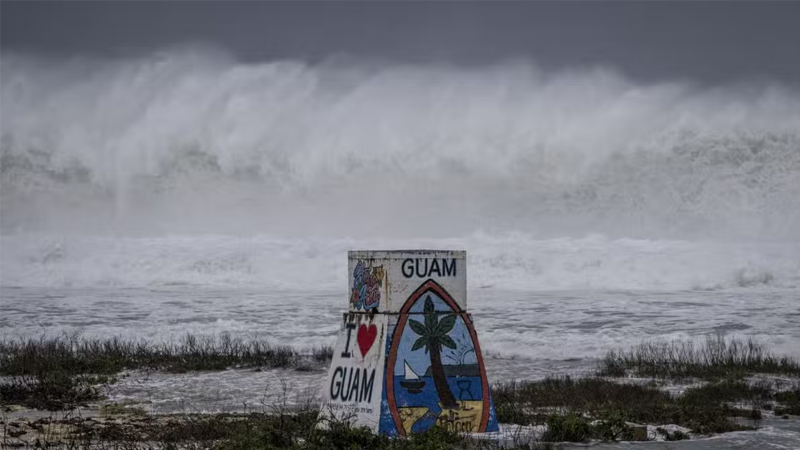
**Huge waves crash along the coast of the U.S. island of Guam as Super Typhoon Bavi approaches. Photo: AFP.
Local officials have urged residents to remain in safe shelters and avoid going outdoors unless absolutely necessary.
Meteorologist Marcus Landon Idle said wind gusts exceeding 161 kilometres (100 miles) per hour were recorded at Saipan International Airport, highlighting the storm’s extreme intensity.
The National Weather Service forecasts that Bavi is unlikely to weaken before Monday afternoon and could remain a powerful tropical cyclone well into the night.
Meanwhile, the U.S. Joint Typhoon Warning Center (JTWC) has classified Bavi as a super typhoon. Storms with sustained winds exceeding 240 kilometres (150 miles) per hour are generally classified as super typhoons. Meteorologists say such storms possess destructive power comparable to a Category 4 or Category 5 hurricane.
Scientists warn that climate change is contributing to an increase in both the frequency and intensity of powerful typhoons across the Pacific, raising the risk of severe weather disasters in the region.