Navi Pillay, Who Fought for Gaza, Wins Nobel Peace Prize
Darwin, October 09: Navanetham “Navi” Pillay, a South African jurist who led a United Nations investigative commission that described Israel’s actions in Gaza as genocide,…



Reuters Special Report
Darwin, August 24 —
Sensing a significant shift in public opinion over the Gaza war, Australia has decided to officially recognize the State of Palestine. While Israel—Australia’s historically close ally—is displeased with the decision, it does not appear alarmed by it.
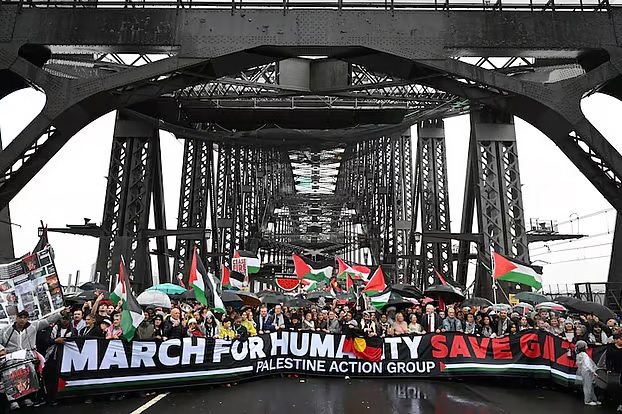
On August 11, the Australian government announced its decision to recognize Palestine. Just days earlier, thousands of people marched across Sydney’s iconic Harbour Bridge, demanding peace in Gaza and the delivery of humanitarian aid.
Nearly two years ago, Hamas, the Palestinian resistance group, launched an unprecedented attack inside Israel. In retaliation, Israel began its military campaign in Gaza the same day. According to Gaza’s Ministry of Health, Israel has killed 62,192 Palestinians in the enclave since the war began. A UN-backed agency has reported that famine is ongoing in Gaza City.
Martin Care, an expert on the Israel-Palestine conflict at the University of Sydney, stated that unwavering support for Israel while placing all blame on Hamas is becoming politically untenable.
The decision to recognize Palestine has strained Australia-Israel relations to a level not seen in decades. Top political figures in both countries have exchanged sharp criticisms. Israeli Prime Minister Benjamin Netanyahu has personally attacked Australian Prime Minister Anthony Albanese. Israel has revoked the visas of Australian diplomats stationed in the West Bank, while an Israeli lawmaker was denied entry into Australia.
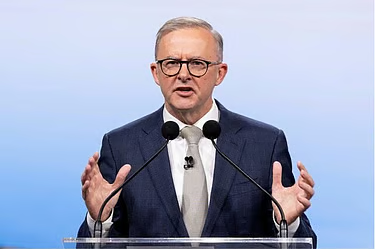
Australian Prime Minister Anthony Albanese
A leading Jewish organization in Australia has called for calm under the current circumstances but has also made an unprecedented public criticism of Netanyahu. Many Australian Jews have expressed growing concerns about their safety, citing a rise in antisemitic attacks in the past year.
In Australia, the Gaza conflict is a divisive issue for the country’s second-largest Muslim population and minority Jewish community. Public opinion polls show growing sympathy for Palestinians.
A DemosAU poll conducted in August found that 45% of Australians supported recognizing Palestine even before a peace agreement between Israel and Hamas—up from 35% the previous year. Only 23% opposed recognition.
An editorial in the Sydney Morning Herald stated that public sympathy for Israel has sharply declined as horrifying images of Gaza’s famine have emerged.
Charles Miller, an international relations lecturer at the Australian National University, said graphic images from Gaza have strengthened the resolve of Australian lawmakers to recognize Palestine. “I believe these images have changed the mindset of many policymakers—as they have in other countries,” he added.
Concerns in the Jewish Community
The Executive Council of Australian Jewry, an umbrella group representing over 200 Jewish organizations in the country, has expressed concern over the growing political rift between Australia and Israel. On Wednesday, it sent letters to both Albanese and Netanyahu, urging them to de-escalate tensions.
The letter stated, “If anything must be said in public, let it be in language that is measured, dignified, and fitting of a national leader.”
Since the war in Gaza began, there have been multiple antisemitic attacks on synagogues, buildings, and vehicles across Australia. Many Jews fear that worsening Australia-Israel tensions could lead to more such incidents.
Rabbi Eli Feldman of Sydney’s Newtown Synagogue said, “Excessive focus on criticism of Israel in the media and political discourse will have consequences for the local Jewish community. We need to think about that.”
A Historic Ally
Australia has long been a staunch supporter of a Jewish state and has consistently backed Israel in various international disputes. However, Australia’s major political parties have officially supported a two-state solution to the Israel–Palestine conflict.
Prime Minister Anthony Albanese has personally supported Palestinian statehood for years but had remained cautious about formally recognizing it due to political considerations. Changing public sentiment has led to a shift in his stance. Moreover, after a sweeping victory in the elections last May, the political risk of such a decision has decreased significantly.
Jessica Genauer, a conflict expert at Flinders University in Adelaide, noted that recent moves by the UK, France, and Canada to recognize Palestine helped make Australia’s decision easier.
Since August 11, Netanyahu has launched personal attacks on Albanese through interviews and social media. He has labeled Albanese a “weak leader” and accused him of “betraying” Israel.
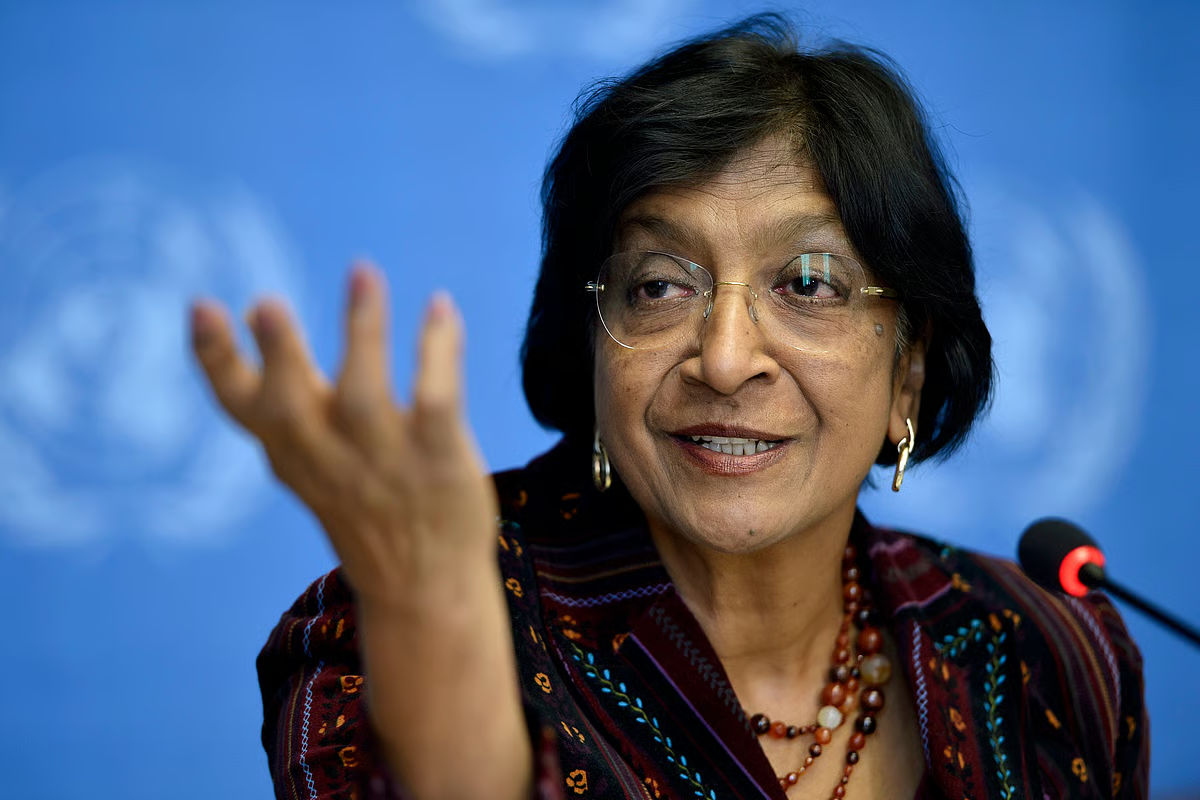
Darwin, October 09: Navanetham “Navi” Pillay, a South African jurist who led a United Nations investigative commission that described Israel’s actions in Gaza as genocide,…

Darwin, October 08: U.S. President Donald Trump said on Wednesday that he deserves to win the Nobel Peace Prize, while expressing doubts that he would…

Darwin, October 07: Russia has finalized preparations to provide Iran with a $1 billion loan. The funds will be transferred once Tehran provides the necessary…
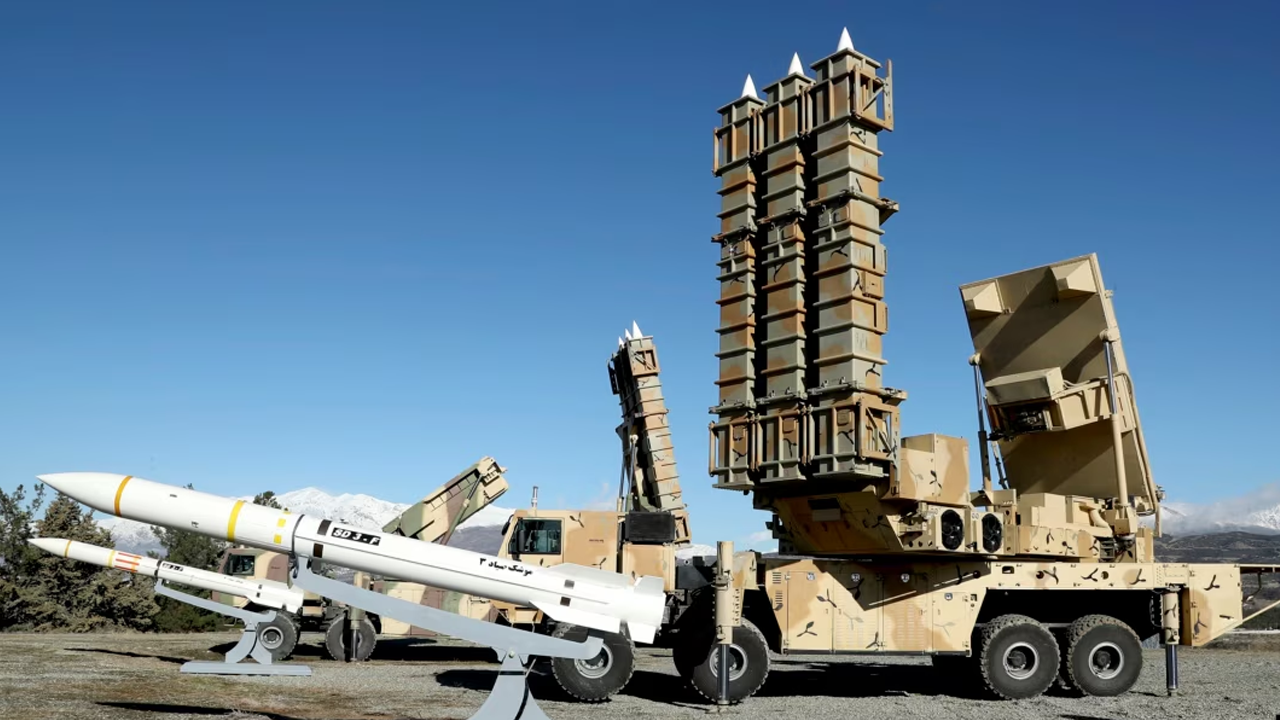
DARWIN, October 7: Iran has warned that it will deliver a stronger response if the United States or Israel launches another attack. The country also…

Darwin, October 05: Deaths in Australia are expected to outnumber births by the 2060s, according to a government report, marking a demographic milestone that countries…

Darwin, October 04: Ten people, including three children, have been injured after a car crashed into a crowd of rugby league fans in Newcastle, eastern…
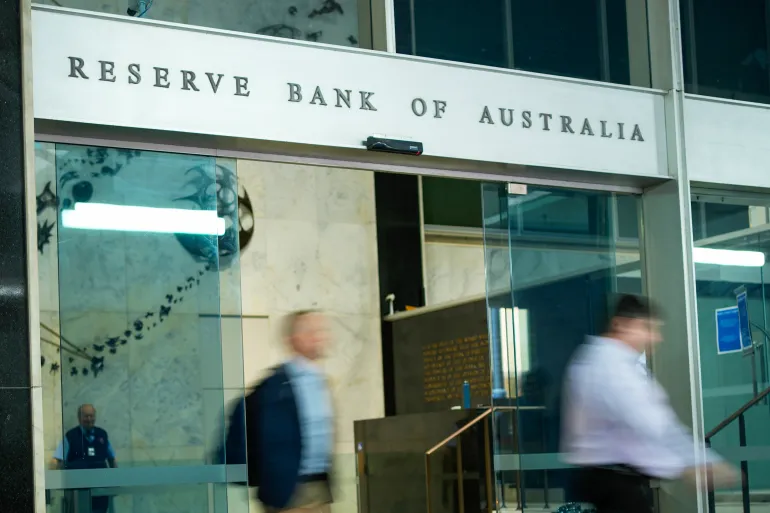
Darwin, October 4: Australia’s central bank has raised interest rates to their highest level in 15 years, increasing mortgage repayments for millions of Australian households….

Darwin, October 3: Under pressure from US President Donald Trump to bring down rising fuel prices, G7 leaders are set to release up to 100…