Oil Prices Rise in Global Markets on Fears of Middle East Supply Disruptions
Darwin, October 21: Oil prices rose in global markets on Wednesday as traders grew concerned about potential disruptions to oil supplies in the Middle East,…



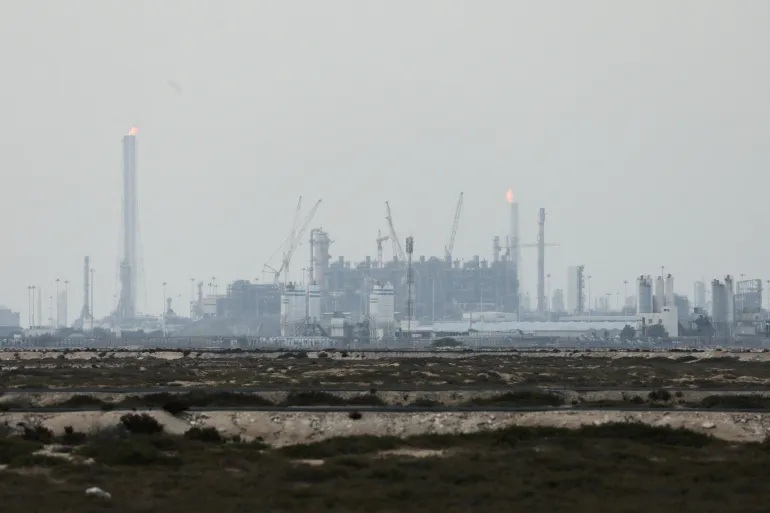
Darwin, 19 march: Tehran has launched missile strikes targeting key energy facilities in Qatar, Saudi Arabia, and the United Arab Emirates (UAE), in retaliation for an attack on Iran’s South Pars gas field.
The three countries strongly condemned the strikes, while U.S. President Donald Trump warned Iran of severe consequences if further attacks occur in Qatar. The developments were reported by BBC and Al Jazeera.
President Trump criticized Israel over the alleged attack on Iran’s gas field, stating that he had no prior knowledge of the incident. “Israel will not carry out such attacks again,” he said, adding, “If Qatar’s energy facilities are targeted once more, Iran will face a much more extensive response.”
Writing on his social media platform Truth Social, Trump warned that the United States could completely destroy the South Pars gas field with unprecedented force, regardless of Israel’s involvement. He added, “Considering the long-term impact on Iran’s future, I do not wish to authorize such levels of violence and destruction. But if Qatar’s LNG facilities are attacked again, I will not hesitate.”
According to reports, Iran launched ballistic missile strikes on Qatar’s Ras Laffan industrial city, a major hub for liquefied natural gas (LNG) processing.
Qatari authorities confirmed “significant damage” to a key energy facility, although all personnel remained safe and fires were later brought under control.
Simultaneously, Iran targeted the Habshan gas facility and Bab oil field in the UAE, as well as a gas installation in eastern Saudi Arabia. The UAE temporarily suspended operations at one of its gas facilities, while Saudi Arabia reported intercepting drones and ballistic missiles.
Earlier, Qatar accused Israel of being responsible for the attack on Iran’s South Pars gas field, part of the world’s largest natural gas reserve. While Israeli media cited officials confirming the strike, the Israeli military has not officially acknowledged it.
QatarEnergy, the state-owned oil and gas company, stated that Iranian missiles struck the Ras Laffan industrial area on Wednesday. Despite the extensive damage, all workers were reported safe.
Qatar described the attack as “reckless” and a direct threat to national security and regional stability. In a statement, its foreign ministry warned that Iran’s escalating actions risk dragging uninvolved countries into a broader conflict. Doha also said it reserves the right to respond.
Following the incident, Qatar ordered two Iranian diplomats—one military and one security official—and their staff to leave the country within 24 hours.
In the UAE, authorities said debris from intercepted missiles fell in two locations. Although no casualties were reported, energy operations were temporarily halted. The UAE condemned the strikes as a “terrorist attack” and a serious violation of international law.
Saudi Arabia’s foreign ministry confirmed that it had foiled an attempted attack on a gas facility in its eastern region. Reports indicated that five drones were destroyed before reaching their targets. Additionally, falling debris from an intercepted missile near Riyadh injured four civilians.
Saudi Foreign Minister Prince Faisal bin Farhan Al Saud stated that Riyadh reserves the right to take military action against Iran if necessary.
Speaking after a ministerial meeting in Riyadh, he urged Iran to “reconsider its miscalculations,” warning that such actions would ultimately backfire politically and morally.
It is worth noting that South Pars is part of the world’s largest natural gas field. Iran had earlier warned that any attack on this facility could trigger retaliation against energy infrastructure in Qatar, Saudi Arabia, and the UAE—a warning later echoed by a media outlet affiliated with Iran’s Revolutionary Guard.
Darwin, October 21: Oil prices rose in global markets on Wednesday as traders grew concerned about potential disruptions to oil supplies in the Middle East,…
Darwin, October 21: Iran is prolonging negotiations with Washington in an attempt to politically weaken President Donald Trump ahead of the US midterm elections, according…

Darwin, October 21: Today is the auspicious occasion of Bijaya Dashami. The five-day Sharadiya Durga Puja, the biggest religious festival of the Hindu community, officially…

Darwin, October 20: Today is Maha Navami, the ninth day of Sharadiya Durga Puja. Members of the Hindu community will observe the day through religious…

Darwin, October 20: Protests and violence over the rising cost of living have erupted in Italy, one of Europe’s largest economies, following similar unrest in…

Darwin, October 20: US President Donald Trump has warned that protests and violence similar to those in France could spread across the United States if…
Darwin, October 20: Moscow has reaffirmed its full support for Tehran just hours after US President Donald Trump remarked that Russia was doing very little…

Darwin, October 19: Former Manchester City manager Pep Guardiola has urged the world not to forget the Palestinians in Gaza. In a video for the…