Oil Prices Rise in Global Markets on Fears of Middle East Supply Disruptions
Darwin, October 21: Oil prices rose in global markets on Wednesday as traders grew concerned about potential disruptions to oil supplies in the Middle East,…



Darwin, 31 March:
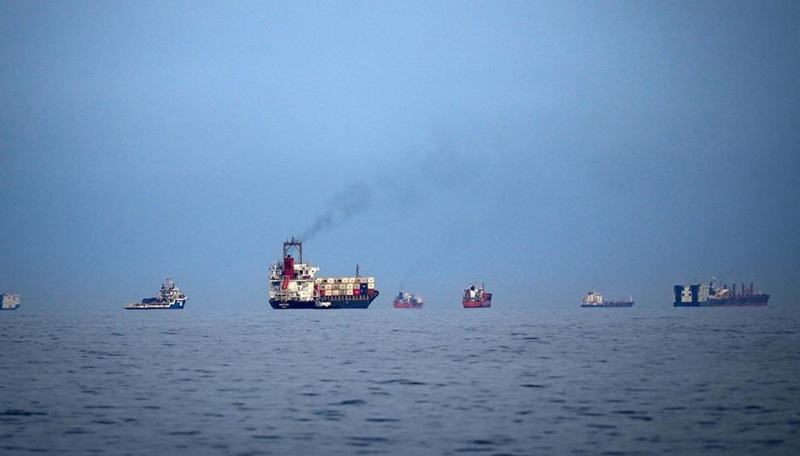
Amid U.S.-Israeli strikes and threats from U.S. President Donald Trump, Iran’s parliament has passed a law to formally impose transit fees on commercial vessels passing through the Strait of Hormuz.
The move legalizes a toll system that Iranian authorities had already been enforcing arbitrarily since early March.
Turkish outlet Türkiye Today and AFP reported the development on Tuesday, citing Iran’s Revolutionary Guard–aligned media outlets Tasnim and Fars News.
The law comes at a time when the U.S. president has threatened to seize Iran’s key Kharg Island and destroy its oil refineries if the strait is not reopened.
The bill, prepared by the Civil Affairs Committee of Iran’s national parliament (Majlis), establishes Tehran’s “sovereignty, control, and oversight” over the strait while also creating a new source of state revenue. Committee chairman and lawmaker Mohammadreza Rezaei Kouchi framed the move in clear commercial terms.
He said, “Parliament is advancing a plan to formally establish Iran’s sovereignty, control, and oversight over the Strait of Hormuz, while also ensuring revenue through the collection of fees.”
He added, “This route is like any other transit corridor. The Strait of Hormuz is also a corridor. We ensure its security, so it is natural for ships and oil tankers to pay duties.”
Iranian state television, citing a parliamentary commission member, reported that the toll system is being introduced to safeguard Iran’s sovereignty. Cooperation will also continue with Oman, which lies on the opposite side of the strait.
A System Already in Practice
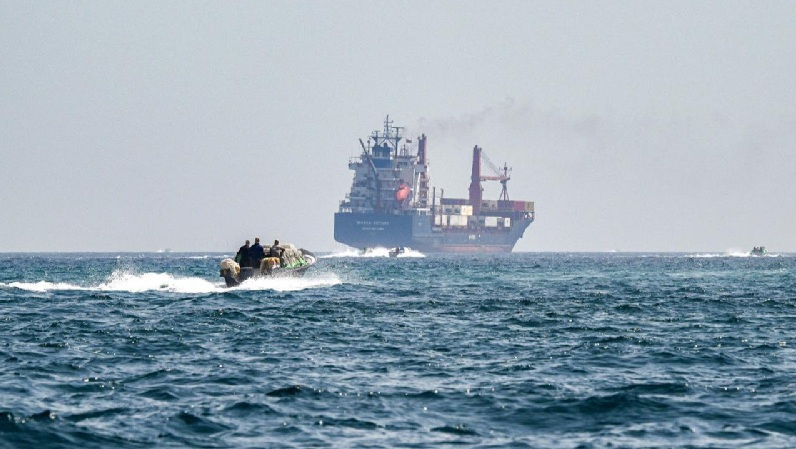
The law effectively provides legal backing to a system already in operation at sea. Since mid-March, Iran’s Revolutionary Guard Corps has enforced a vetting and fee system through a controlled corridor near Iran’s coast, between Qeshm and Larak islands.
Ships seeking passage were required to submit their IMO number, cargo manifest, crew details, ownership information, and destination to IRGC-linked intermediaries. In return, they received a route code and security escort.
Bloomberg reported that some vessels have paid up to $2 million per voyage. This was confirmed on Iranian state television by lawmaker Alaeddin Boroujerdi, who said, “War has costs, so naturally we must do this and collect transit fees from ships passing through the Strait of Hormuz.”
However, no country, importer, or shipping operator has publicly acknowledged making such payments, and details of individual arrangements remain undisclosed.
Broader Context
Since U.S. and Israeli strikes on Iran began, the strait has effectively been closed to most commercial traffic. Before the war, around 140 vessels passed through the route daily. If an average fee of $2 million per ship is applied, annual revenue could exceed $100 billion—equivalent to roughly 20–25% of Iran’s GDP.
Alternatively, following models like the Suez and Panama canals, fees could be set at around $400,000 per vessel, according to Tasnim.
Maritime intelligence firm Windward reported that nearly 2,000 vessels are stranded on both sides of the strait, with many choosing to wait rather than take long alternative routes.
Legal and Regional Opposition
The bill has drawn strong criticism from regional countries and international legal experts. Gulf Cooperation Council Secretary-General Jasem Mohamed Al-Budaiwi stated that the fees violate the United Nations Convention on the Law of the Sea (UNCLOS).
Unlike the Suez or Panama canals, the Strait of Hormuz is a natural international waterway. Under UNCLOS, all vessels have the right of transit passage through such straits, and coastal states are prohibited from obstructing, discriminating against, or charging fees.
Iran argues that these rules do not bind it, as it signed the convention in 1982 but never ratified it.
However, James Kraska, a professor of international maritime law at the U.S. Naval War College, rejected this argument, stating, “There is no legal basis under international law for a coastal state to impose fees in an international strait.”
Karen Young, a researcher at Columbia University’s Center on Global Energy Policy, also called the idea “practically impossible,” warning that Gulf states—including the UAE, Saudi Arabia, and Oman—would “not accept or tolerate” such bilateral arrangements.
Since the war between Iran, the United States, and Israel began, the Strait of Hormuz has effectively been closed, disrupting the flow of oil and gas to various countries and impacting the global economy.
Meanwhile, Iran has allowed two Chinese vessels to pass through the strait. Marine traffic services reported that the ships crossed Hormuz last Friday.
On the other hand, White House Press Secretary Karoline Leavitt said that President Donald Trump may ask Arab countries to fund the war. She noted that Trump is considering the idea and could announce it at any time.
Darwin, October 21: Oil prices rose in global markets on Wednesday as traders grew concerned about potential disruptions to oil supplies in the Middle East,…
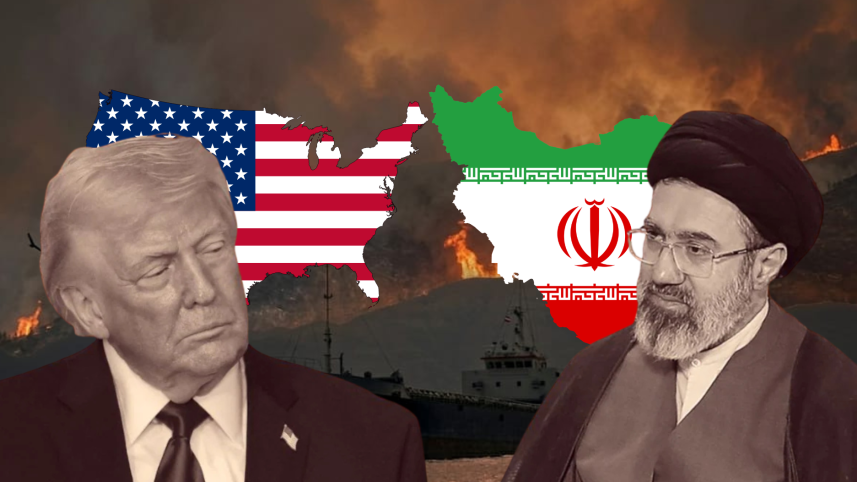
Darwin, October 21: Iran is prolonging negotiations with Washington in an attempt to politically weaken President Donald Trump ahead of the US midterm elections, according…

Darwin, October 21: Today is the auspicious occasion of Bijaya Dashami. The five-day Sharadiya Durga Puja, the biggest religious festival of the Hindu community, officially…

Darwin, October 20: Today is Maha Navami, the ninth day of Sharadiya Durga Puja. Members of the Hindu community will observe the day through religious…

Darwin, October 20: Protests and violence over the rising cost of living have erupted in Italy, one of Europe’s largest economies, following similar unrest in…
Darwin, October 20: US President Donald Trump has warned that protests and violence similar to those in France could spread across the United States if…
Darwin, October 20: Moscow has reaffirmed its full support for Tehran just hours after US President Donald Trump remarked that Russia was doing very little…

Darwin, October 19: Former Manchester City manager Pep Guardiola has urged the world not to forget the Palestinians in Gaza. In a video for the…