Oil Prices Rise in Global Markets on Fears of Middle East Supply Disruptions
Darwin, October 21: Oil prices rose in global markets on Wednesday as traders grew concerned about potential disruptions to oil supplies in the Middle East,…



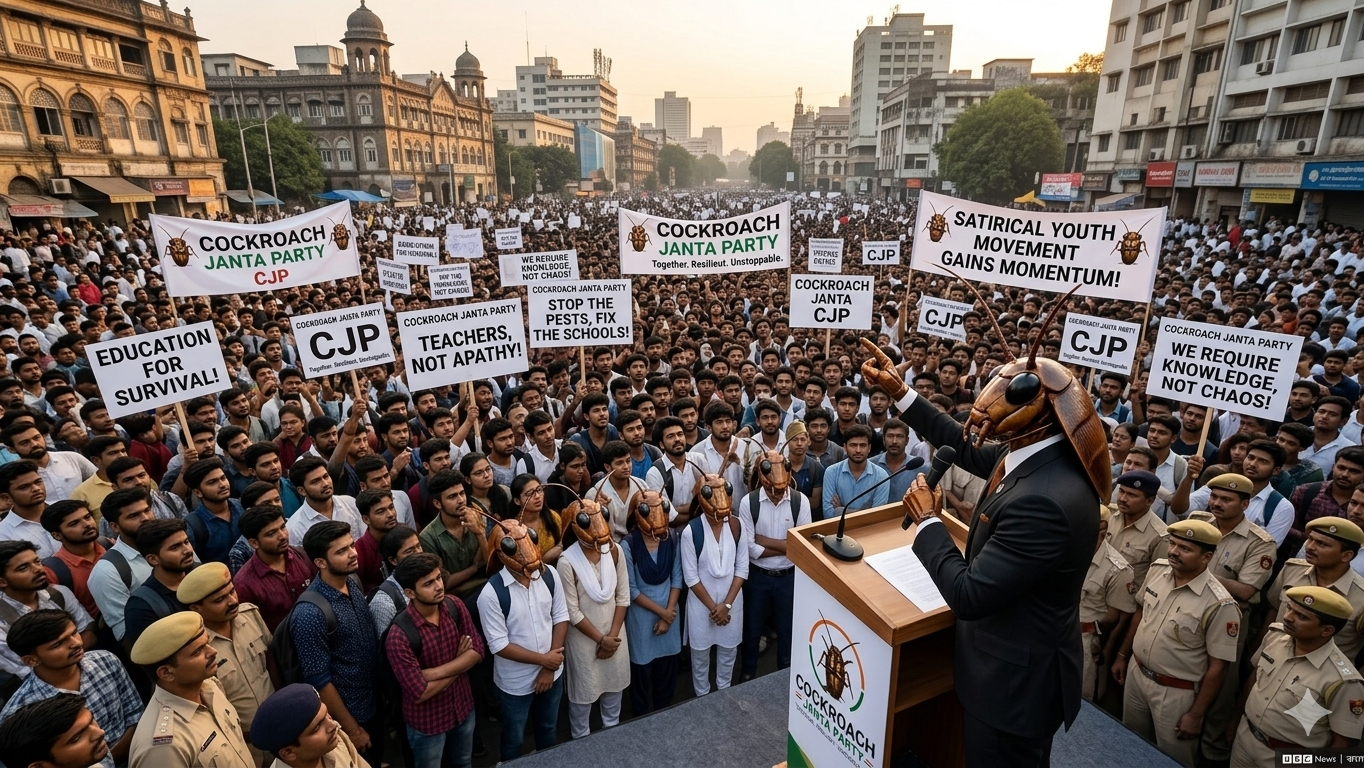
Darwin, 07 June : An unusual political phenomenon has emerged in Indian politics — one symbolized by the cockroach, an insect widely disliked yet notoriously difficult to eliminate.
Known as the Cockroach Janata Party (CJP), or the “Cockroach People’s Party,” the movement began as political satire but has rapidly evolved into a viral youth-driven protest platform, attracting millions of followers online and drawing the attention of mainstream media as well as senior political figures.
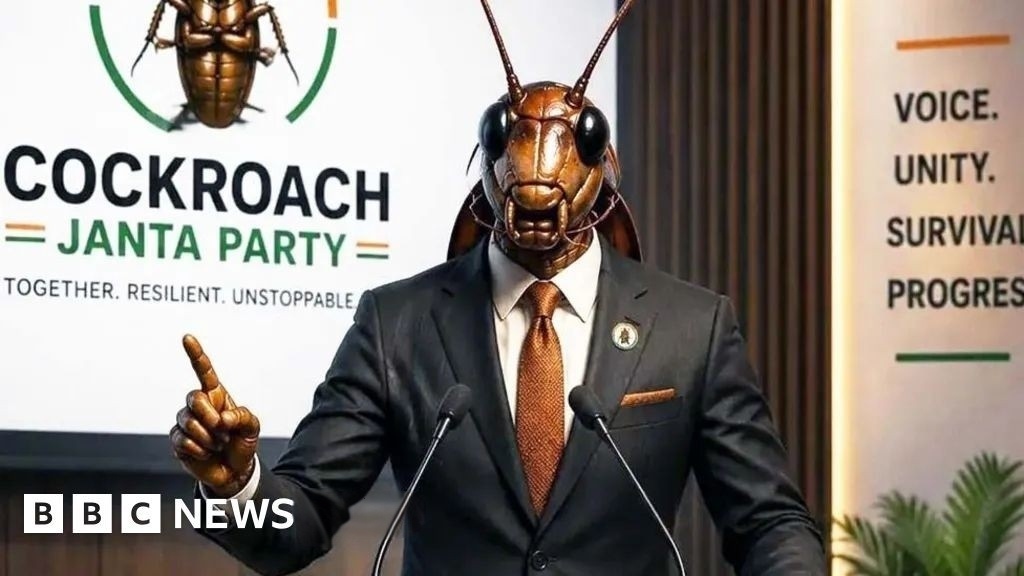
Despite its growing influence, the CJP is not an officially registered political party. Instead, it is being described as a nationwide digital protest movement centered around political satire and frustration among India’s youth.
Its membership criteria are deliberately humorous and sarcastic. To “qualify,” members are jokingly expected to be unemployed, chronically online, and professionally skilled at ranting — expressing frustration loudly and persistently about social and political issues.
The movement was founded by , a political communication strategist’s student. A political communication strategist typically works on crafting messages and public engagement strategies for politicians, political parties, or advocacy groups.
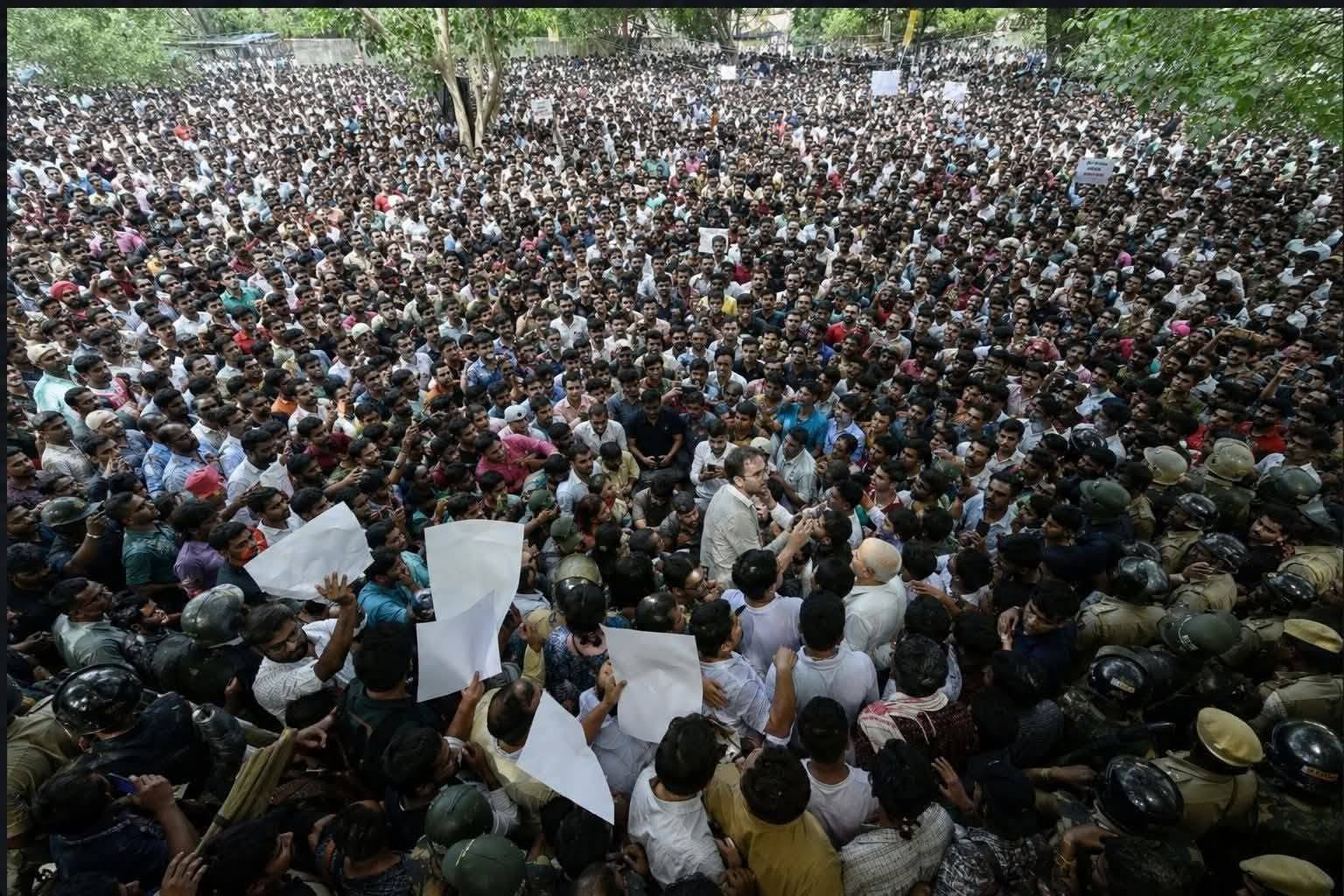
With a population exceeding 1.4 billion, nearly half of India’s population is under the age of 25. For years, frustrations have been building among young people over repeated exam paper leaks, irregularities in examinations, and controversies surrounding academic evaluations.
That frustration appears to have exploded through this unconventional protest movement.
The origins of the CJP trace back to remarks made last month by India’s chief justice, who reportedly compared young people to “cockroaches,” triggering widespread criticism.
In response, Dipke — who studies in the United States — posted on social media platform X: “What happens if all the cockroaches come together?”
The satirical post quickly went viral and gave birth to the Cockroach Janata Party, which many view as a parody of Prime Minister ’s ruling (BJP).
What initially started as a joke among young Indians soon transformed into a broader movement. The CJP’s Instagram following reportedly surged to more than 22 million — nearly double that of the BJP’s account.
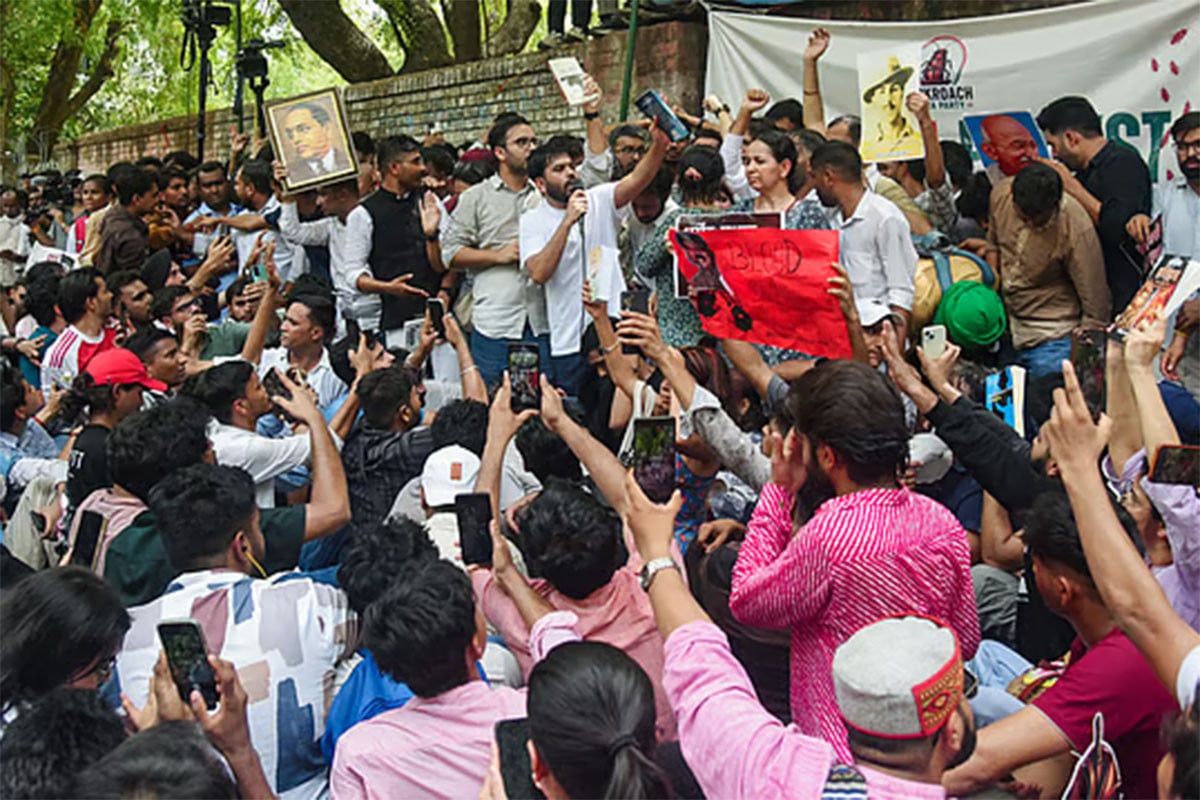
On Saturday, hundreds of young protesters gathered at , a historic protest site in New Delhi, demanding the resignation of Education Minister .
Addressing the crowd, Dipke issued a direct message to the Modi government:
“Our message to the government is clear — the education minister must resign. Otherwise, we are not leaving.”
The protests come amid fresh allegations of irregularities surrounding India’s Class 12 examination results. Earlier, the country’s major medical entrance examination had reportedly been canceled following a question paper leak.
One protester, Saurabh Kushwaha, voiced frustration over both rising education costs and what he described as government indifference toward students’ suffering.
“I don’t know whether I’ll be able to afford higher education,” he said. “But what angers me more is a government elected by the people remaining indifferent to students’ struggles.”
Dipke, who recently returned from the United States, said his family feared he could face arrest upon returning to India.
“Many people in this country now believe that criticizing the government comes with the risk of arrest,” he alleged.
At the demonstration, many participants wore cockroach masks, while others carried flowers and books — symbols of peaceful resistance inspired by online calls to protest.
Later, wearing an Indian cricket jersey, Dipke addressed the crowd once again:
“Those who think India’s youth only post on social media should come here and see. And to those who think we’ll simply chant slogans and leave — we are cockroaches. We are staying until the education minister resigns.”
Among the protesters was 28-year-old delivery worker Mohammad Aftab, who said financial hardship forced him to abandon his education.
“Millions of students stay awake at night trying to build their future,” he said. “Standing beside them is our responsibility.”
So far, the Indian government has not issued an official response to the movement.
Standing at a distance during the protest was police officer Shivani, whose daughter also joined the demonstration. She said she had no objection.
“These young people are worried about their future,” she said. “As a mother, I’m worried too. Sometimes in life, people have no choice but to take to the streets.”

Darwin, October 21: Oil prices rose in global markets on Wednesday as traders grew concerned about potential disruptions to oil supplies in the Middle East,…

Darwin, October 21: Iran is prolonging negotiations with Washington in an attempt to politically weaken President Donald Trump ahead of the US midterm elections, according…

Darwin, October 21: Today is the auspicious occasion of Bijaya Dashami. The five-day Sharadiya Durga Puja, the biggest religious festival of the Hindu community, officially…
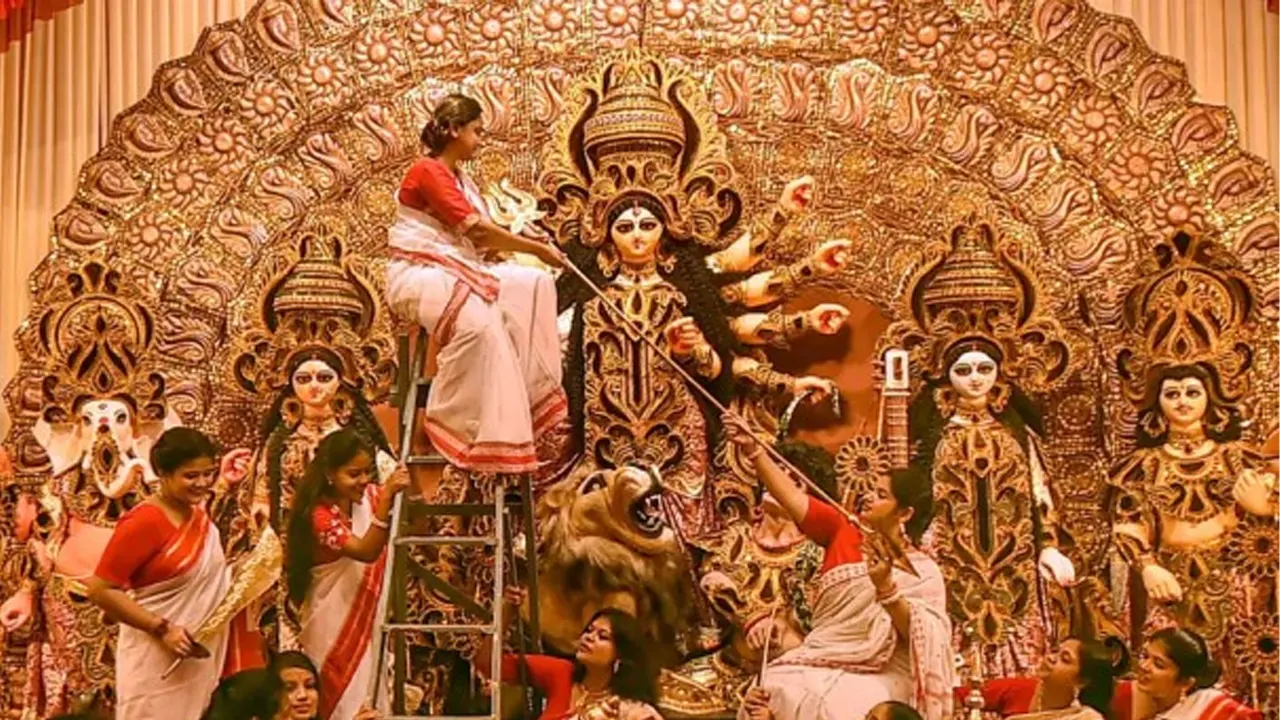
Darwin, October 20: Today is Maha Navami, the ninth day of Sharadiya Durga Puja. Members of the Hindu community will observe the day through religious…

Darwin, October 20: Protests and violence over the rising cost of living have erupted in Italy, one of Europe’s largest economies, following similar unrest in…

Darwin, October 20: US President Donald Trump has warned that protests and violence similar to those in France could spread across the United States if…

Darwin, October 20: Moscow has reaffirmed its full support for Tehran just hours after US President Donald Trump remarked that Russia was doing very little…

Darwin, October 19: Former Manchester City manager Pep Guardiola has urged the world not to forget the Palestinians in Gaza. In a video for the…