Lionel Messi Ends His Epic International Career with a Goal and Two Assists
Darwin, October 07: Lionel Messi’s final match in international football, if this indeed was his last, was just like the man himself—filled with goals, assists, and…



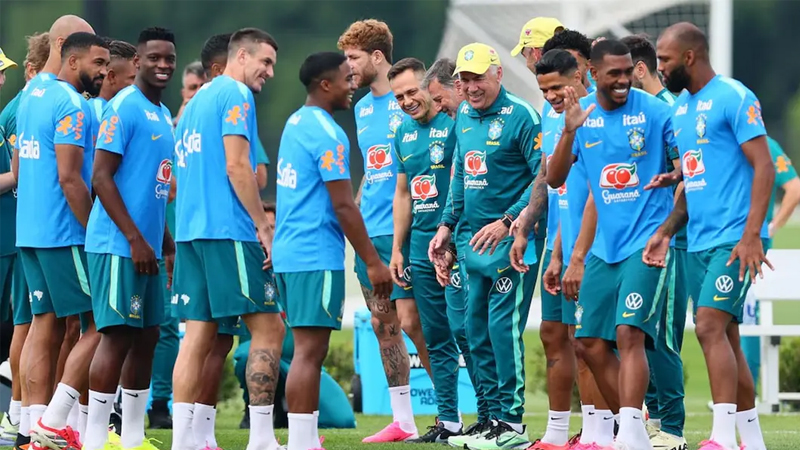
Darwin, 29 June : Five-time world champions Brazil have traditionally stood above most other teams in terms of pedigree and reputation. For the men in yellow, anything less than winning a major tournament has often been considered a disappointment. However, those glorious days have gradually become part of history. Brazil are now enduring a two-decade wait since their last FIFA World Cup triumph, while continental success has also become increasingly elusive. Once regarded as the “Wonderland of Football,” the Seleção are now searching for their lost glory.
Amid such circumstances, the Brazilian Football Confederation broke with tradition by appointing a foreign coach—a rare decision in the country’s football history. And not just any coach, but former Real Madrid manager Carlo Ancelotti, who was brought in with the hope of leading Brazil to their long-awaited sixth World Cup title.
Now, under Ancelotti, Brazil begin their knockout-stage campaign against Asian powerhouse Japan. The match represents not only an opportunity for revenge but also the biggest test yet of how much the Italian has transformed his team since taking charge.
Back in October 2025, Brazil suffered a shocking 3-2 defeat to Japan in an international friendly. Despite leading 2-0 in Tokyo, the Seleção conceded three goals in just 20 minutes. It was Japan’s first-ever victory over Brazil after 14 previous meetings.
That defeat perfectly illustrated the magnitude of the challenge Ancelotti inherited after leaving Real Madrid. He had only one year to rebuild a disorganized squad into genuine World Cup contenders. When he took over, Brazil were struggling, having worked under four different coaches and finishing fifth in the South American World Cup qualifiers—their worst qualifying campaign in history.
Before naming his final 26-man World Cup squad, Ancelotti had only five international windows to assess his players. During the last three, Brazil faced teams from Asia, Europe, and Africa to help the squad adapt to different styles of football.
The Asian tour began in impressive fashion with a 5-0 victory over South Korea in Seoul. Brazil also raced into a 2-0 lead within 30 minutes against Japan in Tokyo before collapsing in the second half and eventually losing 3-2.
Today’s match in Houston, however, will be played under completely different circumstances. Japan advanced to the knockout stage as runners-up in their group behind the Netherlands after drawing 1-1 with Sweden. Speaking after that match, Japan head coach Hajime Moriyasu said:
“They will probably be even more motivated because of what happened last time. We are going to face a Brazil side desperate to win. I am looking forward to the match.”
Japan will be without several key players who featured in last year’s victory, including captain Wataru Endo, wingers Kaoru Mitoma and Takefusa Kubo, as well as forward Takumi Minamino, who scored in that match.
Brazil, meanwhile, have undergone significant changes. None of the defenders who played in Tokyo remain in Ancelotti’s current World Cup squad. Although Brazil began their World Cup campaign with a 1-1 draw against Morocco, they have steadily improved and now enter the knockout stage on the back of two consecutive victories. Vinícius Júnior has scored four goals, while Neymar has returned to the national team after spending three years on the sidelines with injury.
Ahead of his first World Cup knockout match with Brazil, Carlo Ancelotti appeared relaxed but insisted that his team would not underestimate Japan.
“In knockout football, anything can happen. Extra time, penalties—we have prepared for every possibility. Matches like these require not only your legs but also your mind and your heart. Since it’s a one-off game, once you’re eliminated there is no way back. Fortunately, my players are intelligent. They know how to deal with this pressure.”
He added:
“The entire squad is fully focused and prepared for every possible situation. Whether the game goes to extra time or penalties, we are ready. This match is like a final for us.”
One of the biggest changes under Ancelotti has been Brazil’s tactical approach. Rather than sitting deep and defending inside their own half, Vinícius, Cunha, and their teammates now apply aggressive high pressure high up the pitch, forcing opponents into mistakes before quickly launching attacks.
The strategy has become one of Brazil’s most effective weapons. Eight of the team’s 33 goals under Ancelotti have come after winning possession near the opposition’s penalty area—meaning one in every four goals has resulted directly from high pressing.
That approach was clearly visible in Brazil’s recent 3-0 victory over Scotland, where the first two goals came after regaining possession in dangerous areas. Vinícius Júnior also scored another goal from a similar situation, although it was later ruled out by VAR.
Ancelotti has placed special emphasis on this tactical philosophy during training. Sessions regularly include drills in which one group tries to maintain possession while another attempts to win the ball back quickly before launching an immediate attack. Match analysis and tactical briefings also repeatedly highlight the importance of this strategy.
The rivalry between Brazil and Japan also carries a fascinating historical connection. Brazil has long served as a major inspiration for Japanese football, largely thanks to legendary Brazilian playmaker Zico.
After starring for Flamengo, Udinese, and Brazil, Zico came out of retirement to play for Sumitomo Metal (later Kashima Antlers) between 1991 and 1994, helping lay the foundation for professional football in Japan. He later coached the club and currently serves as its technical advisor.
From 2002 to 2006, Zico also managed the Japanese national team, leading them to the 2004 AFC Asian Cup title and qualification for the 2006 FIFA World Cup. Ironically, it was Brazil who ended Japan’s campaign in Germany with a commanding 4-1 victory in the group stage.
Darwin, October 07: Lionel Messi’s final match in international football, if this indeed was his last, was just like the man himself—filled with goals, assists, and…
Darwin, August 16 : Darwin witnessed a new dawn for Bangladesh cricket today. In a historic triumph on Australian soil, the Tigers defeated the hosts…

Sports Desk, August 12: The long-awaited wedding has finally taken place. Portuguese football star Cristiano Ronaldo has married his longtime partner, Georgina Rodriguez, after nearly…

Sports Desk: A resignation letter only a few lines long has come to symbolize the growing frustration across the football world. On Friday morning, Carlos…
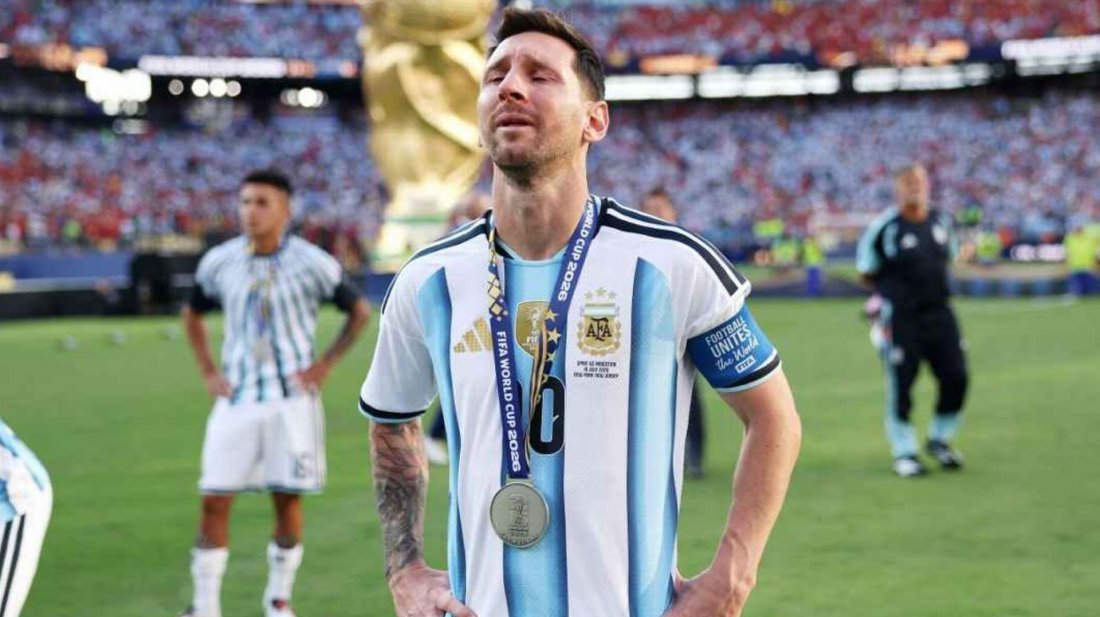
Sports Desk: Argentina’s dream of retaining the World Cup title has been shattered. A day after losing the final to Spain, captain Lionel Messi broke…

Sports Desk: France captain Kylian Mbappé made FIFA World Cup history by becoming the first player ever to win the Golden Boot twice after finishing…
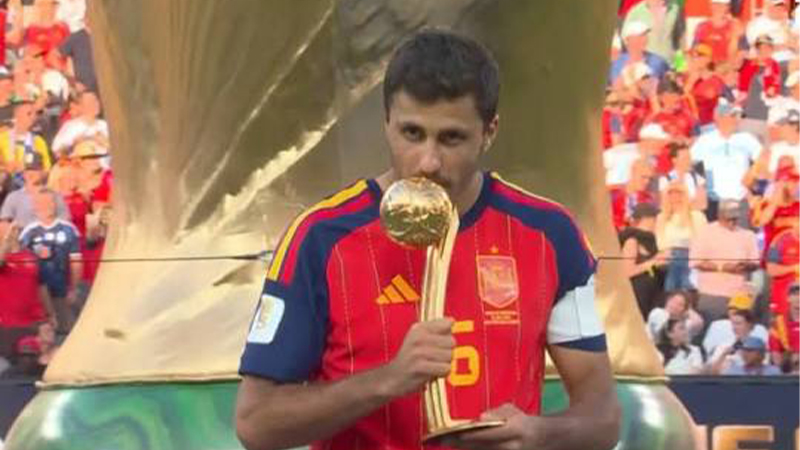
Sports Desk: Spain midfielder Rodri was named the winner of the Golden Ball as the best player of the 2026 FIFA World Cup after inspiring…
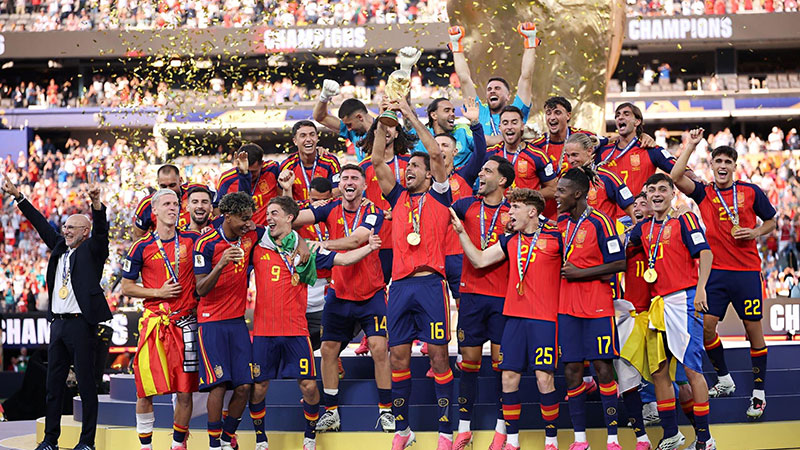
Sports Desk: Spain were crowned FIFA World Cup champions for the second time in their history after defeating Argentina 1-0 in extra time in the…