Oil Prices Rise in Global Markets on Fears of Middle East Supply Disruptions
Darwin, October 21: Oil prices rose in global markets on Wednesday as traders grew concerned about potential disruptions to oil supplies in the Middle East,…



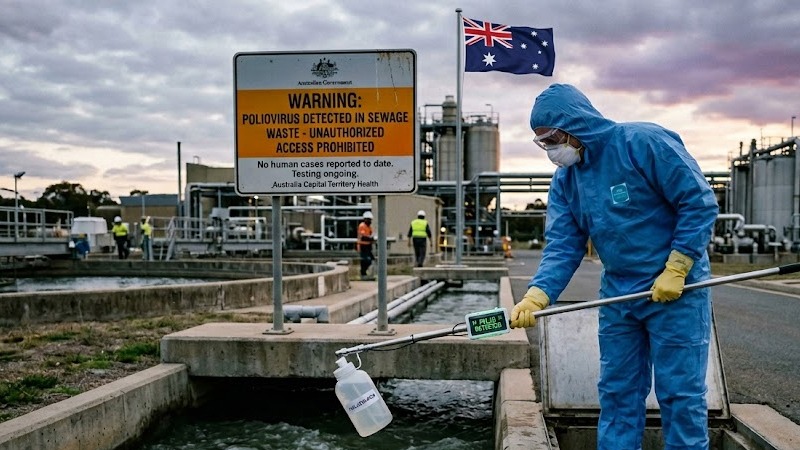
Darwin, 13 May : Health authorities in Western Australia have confirmed the detection of poliovirus in wastewater in Perth, marking the first such finding in more than 50 years in the country.
The positive sample was identified in mid-April 2026 at the Subiaco wastewater treatment plant in central Perth, a busy urban area home to numerous hotels, businesses, and restaurants. According to Australia’s national broadcaster ABC, this is the first detection of poliovirus in Australia in over half a century.
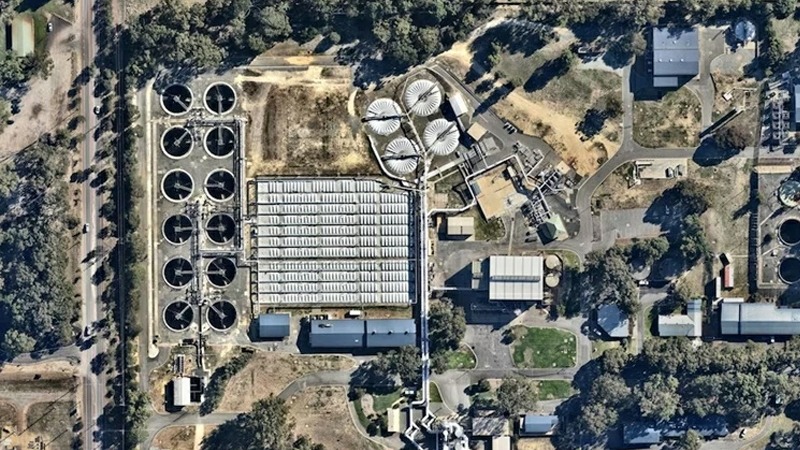
Wastewater Treatment Plant In The Heart of Perth.
The strain has been identified as a vaccine-derived poliovirus type 2, a variant that has previously been detected in parts of Africa, Europe, and Papua New Guinea in recent years. Health officials believe the virus likely entered the sewage system through an international traveler rather than indicating local community transmission.
Western Australia’s Director of Health, Dr. Clare Huppatz, described the finding as “significant” but emphasized that it does not currently pose a serious public health threat. She pointed to the state’s high childhood vaccination coverage—approximately 92%—along with modern sanitation systems and strong disease surveillance as key protective factors.
The Australian Medical Association’s Western Australian president, Dr. Kyle Hoth, also confirmed that there is no evidence of any related illness or outbreak at this stage, urging the public not to panic. The World Health Organization is reportedly monitoring the situation to determine whether this represents an isolated incident.
Health authorities further noted that many countries use oral polio vaccines containing weakened live virus, which in rare cases can mutate into vaccine-derived strains, particularly in under-immunized populations. Australia, however, currently uses an inactivated polio vaccine administered by injection, which does not contain live virus.
Polio infection is often asymptomatic or causes only mild illness, but in rare cases—about 1%—it can lead to permanent paralysis or death.
Australia has been officially polio-free since 2000, with the last recorded outbreaks occurring in 1956 and 1960, and no documented community transmission since 1972. Authorities plan to intensify wastewater monitoring as a precaution and continue emphasizing the importance of vaccination and booster doses, particularly for unvaccinated individuals and healthcare workers.

Darwin, October 21: Oil prices rose in global markets on Wednesday as traders grew concerned about potential disruptions to oil supplies in the Middle East,…

Darwin, October 21: Iran is prolonging negotiations with Washington in an attempt to politically weaken President Donald Trump ahead of the US midterm elections, according…

Darwin, October 21: Today is the auspicious occasion of Bijaya Dashami. The five-day Sharadiya Durga Puja, the biggest religious festival of the Hindu community, officially…

Darwin, October 20: Today is Maha Navami, the ninth day of Sharadiya Durga Puja. Members of the Hindu community will observe the day through religious…

Darwin, October 20: Protests and violence over the rising cost of living have erupted in Italy, one of Europe’s largest economies, following similar unrest in…

Darwin, October 20: US President Donald Trump has warned that protests and violence similar to those in France could spread across the United States if…

Darwin, October 20: Moscow has reaffirmed its full support for Tehran just hours after US President Donald Trump remarked that Russia was doing very little…

Darwin, October 19: Former Manchester City manager Pep Guardiola has urged the world not to forget the Palestinians in Gaza. In a video for the…