Oil Prices Rise in Global Markets on Fears of Middle East Supply Disruptions
Darwin, October 21: Oil prices rose in global markets on Wednesday as traders grew concerned about potential disruptions to oil supplies in the Middle East,…



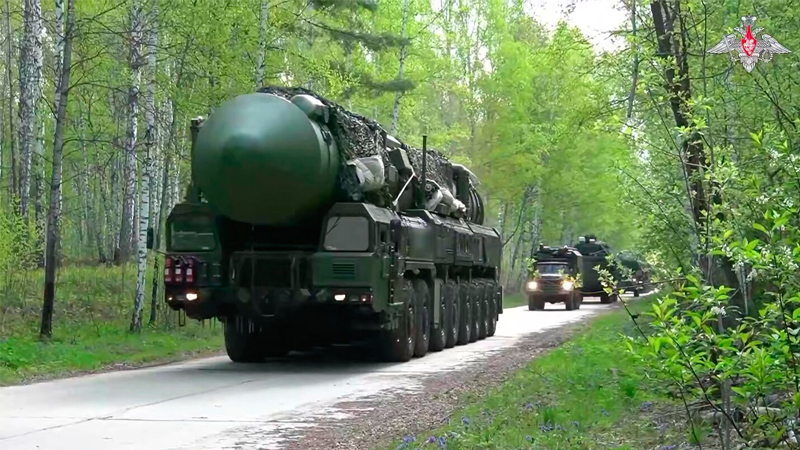
Darwin, 22 May: Amid growing tensions with NATO members over the Ukraine war and increased drone activity in the Baltic region, Russia has transferred nuclear munitions to military facilities in Belarus while simultaneously showcasing the capabilities of its strategic nuclear forces. The move has raised concerns as Moscow flexes its nuclear muscle during escalating tensions in the Baltic region, according to a report by Reuters on Thursday.
Russia is currently conducting one of its largest nuclear exercises in recent years, involving around 64,000 military personnel. The drills are aimed at testing and enhancing the readiness and operational use of the country’s nuclear forces in the event of aggression.
During the exercises, Russia displayed its Borei-class nuclear-powered ballistic missile submarines, Il-38 anti-submarine aircraft, MiG-31 fighter jets armed with Kinzhal hypersonic missiles, and RS-24 Yars intercontinental ballistic missiles.
Russia’s Ministry of Defense stated that “as part of the nuclear forces exercise, nuclear munitions have been delivered to field-level storage facilities of missile brigades deployed in the Republic of Belarus.”
The joint drills involve Russia’s Strategic Missile Forces, the Northern and Pacific Fleets, long-range aviation units, and military formations from the Leningrad and Central military districts.
Moscow also said that a Belarusian missile unit is training to receive and load special munitions for its Iskander-M tactical missile systems.
Such Russian nuclear exercises generally use mock warheads rather than live nuclear weapons. Videos released by the Defense Ministry showed a tarpaulin-covered military truck moving with minimal visible security, while other footage displayed nuclear submarines, aircraft, and warships participating in the drills.
The three-day exercise, which began Tuesday across Russia and Belarus, comes at a time when Moscow claims it is engaged in an existential struggle with the West over the Ukraine conflict.
Throughout the war, Russian President Vladimir Putin has repeatedly reminded Western countries of Russia’s nuclear capabilities as a warning not to cross Moscow’s “red lines” in supporting Kyiv. However, Ukraine and several Western leaders have dismissed such rhetoric as irresponsible “nuclear saber-rattling.”
Moscow has accused Baltic nations of allowing Ukraine to use their airspace to launch attacks on northern Russia. NATO has firmly denied the allegation.
The Baltic states, which are strong supporters of Ukraine, have instead accused Russia of deliberately redirecting Ukrainian drones toward Baltic airspace after altering their original flight paths inside Russia.
Meanwhile, the Kremlin on Wednesday condemned remarks made by Lithuania’s top diplomat as “madness.” Lithuanian Foreign Minister Kestutis Budrys had said NATO should make it clear to Moscow that it is capable of striking Russia’s exclave of Kaliningrad.
The Kaliningrad region lies on the Baltic coast between NATO members Lithuania and Poland. Home to nearly one million people, the heavily militarized territory serves as the headquarters of Russia’s Baltic Fleet.
Source: Reuters

Darwin, October 21: Oil prices rose in global markets on Wednesday as traders grew concerned about potential disruptions to oil supplies in the Middle East,…
Darwin, October 21: Iran is prolonging negotiations with Washington in an attempt to politically weaken President Donald Trump ahead of the US midterm elections, according…

Darwin, October 21: Today is the auspicious occasion of Bijaya Dashami. The five-day Sharadiya Durga Puja, the biggest religious festival of the Hindu community, officially…

Darwin, October 20: Today is Maha Navami, the ninth day of Sharadiya Durga Puja. Members of the Hindu community will observe the day through religious…

Darwin, October 20: Protests and violence over the rising cost of living have erupted in Italy, one of Europe’s largest economies, following similar unrest in…

Darwin, October 20: US President Donald Trump has warned that protests and violence similar to those in France could spread across the United States if…
Darwin, October 20: Moscow has reaffirmed its full support for Tehran just hours after US President Donald Trump remarked that Russia was doing very little…

Darwin, October 19: Former Manchester City manager Pep Guardiola has urged the world not to forget the Palestinians in Gaza. In a video for the…