How criminals secretly use your home Wi-Fi for cybercrime
Darwin, 15 May: You may think your home Wi-Fi connection is completely under your control and fully secure. But what if, without your knowledge, your…



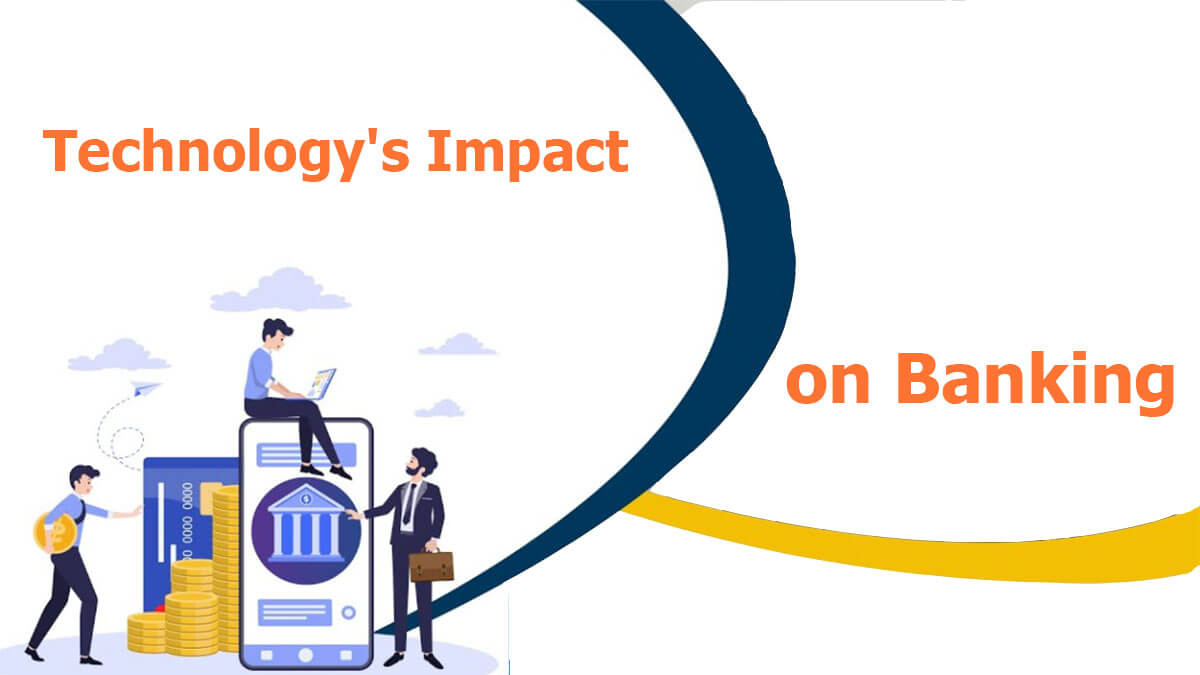
Nothing sits still in the world of banking and business. The most significant shift is in the scope of the banking industry. Banking in its conventional form is concerned with the acceptance of client deposits, the lending of excess deposits to appropriate customers who seek to borrow, and the conveyance of cash.
Aside from conventional business, banks today provide a diverse variety of services to meet the financial and non-financial requirements of all sorts of clients, from the smallest account holder to the biggest corporation, and in certain circumstances, non-customers. The services provided vary for every bank, mostly dependent on the kind and size of the bank.
The Reserve Bank of India (RBI), as a central bank in a developing nation, has made the development of the banking and financial markets one of its primary goals. From the 1950s through the 1970s, “institutional development” was the characteristic of this strategy.
The Reserve Bank concentrated on “improvements in the productivity” of the banking industry in the 1980s. Being persuaded that technology is the key to increasing productivity, the Reserve Bank of India launched several efforts to promote the use of technology by Indian banks.
Since the early 1980s, the Reserve Bank has created committees and working groups to debate and suggest the proper use of technology by banks given the conditions and necessity. The following are the committees:
The Reserve Bank established appropriate guidelines for banks based on the suggestions of these committees and working groups. In the 1980s, the use of technology for bank back office activities dominated the landscape. It took the form of transaction accounting and MIS collecting. It took the form of clearing and settlement employing MICR technology in interbank payment systems.
Two key Reserve Bank decisions in the 1990s transformed the landscape forever: a) the requirement that new private sector banks use technology in full measure as a prerequisite of licensing, and b) the formation of an exclusive research institute for banking technology.
As new private sector banks emerged on the market as technologically aware banks, offering various novel solutions at the front office for consumers based on technology, the demonstration effect impacted the banks’ reset.
Banks in India pioneered multichannel options such as machine-based (ATMs and PC-Banking), card-based (credit/Debit/Smart cards), and communication-based (Tele-Banking and Internet Banking). The IDRBT was essential in building a safe and secure, cutting-edge communication backbone in the form of the Indian Financial NETwork (INFINITE) as a restricted user group solely for India’s banking and financial industry.
Several developments occurred in the Indian service sector as a result of liberalization. Probably, the Indian banking sector learned a valuable lesson. Before financial deregulation, all we could do in a bank was deposit and take money. The service was horrible, but all we could do was smile and suffer it. The tables have turned since liberalization. There is a consumer market there.
Every aspect of human effort and action is being transformed by technology. The introduction of information technology into the stock market is one of them. Internet banking is transforming the banking business and has a significant impact on financial relationships. The internet is more significant in retail financial services than it is in many other businesses.
Retail banking in India is developing with time, with numerous products that may be tailored further. The most active sector is home loans, which is seeing fierce competition. Home loans are quite popular since they allow you to fulfill your most treasured goal.
Interest rates are falling, and the market has seen several creative goods. Personal loans, school loans, and automobile loans are examples of retail banking products. Almost every bank and the financial institution provides these products, but it is important to grasp the many components of these loan products that are not included in their colorful commercials.
Plastic money was a welcome addition to the Indian market. Allowing you to avoid carrying too much cash. To make plastic money more appealing, various additional functions have been implemented. It operates on the principle of buy now, pays later. There are several truths about plastic money credit card is synonymous with all.
A credit card is a financial instrument that may be used several times to borrow money or purchase goods and services on credit. These are often issued by banks, retail outlets, and other enterprises. They are classified into three types according to their credit limit: classic, gold, and silver.
Charged cards have virtually the same characteristics as credit cards. The primary distinction is that you cannot delay payments charged often have greater credit limits or, in some cases, no credit limitations. Debit cards-this card may be described as an accountholder’s mobile ATM; to get one, you must have an account with any bank that offers credit cards.
The banking industry in India has seen several changes throughout the years. Most banks have started to adopt an innovative approach to banking to create more value for clients and, as a result, the banks. The following are some of the key developments in the banking industry.
Taking advantage of the brisk market for mobile phones and cellular services, numerous banks have launched mobile banking, allowing users to conduct financial transactions using their mobile phones. For example, HDFC has launched SMS services. Mobile banking has been designed specifically for consumers who travel often and want to keep track of their financial transactions.
NABARD’s KISAN CREDIT CARD (KCC) SCHMME was one of the pioneering rural banking schemes established in fiscal 1998-1999. The KCC mode makes it easy for farmers to acquire critical agricultural supplies. In addition to traditional agricultural loans, banks will provide a variety of additional products tailored to the requirements of rural residents. Private sector banks saw the possibilities in the rural market as well. ICICI Bank started establishing internet kiosks and ATM machines in rural Tamilnadu in the early 2000s.
With a large number of Indians having relatives overseas, banks have started to provide services that enable expatriate Indians to send money to relatives in India more efficiently, which is one of the key advances in money transfer.
E-banking is gaining popularity among retail banking consumers. E-banking reduces costs by offering cheaper and quicker alternatives to distribute goods to clients. It also enables the consumer to choose the time, location, and mode by which he wants to access the services and gives affects the bank’s multichannel service delivery. This E-Banking is powered by a “customer-pull and bank-push” engine.

Darwin, 15 May: You may think your home Wi-Fi connection is completely under your control and fully secure. But what if, without your knowledge, your…

Darwin, 27 April: The shooting incident at the Hilton Hotel in Washington, D.C., on Saturday night—during the White House Correspondents’ Association annual dinner attended by…

Darwin, 21 April : Major changes are taking place in the leadership of Apple, one of the world’s leading technology companies. After successfully leading the…
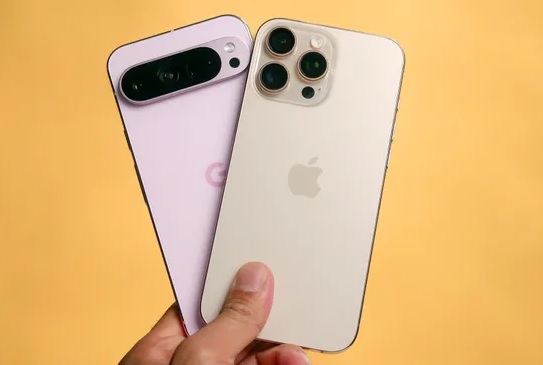
Darwin, 19 January: AnTuTu Benchmark is one of the most widely used tools in the tech world for comparing the performance of iPhones and Android…

At Australia’s only publicly-run gaming disorder clinic in Perth, patients like 15-year-old Sadmir Perviz are replacing 10 hours of online gaming with board games. The clinic treats patients suffering from Gaming Disorder, a condition formally recognised by the World Health Organization (WHO) that psychiatrist Dr. Daniela Vecchio likens to substance abuse. The clinic has treated over 300 patients with a range of comorbidities.

US investor Frank McCourt confirmed he is ready to purchase TikTok’s US operations and replace its entire Chinese technology stack, including the controversial recommendation algorithm, with his own “Project Liberty” infrastructure. The move aims to resolve the national security concerns that led to the 2024 law requiring a sale, which President Trump is expected to delay for a fifth time this week.

A new £1m scanner at Royal Brompton Hospital using Cadmium Zinc Telluride (CZT), made by British firm Kromek, has cut lengthy lung scans from 45 to 15 minutes. The “amazing feat of engineering” allows for highly detailed 3D images while reducing the radioactive dose by 30%, ushering in a “revolution” in medical imaging.

Nvidia’s CEO claimed “sales are off the charts” after profits soared >60%, but the stock fell 1% post-report. Market concern persists over Big Tech’s massive AI infrastructure spending and the risk of a bubble burst