Legendary Indian Singer Asha Bhosle Passes Away
Darwin, 12 April : Legendary Indian singer Asha Bhosle has passed away. She was 92 years old at the time of her death. Indian media…



Darwin, 24 October-
Nearly three decades after the death of popular film actor Salman Shah, a dramatic revelation has once again brought the 1996 case into the spotlight. According to court sources, accused Rizvi Ahmed — also known as Forhad — claimed in a 1997 judicial confession that the actor’s killing was a planned murder for which a payment of Tk 1.2 million was agreed upon.
From ‘suicide’ to ‘murder’
Salman Shah, born Chowdhury Mohammad Shahriar Emon, was found dead at his rented apartment in Eskaton Garden, Dhaka, on the morning of September 6, 1996. Police initially registered the incident as an unnatural death (UD case), and multiple investigations concluded it was a suicide.
However, Salman’s mother, Neela Chowdhury, challenged those findings. In December 2021, she filed a revision petition rejecting the Police Bureau of Investigation’s (PBI) report. After almost four years, on October 20 this year, a Dhaka court granted the revision and ordered that the case be treated as a murder instead of suicide.
Rizvi’s explosive confession resurfaces
Following the court’s order, a long-forgotten confession given by Rizvi in July 1997 has resurfaced. In his statement under Section 164 of the Criminal Procedure Code, Rizvi admitted involvement and detailed the alleged conspiracy.

Salman Shah, Shahrukh Khan and there wife.
He claimed that Samira’s mother, Don, had promised Tk 1.2 million for the murder — Tk 600,000 before and Tk 600,000 after the killing. “I handed over the first Tk 600,000 before the murder,” Rizvi said in his confession.
He further alleged that Don and another accused, David, planned to kidnap Salman’s brother, Biltu, to pressure the family into withdrawing the case. Rizvi was arrested in July 1997 while attempting to carry out the abduction.
The night of the murder
Rizvi’s confession paints a chilling picture of the night before Salman’s death. On the evening of September 5, 1996, he met Don, David, Faruk, and Javed at a bar near Gulistan, where two others, Sattar and Saju, later joined them.
According to him, Tk 200,000 was initially handed over, leading to a dispute among the conspirators. Later, another Tk 400,000 arrived to complete the first installment. The total contract was allegedly financed by Samira’s mother and film producer Aziz Mohammad Bhai, both accused of orchestrating the crime.
Rizvi described how, in the early hours before dawn, the group went to Salman’s Eskaton apartment. Familiar with the security guard, they entered without resistance. Inside, they found Salman asleep.
He alleged that Samira held a chloroform-soaked cloth over Salman’s nose, while Don sat on his chest. When Salman resisted, Aziz Mohammad Bhai allegedly struck him on the neck with a ceiling fan blade before instructing Don to inject him with a syringe. The group then staged the scene to look like a suicide, tying a rope to the ceiling fan and leaving traces of oil on the body to mimic massage marks.
Aftermath and attempted abduction
After fleeing through the back gate, Rizvi claimed he escaped to Faridpur. A year later, Don and David approached him again, planning to kidnap Salman’s younger brother, Biltu, to force the family to drop the case. Disguised as filmmaker Alamgir Kabir’s son Lenin, Rizvi visited Salman’s home — but his behavior raised suspicion, and police arrested him.
Court’s latest ruling
Lawyer Abid Hasan, representing the plaintiff, said, “This case was filed 29 years ago, but the authorities delayed the investigation for 25 years, effectively destroying vital evidence. After reviewing the confession and previous reports, the court has now recognized the incident as a murder.”

Salman Shah, the Most popular hero of Bangla film industry.
He added that the court found negligence by the police and PBI, noting specific lapses in their handling of the case. “The confession clearly mentions who was involved. The court has instructed that all accused be brought under trial,” he said.
With the court’s ruling, one of Bangladesh’s most controversial celebrity deaths has been officially recognized as a murder case, reigniting public interest and calls for justice nearly three decades later.
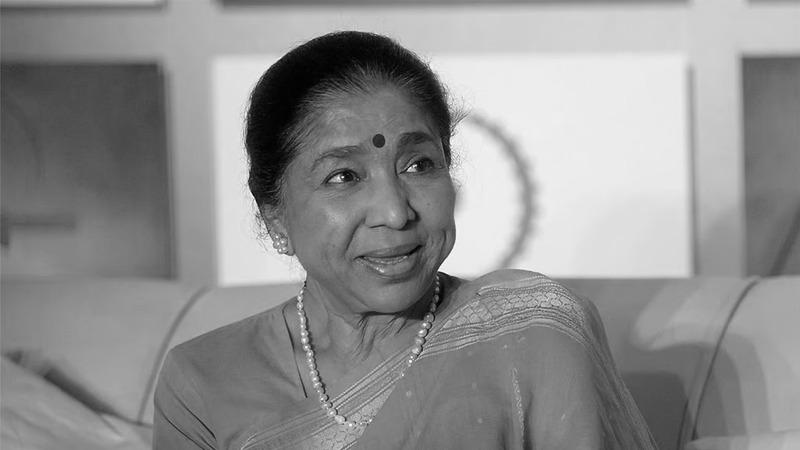
Darwin, 12 April : Legendary Indian singer Asha Bhosle has passed away. She was 92 years old at the time of her death. Indian media…

Darwin, 02 April : Bangladeshi actor Arifin Shuvo is gaining widespread recognition beyond national borders, drawing strong positive attention from major Indian media outlets for…
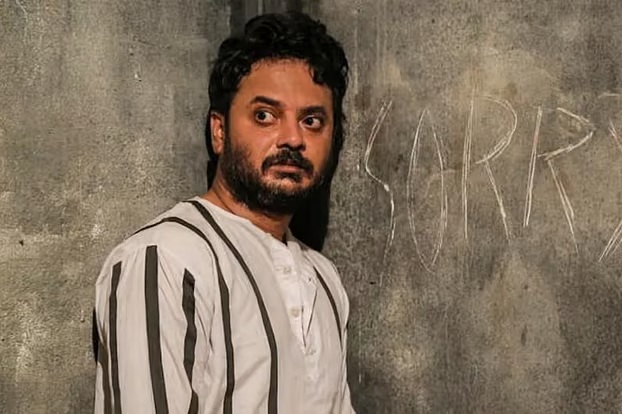
Darwin, 30 March: The incident occurred on Sunday at Talsari Sea Beach, near Digha in West Bengal, during the shooting of a television serial. He…

Darwin, 28 March: The world’s most prestigious film awards, the Oscars, will no longer be held in Hollywood starting in 2029, organizers have announced. The…

Darwin, 24 February: Rumors are circulating in Bollywood that Kriti Sanon is set to tie the knot soon with London-based businessman Kabir Bahia. Before the…

Darwin, 24 February: Putting an end to long-standing speculation, popular South Indian stars Rashmika Mandanna and Vijay Deverakonda have officially confirmed their wedding. On Sunday…

Darwin, 22 February: Entertainment Desk: Britney Spears, who captivated the world at a young age with her music, dance, and charisma, is once again at…

Darwin, 03 February: Bollywood actress Sonam Kapoor is set to become a mother for the second time. She recently attended an event in Mumbai, where…