How criminals secretly use your home Wi-Fi for cybercrime
Darwin, 15 May: You may think your home Wi-Fi connection is completely under your control and fully secure. But what if, without your knowledge, your…



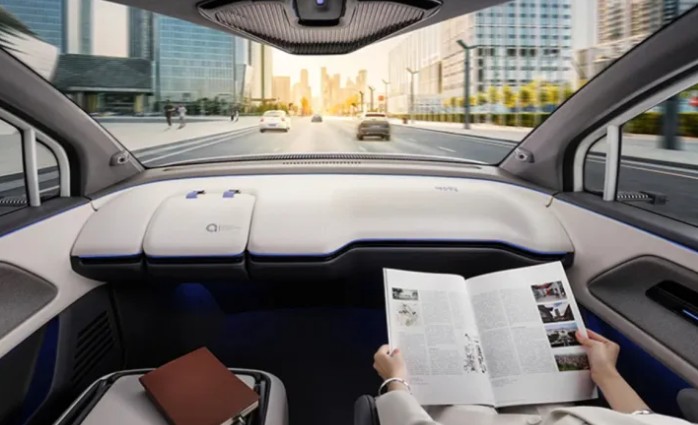
As the United States becomes increasingly restrictive toward Chinese technology companies, China’s driverless car industry is turning its eyes toward Europe. The move is reshaping global competition in autonomous vehicles and raising concerns among European automakers.
Chinese firms developing autonomous driving technology have long faced obstacles in the U.S. — from regulatory pushback to data-sharing restrictions. Shut out of this lucrative market, they are now betting big on Europe, which is seen as more open to testing and collaboration.
Chinese companies are not only opening offices across Europe but also signing data-sharing agreements and conducting on-road trials of their autonomous vehicle systems. These steps signal a determined push to integrate with Europe’s transportation and automotive ecosystem.
This expansion, however, has made local companies uneasy. Many fear that once Chinese driverless technology enters the European market, competition will intensify, putting pressure on homegrown manufacturers and tech suppliers.
China’s domestic car market is booming, and over half of all new models now feature some form of driverless technology — with several making it a core selling point. The government continues to encourage domestic firms to lead the world in autonomous vehicle innovation, offering policy support to accelerate research, testing, and deployment.
Dong Li, Chief Technology Officer of Chinese automaker QCraft, described Europe as central to their global ambitions:
“We see Europe as the main hub of our global strategy. The environment here is much more open than in the U.S.”
QCraft has already announced plans to open a new office in Germany and is collaborating with several European carmakers. The company expects to begin selling its driverless systems in the region within the next two years.
For Europe, the arrival of Chinese autonomous driving firms represents both an opportunity and a challenge. On one hand, collaboration could accelerate innovation and make self-driving technology mainstream sooner. On the other, European automakers may find themselves fighting to maintain market share in an industry that could redefine the future of transport.
What’s clear is that China’s driverless car industry has no intention of slowing down — and Europe is fast becoming its most important battleground.

Darwin, 15 May: You may think your home Wi-Fi connection is completely under your control and fully secure. But what if, without your knowledge, your…

Darwin, 27 April: The shooting incident at the Hilton Hotel in Washington, D.C., on Saturday night—during the White House Correspondents’ Association annual dinner attended by…

Darwin, 21 April : Major changes are taking place in the leadership of Apple, one of the world’s leading technology companies. After successfully leading the…
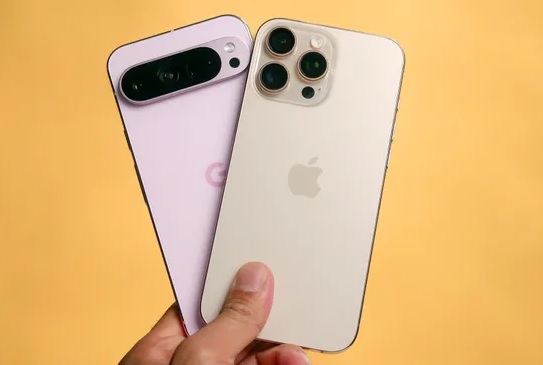
Darwin, 19 January: AnTuTu Benchmark is one of the most widely used tools in the tech world for comparing the performance of iPhones and Android…

At Australia’s only publicly-run gaming disorder clinic in Perth, patients like 15-year-old Sadmir Perviz are replacing 10 hours of online gaming with board games. The clinic treats patients suffering from Gaming Disorder, a condition formally recognised by the World Health Organization (WHO) that psychiatrist Dr. Daniela Vecchio likens to substance abuse. The clinic has treated over 300 patients with a range of comorbidities.

US investor Frank McCourt confirmed he is ready to purchase TikTok’s US operations and replace its entire Chinese technology stack, including the controversial recommendation algorithm, with his own “Project Liberty” infrastructure. The move aims to resolve the national security concerns that led to the 2024 law requiring a sale, which President Trump is expected to delay for a fifth time this week.

A new £1m scanner at Royal Brompton Hospital using Cadmium Zinc Telluride (CZT), made by British firm Kromek, has cut lengthy lung scans from 45 to 15 minutes. The “amazing feat of engineering” allows for highly detailed 3D images while reducing the radioactive dose by 30%, ushering in a “revolution” in medical imaging.

Nvidia’s CEO claimed “sales are off the charts” after profits soared >60%, but the stock fell 1% post-report. Market concern persists over Big Tech’s massive AI infrastructure spending and the risk of a bubble burst