Will humans ever be able to talk to animals?
Darwin, 15 May: We often wonder—what if we could talk to our pets? Imagine being able to understand what your dog or cat is thinking,…



ISTANBUL, TÜRKIYE — In the sprawling, bustling metropolis of Istanbul—a city of over 15 million people—a softer, quieter narrative is being written daily by an estimated quarter of a million stray cats. These felines, earning the city the affectionate nickname “Catstanbul,” are not merely strays but are considered a unique hybrid of pets and community residents, taken care of by local neighborhoods in a tradition that spans centuries.
“Istanbul cats are, on the whole, neither pets nor strays,” explains Marcel Heijnen, photographer and author of City Cats of Istanbul, noting a reverence he has not witnessed elsewhere.
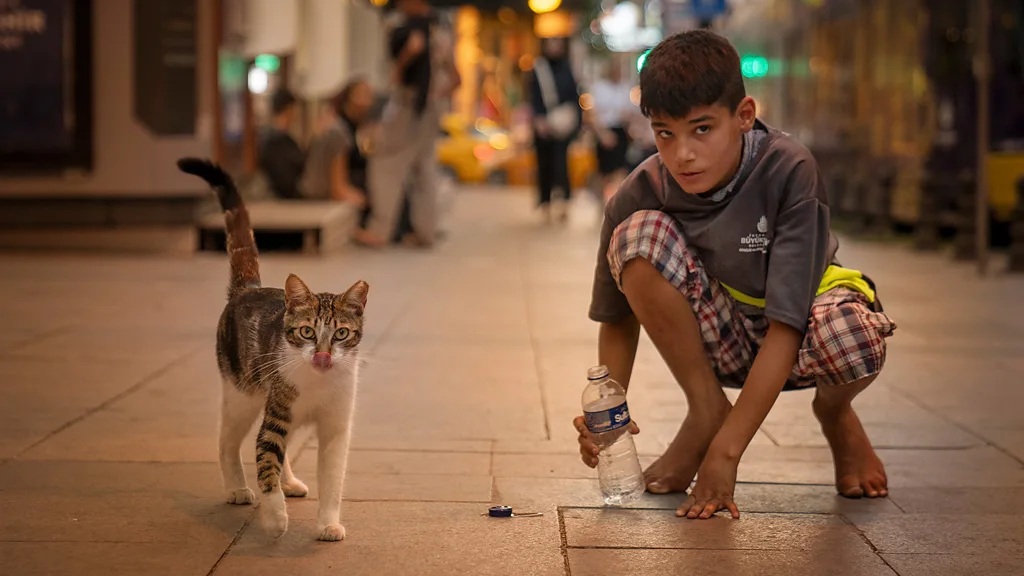
The city’s nickname, ‘Catstanbul’, is widely used by feline fanciers around the world
The deep devotion to these animals traces back to Istanbul’s history as the heart of the Ottoman Empire. The relationship began with practicality, as cats protected stored food, valuable manuscripts, and sea-faring merchant ships from vermin.
Crucially, local foundations during the Ottoman period ensured stray animals were cared for. This led to the creation of a full-time profession: mancacı—literally, a “cat sitter”—tasked with ensuring the city’s street cats were fed, a role that cemented the community’s responsibility for the animals.
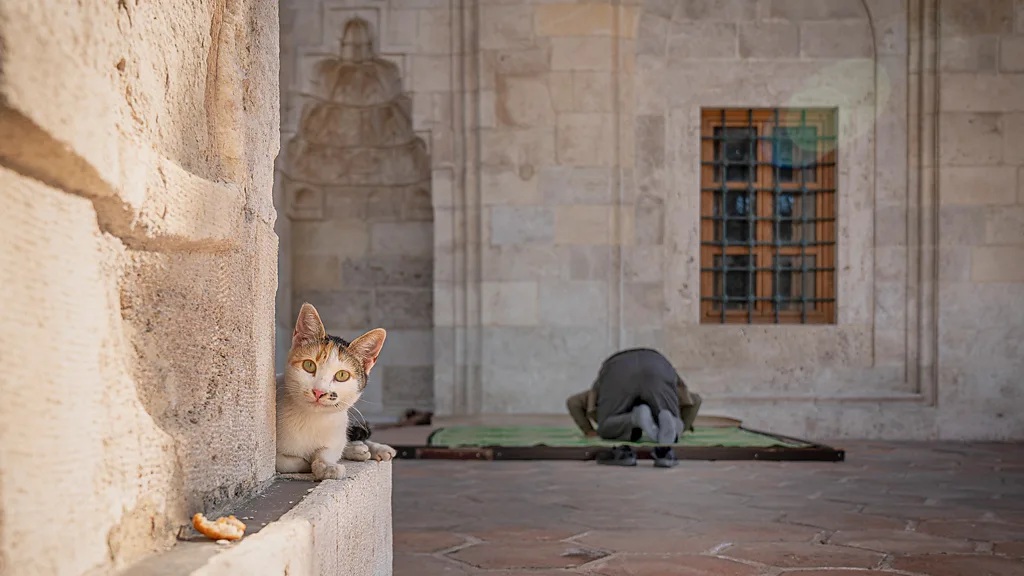
Istanbul is home to an estimated 250,000 stray cats, who wander freely through mosques, markets and neighbourhood courtyards
Today, that ancient tradition is upheld by a modern, community-backed infrastructure. Fatih Dağlı, co-founder of the Cat Museum Istanbul, highlights the sophisticated care system:
Each municipality operates a veterinary department that provides free neutering services for street cats. Private clinics often offer discounted services, with residents pooling resources to cover vet bills.
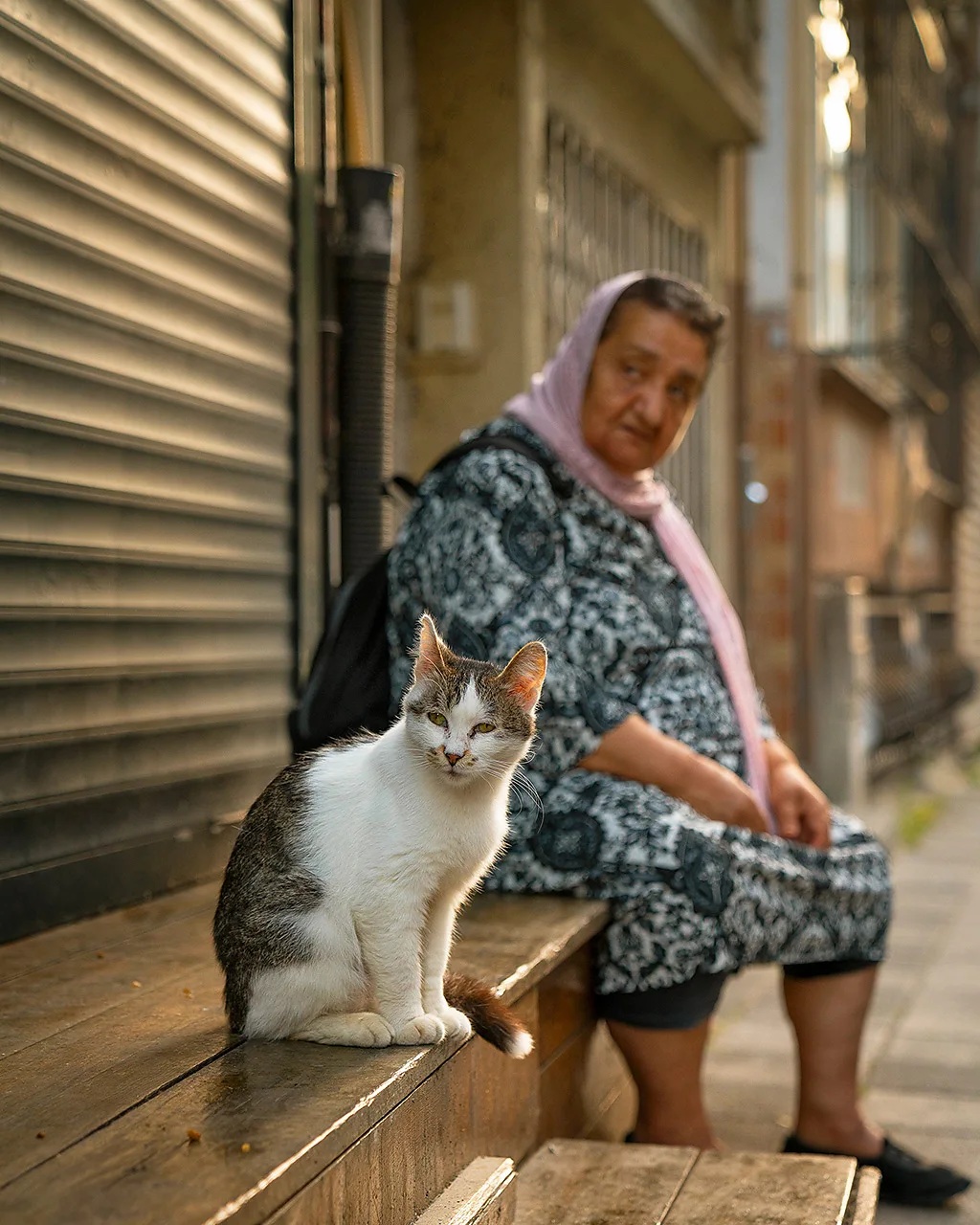
Locals happily coexist with the cats, leaving out food and water and treating them as part of the community
Shopkeepers regularly offer scraps, and A-frame wooden “cat houses” are common sights in hillside neighbourhoods. Food and water bowls wait outside markets and metro stations, maintained by locals acting like “street guardians.”
The cats, therefore, live what Heijnen calls a surprisingly comfortable life, seen often lounging in mosques, markets, and tourist hubs like Sultanahmet Square—home to the famous tabby, Sulo.
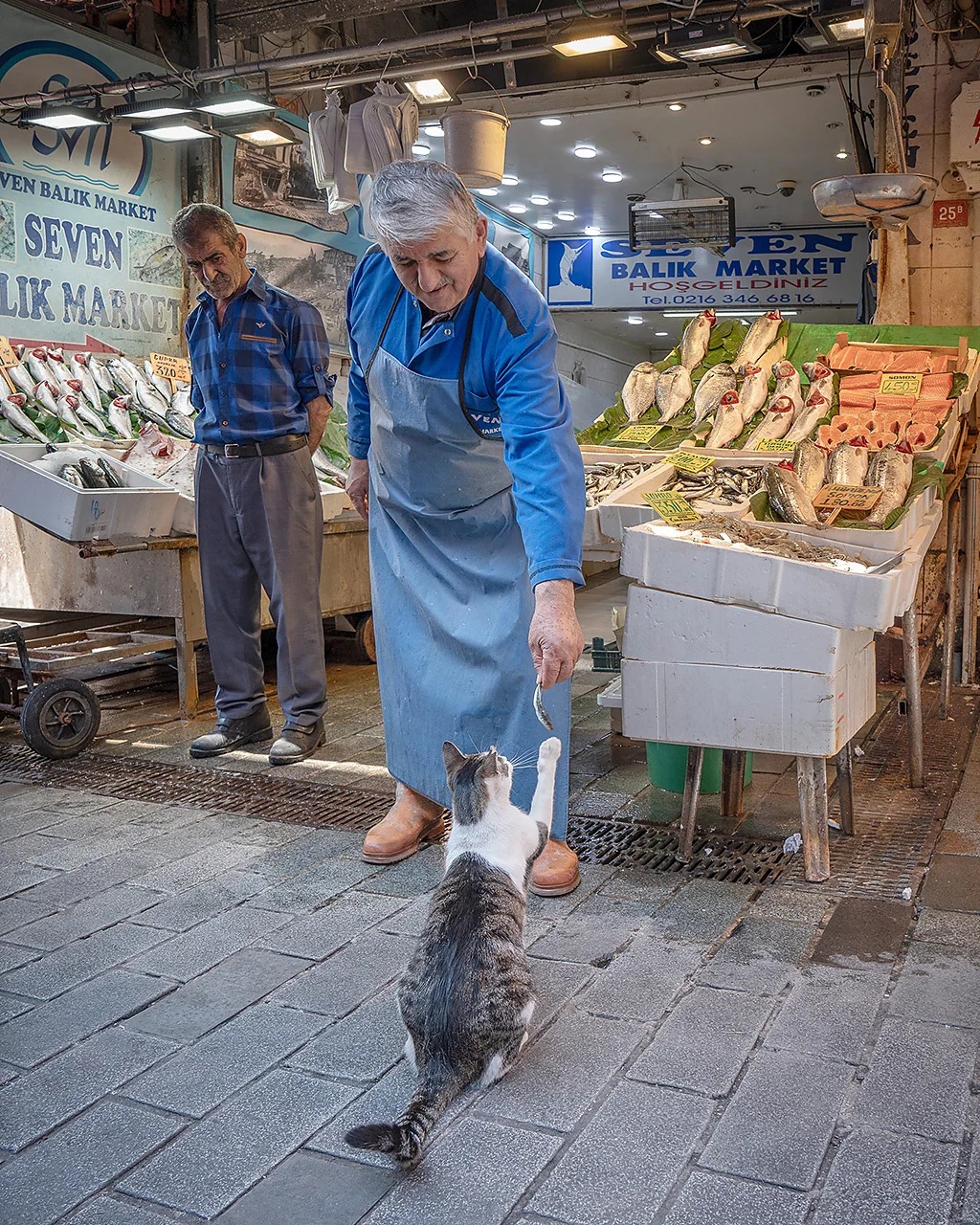
Feeding strays is a long-standing tradition in Istanbul, and many shopkeepers regularly offer scraps to neighbourhood cats
For many visitors, the cats serve as unofficial tourist ambassadors. They appear everywhere, from wooden benches near the Galata Tower to seawalls along the Bosphorus, offering surprising moments of calm amid the city’s chaotic bustle.
As Heijnen notes, when an Istanbul cat chooses your lap for a nap, the hard, noisy metropolis transforms into a “softer, more pleasant attack on the senses,” a testament to what is possible when humans and animals peacefully share their space and resources.
Darwin, 15 May: We often wonder—what if we could talk to our pets? Imagine being able to understand what your dog or cat is thinking,…

Darwin, 08 March : Today, March 8, 2026, marks International Women’s Day. This year the day is being observed around the world, including in Australia,…

Darwin, 14 February: Valentine’s Day, celebrated every year on February 14, is a beautiful occasion dedicated to love, affection, and meaningful relationships. Across the globe,…

A single ticket sold in Arkansas has won the $1.817 billion Powerball jackpot. Find out the winning numbers for the second-largest lottery prize in US history.

Forget the simple “real or plastic” carbon debate: scientists reveal that Christmas tree plantations play a vital role in biodiversity and sustainable land use. These young forests provide refuge for declining farmland birds (like yellowhammers) and support local economies, fulfilling an important ecological niche, making a real tree often the greener, more nuanced choice.

Darwin, NT — Severe Tropical Cyclone Fina has intensified to a Category 3 system, bringing destructive winds exceeding 200–205km/h as it tracks dangerously close to…

Darwin, 19 November — Tropical Cyclone Fina is rapidly approaching the Australian coastline, prompting authorities to urge residents in Darwin to remain on high alert….

Darwin, 17 November- Hasina Sentenced to Death for Crimes Against Humanity The International Crimes Tribunal has sentenced ousted Prime Minister Sheikh Hasina to death for…