Will humans ever be able to talk to animals?
Darwin, 15 May: We often wonder—what if we could talk to our pets? Imagine being able to understand what your dog or cat is thinking,…



GLOBAL — The beloved tradition of decorating a Christmas tree is undergoing an environmental re-evaluation. Scientists say the conversation around choosing a “green” tree must move beyond the basic carbon footprint of real versus plastic and focus on the nuanced role of tree farms in sustainable land use and biodiversity.
While the tradition, popularized in the US and UK in the 19th century, remains robust—with millions of trees sold annually—research shows that cutting down a tree is not the ecological negative it is often assumed to be.
Unlike deforestation, real Christmas trees are an agricultural crop, typically spruce, fir, or pine, grown on managed plantations for about 10 years.
Alexandra Kosiba, a forest ecologist at the University of Vermont Extension, explains: “I do think there’s a lot more nuance to it, than just, ‘Oh, we’re cutting down a tree and removing it.’ Before it is cut down and displayed, a Christmas tree is grown—on land that might otherwise be used for different purposes.”
Experts highlight two key environmental advantages of these farms:
Like all forests, Christmas tree plantations actively pull carbon from the atmosphere throughout their decade of growth. For every tree harvested, around nine remain standing, ensuring a continuous carbon-storing forest cover.
Ecologists find that Christmas tree plantations, especially those integrated into larger landscapes, create unique habitats. Studies in Germany and Belgium show they serve as important refuges for declining farmland birds (like yellowhammers and woodlarks) and support insect diversity, offering foraging and nesting sites in areas otherwise dominated by intensified industrial agriculture.
Andy Finton of The Nature Conservancy notes that if a Christmas tree farm is part of a “mosaic of habitat types,” it can fulfill a “real ecological niche.”
The decision ultimately leans toward the real tree, especially for the environmentally conscious:
A typical two-meter artificial tree made of PVC plastic has a carbon footprint of around 40kg of CO2e, mainly from manufacturing and shipping from overseas. A real tree’s footprint is drastically smaller (around 3.5kg CO2e), provided it is disposed of correctly.
If a real tree is sent to a landfill, its footprint increases dramatically (to about 16kg CO2e as it decomposes and releases potent methane gas. The greenest method is recycling it into mulch, compost, or wood chips through local municipal programs.
For an artificial tree to match the sustainability of a real tree, it must be reused for at least 10 to 12 years to offset its high initial carbon cost.
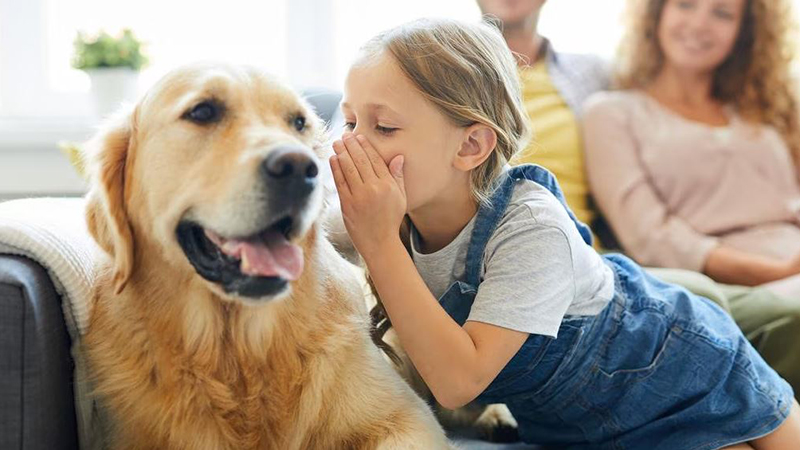
Darwin, 15 May: We often wonder—what if we could talk to our pets? Imagine being able to understand what your dog or cat is thinking,…

Darwin, 08 March : Today, March 8, 2026, marks International Women’s Day. This year the day is being observed around the world, including in Australia,…

Darwin, 14 February: Valentine’s Day, celebrated every year on February 14, is a beautiful occasion dedicated to love, affection, and meaningful relationships. Across the globe,…

A single ticket sold in Arkansas has won the $1.817 billion Powerball jackpot. Find out the winning numbers for the second-largest lottery prize in US history.

Darwin, NT — Severe Tropical Cyclone Fina has intensified to a Category 3 system, bringing destructive winds exceeding 200–205km/h as it tracks dangerously close to…

Discover why Istanbul is known as ‘Catstanbul’. The city’s unique bond with its estimated 250,000 stray cats dates back to the Ottoman Empire and the creation of “cat sitters” (mancacı). Today, a sophisticated system of free vet services and local feeding sustains these hybrid community pets, making the Turkish metropolis a global model for human-animal coexistence.

Darwin, 19 November — Tropical Cyclone Fina is rapidly approaching the Australian coastline, prompting authorities to urge residents in Darwin to remain on high alert….

Darwin, 17 November- Hasina Sentenced to Death for Crimes Against Humanity The International Crimes Tribunal has sentenced ousted Prime Minister Sheikh Hasina to death for…