Netanyahu: IDF Will Remain in Lebanon as Long as Necessary
Darwin, 10 July : Israeli Prime Minister Benjamin Netanyahu has said that Israeli forces will remain in Lebanon for as long as necessary to ensure…



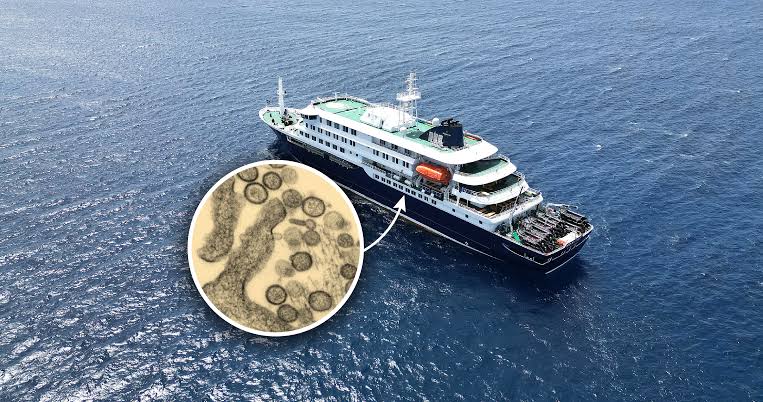
Darwin, 09 May : The UK government suspects that a third British citizen has been infected with hantavirus, which spread aboard the cruise ship MV Hondius in the Atlantic Ocean. However, the individual is not on the ship but is currently on the remote Atlantic island of Tristan da Cunha.
The ship had made a stop at the island in mid-April. The other two infected British citizens are reported to be in stable condition. One of them has been transferred to the Netherlands and the other to South Africa for advanced medical treatment.
According to the BBC, citing the British government, a total of five people have so far been confirmed to have contracted the virus from the cruise ship. Among the infected, three have died.
MV Hondius is currently heading toward the Canary Islands, expected to arrive by the end of the week. Once docked, the remaining British passengers and crew on board will be flown back to the UK on a chartered plane. Although none of them currently show signs of infection, they will be required to undergo mandatory isolation upon returning as a precaution.
Meanwhile, of the seven British passengers who disembarked at Saint Helena Island on April 24, two have already returned to the UK and are voluntarily in isolation. The remaining four are still on the island under health monitoring, while one person is yet to be located.
The World Health Organization (WHO) has classified the incident as “serious” but stated that the risk to the general public is low.
WHO Director-General Tedros Adhanom Ghebreyesus reported that the infected individuals had previously visited Argentina, Chile, and Uruguay on a bird-watching trip. It is believed that the virus may have originated from rodents encountered during that journey.
Hantavirus typically spreads through rodents or similar animals, but experts suggest that in this particular case, human-to-human transmission may also be possible. Symptoms of hantavirus infection generally include fever, extreme fatigue, abdominal pain, vomiting, and respiratory distress. These symptoms usually appear two to four weeks after infection.

Darwin, 10 July : Israeli Prime Minister Benjamin Netanyahu has said that Israeli forces will remain in Lebanon for as long as necessary to ensure…

Darwin, 10 July: A sea of mourners dressed in black and carrying red flags stretched for miles through the streets of Iran’s holy city of…

Darwin, 10 July : India and Australia have signed a significant energy cooperation agreement, including uranium exports, during Indian Prime Minister Narendra Modi’s visit to…

Darwin, 10 July : A key railway bridge in Iran’s northern Golestan province was targeted in an attack early Thursday morning, with Iranian authorities claiming…

Darwin, 10 July: Iran’s Health Ministry has said that at least 14 people have been killed and 78 others injured across five provinces following a…

Darwin, 10 July : Russian President Vladimir Putin has said that Ukraine’s increasing attacks on Russia’s energy infrastructure will not be able to destabilize the…

Sports Desk : Refereeing decisions at the ongoing FIFA World Cup have sparked widespread debate, with the Round of 16 clash between Argentina and Egypt emerging…

Darwin, 08 July : Iran’s Islamic Revolutionary Guard Corps (IRGC) has claimed responsibility for launching attacks on 85 key U.S. military facilities in Bahrain and…