Darwin, 12 October-
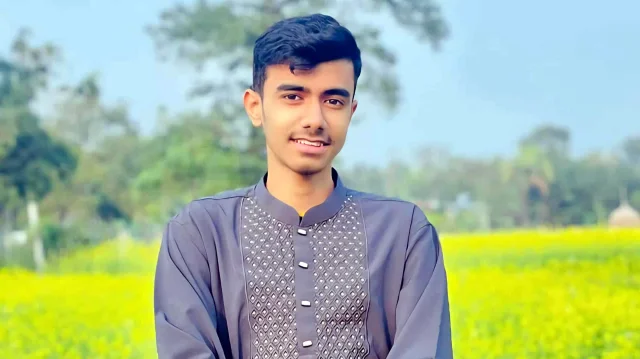
Mahbub Al Hasan, a 17-year-old madrasa student from Kishoreganj, has been nominated for the International Children’s Peace Prize, often referred to as the “Children’s Nobel.” He received the nomination in recognition of his contributions to environmental protection, climate action, education, and healthcare.
The KidsRights Foundation, based in Amsterdam, Netherlands, annually nominates children from around the world who have made significant efforts to protect and promote children’s rights.
Mahbub completed his Dakhil examination in 2022 from Ahmadu Zubaida Dakhil Madrasa and his Alim in 2024 from Hoybotnagar AU Kamil Madrasa. He is currently preparing for university admission. Mahbub is the son of Abdullah Al Hasan and Diluara Khatun of Sholakia, Kishoreganj.
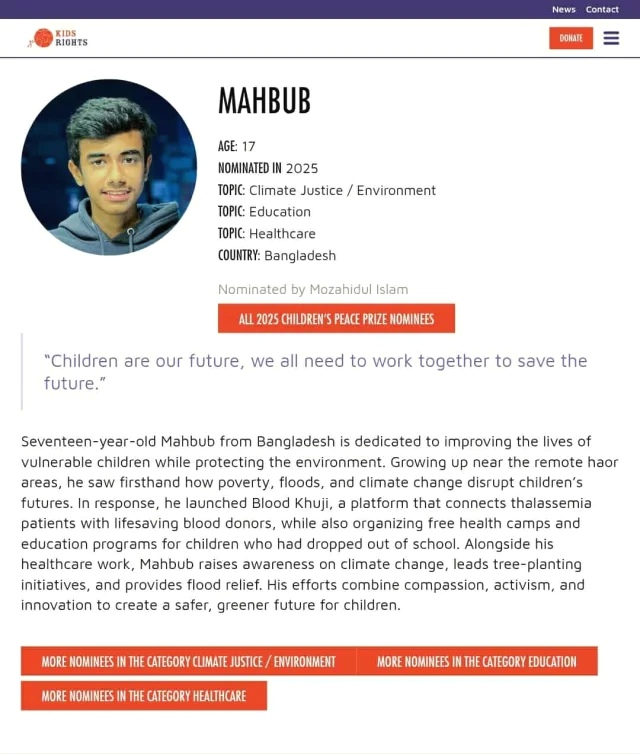
For the past three years, Mahbub has been leading his self-founded organization, The Change Bangladesh, which aims to improve child healthcare and promote climate awareness among young people. Under his leadership, the group regularly organizes activities such as awareness campaigns on climate change, tree planting, and distribution of saplings, notebooks, pencils, and pens to underprivileged children. He has also been working tirelessly to ensure educational opportunities for children in the haor (wetland) regions of Bangladesh.
In addition, Mahbub launched an online blood donation platform called “Blood Khunji”, which connects blood donors with families of sick children in urgent need of transfusions.
Expressing his feelings about the nomination, Mahbub said:
> “Children are our future, and it is our shared responsibility to protect that future. I have always believed that an aware generation can change the world. Working for children is not just a duty for me—it’s my life’s goal and commitment. This international recognition strengthens my sense of responsibility and inspires me to continue working for children on a larger scale. I dream of a Bangladesh where every child—from the remotest haor to the bustling cities—enjoys equal opportunities and security.”