Successful Human Trial of Russia’s Cancer Vaccine
Darwin, August 02: Russia’s newly developed cancer vaccine, “NeoOncoVac,” has shown promising results in the early stage of human trials. Researchers involved in the project…



A directive from the Trump administration is forcing state health agencies to perform what experts are calling “unprecedented” checks on Medicaid enrollees, creating a massive administrative challenge and raising alarms that thousands of eligible, low-income Americans could lose their essential health coverage.
The Centers for Medicare & Medicaid Services (CMS) has demanded that state Medicaid agencies investigate over 170,000 names flagged as potentially ineligible due to their immigration status.
Medicaid and the closely related Children’s Health Insurance Program (CHIP) are restricted to U.S. citizens and certain lawfully present immigrants. Those without legal status are ineligible for federally funded health coverage.
However, advocates warn that the federal order to reverify the immigration status of enrollees—a process states already conduct—is inherently flawed:
Administrative Errors: Names flagged by CMS may simply be due to common data errors, such as misspellings or outdated information (e.g., maiden names vs. married names), according to Georgetown University research professor Leonardo Cuello.
Paperwork Loss: If states must contact individuals to request documentation, eligible residents may fall off the rolls for failing to see a letter or missing a deadline.
Duplication: Advocacy groups argue the push “duplicates what states already do” and is “a waste of state resources.”
Marian Jarlenski, a health policy professor at the University of Pittsburgh, stated, “I am not sure that evidence suggests there really is a need for this” extra verification.
The directive is part of the administration’s broader immigration crackdown, with CMS Administrator Mehmet Oz claiming over $1 billion in federal Medicaid funds were misspent on ineligible individuals.
State officials in Democratic-led states targeted by the administration, including Colorado, Illinois, and Washington, D.C., forcefully rejected Oz’s spending claims as “inaccurate,” “overstated,” and “misinformation.”
Washington, D.C.’s Medicaid director acknowledged and fixed some administrative errors related to billing for its local program (which covers individuals regardless of status using D.C. funds) but confirmed they are paying back only $654,014—a fraction of the $2.1 million initially claimed by Oz.
The states singled out for the audit all run programs that legally use state tax dollars to cover certain individuals not eligible for federal Medicaid, often including specific services for those without legal status.
The overarching concern remains the policy’s impact on patient stability, as the effort risks creating extensive, unnecessary work for states with potentially “very little pay dirt,” according to experts.
Darwin, August 02: Russia’s newly developed cancer vaccine, “NeoOncoVac,” has shown promising results in the early stage of human trials. Researchers involved in the project…
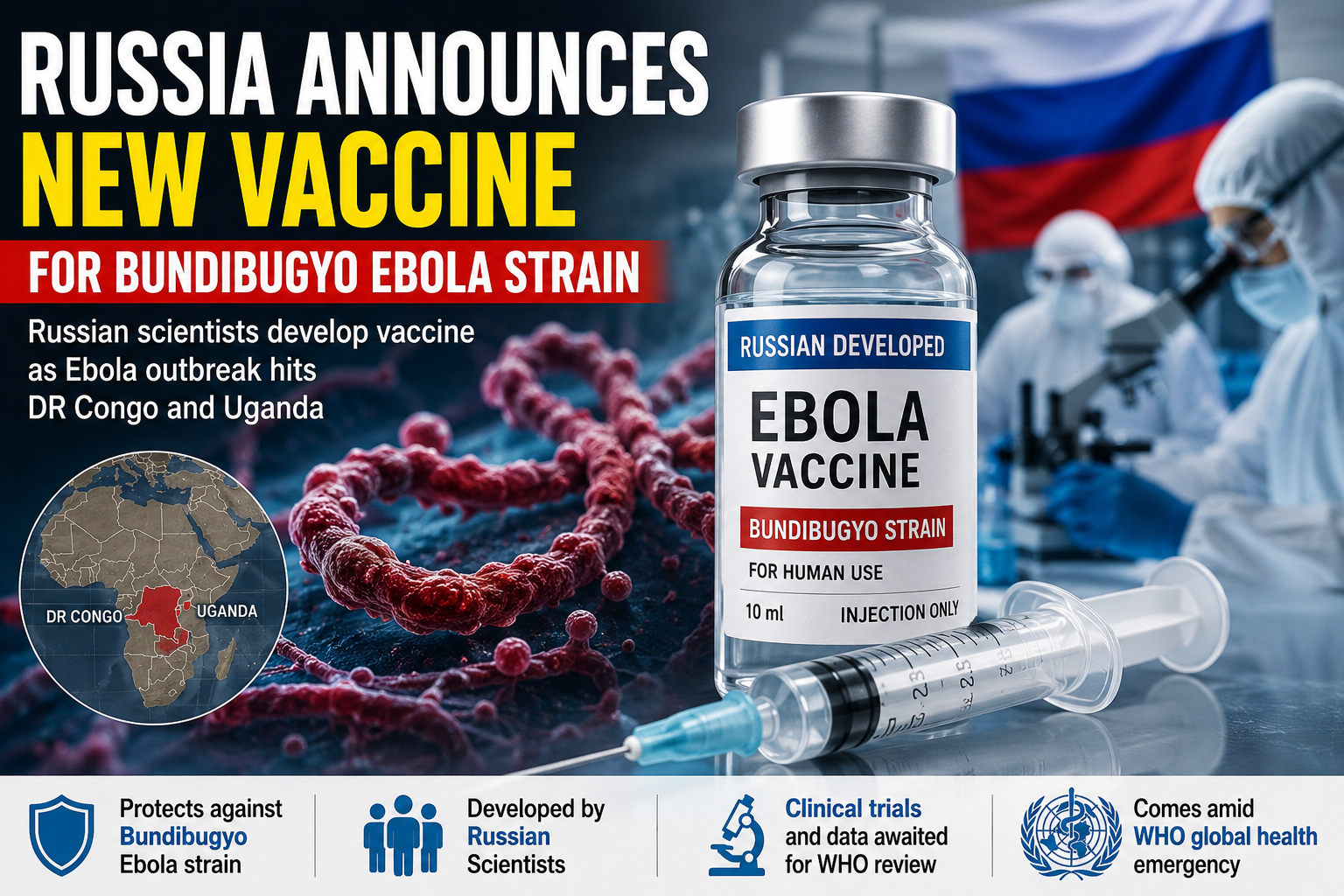
Darwin, 28 May : Russian scientists have developed a new vaccine aimed at combating the deadly Bundibugyo strain of Ebola, according to an announcement made by…

Darwin, 13 May : Health authorities in Western Australia have confirmed the detection of poliovirus in wastewater in Perth, marking the first such finding in…

Darwin, 09 May : The UK government suspects that a third British citizen has been infected with hantavirus, which spread aboard the cruise ship MV…

Darwin, 05 May: Bangladesh has reported its deadliest single day in the ongoing measles outbreak, with 17 children dying in the past 24 hours, according…

New research suggests your body handles a single big meal better than you think—but there’s a limit. Learn why five days of feasting is the danger zone.

The CDC officially abandoned universal newborn hepatitis B vaccination, recommending ‘shared decision-making,’ a major policy shift driven by the ACIP committee appointed by Robert F. Kennedy Jr.

A new £1m scanner at Royal Brompton Hospital using Cadmium Zinc Telluride (CZT), made by British firm Kromek, has cut lengthy lung scans from 45 to 15 minutes. The “amazing feat of engineering” allows for highly detailed 3D images while reducing the radioactive dose by 30%, ushering in a “revolution” in medical imaging.