Successful Human Trial of Russia’s Cancer Vaccine
Darwin, August 02: Russia’s newly developed cancer vaccine, “NeoOncoVac,” has shown promising results in the early stage of human trials. Researchers involved in the project…



WASHINGTON D.C. : The US Centers for Disease Control and Prevention (CDC) officially abandoned the long-standing recommendation for universal hepatitis B vaccination of newborns on Tuesday, adopting a policy of shared decision-making between parents and healthcare providers—a move that prominent medical experts and researchers warn will lead to an increase in illness.
This change marks the most significant action yet taken by the CDC’s Advisory Committee on Immunization Practices (ACIP), whose members were appointed this summer by US Health and Human Services Secretary Robert F. Kennedy Jr. after he removed all 17 previous members.
Universal Hepatitis B vaccination for infants has been standard US policy since 1991, a strategy credited with slashing annual infections in children from an estimated 18,000 cases down to about 20. The previous schedule advised the first dose at birth.
The CDC will now recommend shared decision-making for mothers who test negative for the virus, allowing them to decide the timing of the vaccine, including whether to administer it at birth. For those who opt against the birth dose, the ACIP suggests waiting until the child is at least two months old.
Acting CDC Director Jim O’Neill defended the decision, stating: “This recommendation reflects ACIP’s rigorous review of the available evidence. We are restoring the balance of informed consent to parents whose newborns face little risk of contracting hepatitis B.”
However, major medical groups, including the Infectious Diseases Society of America and the American Academy of Pediatrics (AAP), continue to recommend universal vaccination for newborns.
The policy shift drew immediate and sharp criticism. Dr. Susan Kressly, President of the AAP, called the development “heartbreaking.”
“Since the ACIP voted to downgrade the recommendation for a birth dose of hepatitis B vaccine, pediatricians are already reporting more parents declining to give their child this critical dose,” Dr. Kressly said. “It is deeply disappointing to see the continued dismissal of expertise to inform recommendations that have broad implications on the health of America’s children.”
Adding to the criticism, Louisiana Republican Senator Bill Cassidy, a pivotal vote in confirming Kennedy as HHS secretary and a liver doctor by training, publicly urged O’Neill to reject the ACIP recommendations.
“As a liver doctor who has treated patients with hepatitis B for decades, this change to the vaccine schedule is a mistake,” Cassidy posted on X. “Ending the recommendation for newborns makes it more likely the number of cases will begin to increase again. This makes America sicker.”
Experts warn that the new wording suggests perceived risks associated with the vaccine, despite decades of testing proving it to be “exquisitely low risk.”

Darwin, August 02: Russia’s newly developed cancer vaccine, “NeoOncoVac,” has shown promising results in the early stage of human trials. Researchers involved in the project…
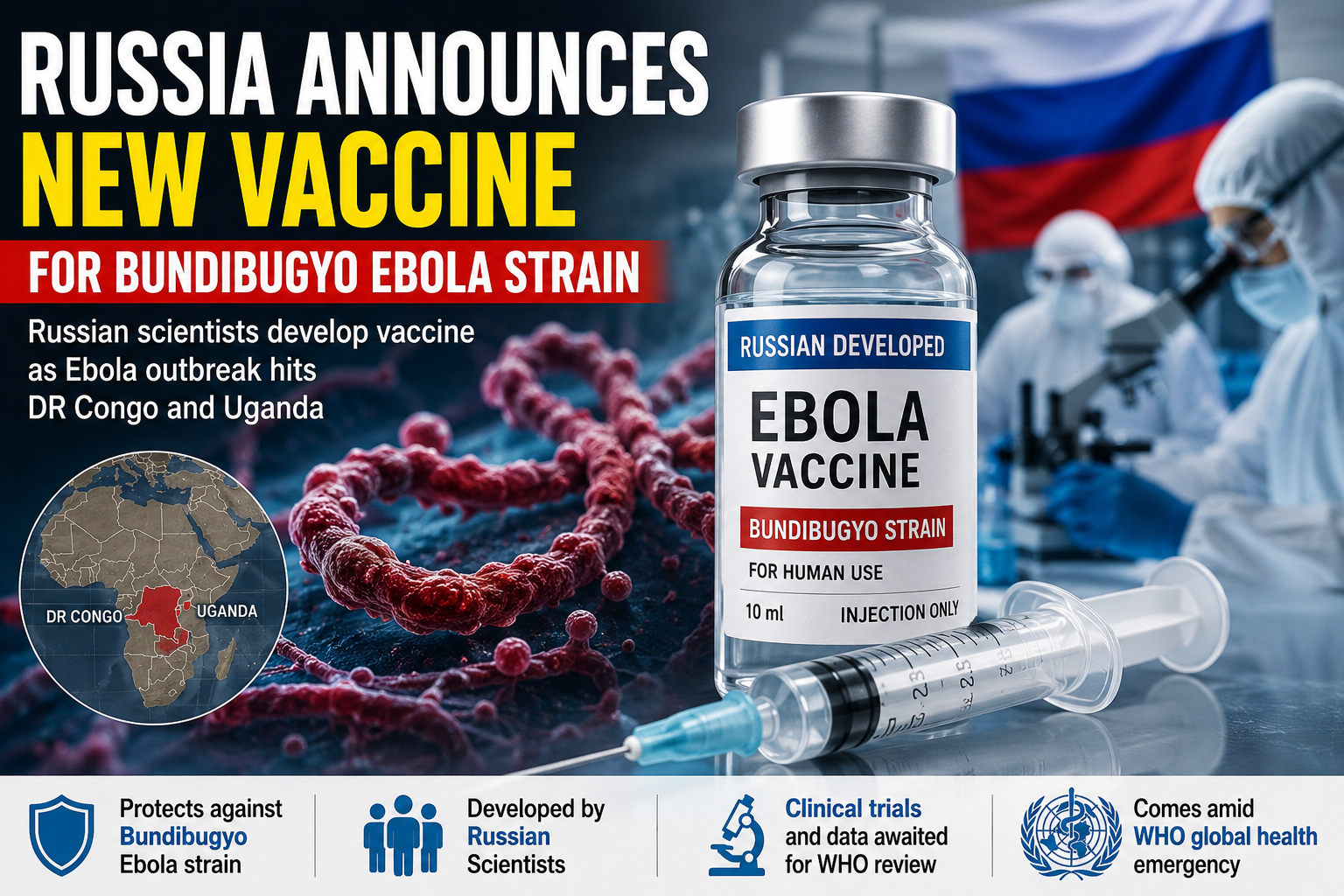
Darwin, 28 May : Russian scientists have developed a new vaccine aimed at combating the deadly Bundibugyo strain of Ebola, according to an announcement made by…

Darwin, 13 May : Health authorities in Western Australia have confirmed the detection of poliovirus in wastewater in Perth, marking the first such finding in…

Darwin, 09 May : The UK government suspects that a third British citizen has been infected with hantavirus, which spread aboard the cruise ship MV…

Darwin, 05 May: Bangladesh has reported its deadliest single day in the ongoing measles outbreak, with 17 children dying in the past 24 hours, according…

New research suggests your body handles a single big meal better than you think—but there’s a limit. Learn why five days of feasting is the danger zone.

A new £1m scanner at Royal Brompton Hospital using Cadmium Zinc Telluride (CZT), made by British firm Kromek, has cut lengthy lung scans from 45 to 15 minutes. The “amazing feat of engineering” allows for highly detailed 3D images while reducing the radioactive dose by 30%, ushering in a “revolution” in medical imaging.

New ABS data for 2024 confirms dementia is the nation’s biggest killer, claiming 17,549 lives. The shift, which ends heart disease’s decades-long reign, is linked to Australia’s longer life expectancy, especially for women, who account for over 62% of dementia deaths.