Commitment to Women’s Empowerment and Equality
Darwin, 08 March : Today, March 8, 2026, marks International Women’s Day. This year the day is being observed around the world, including in Australia,…



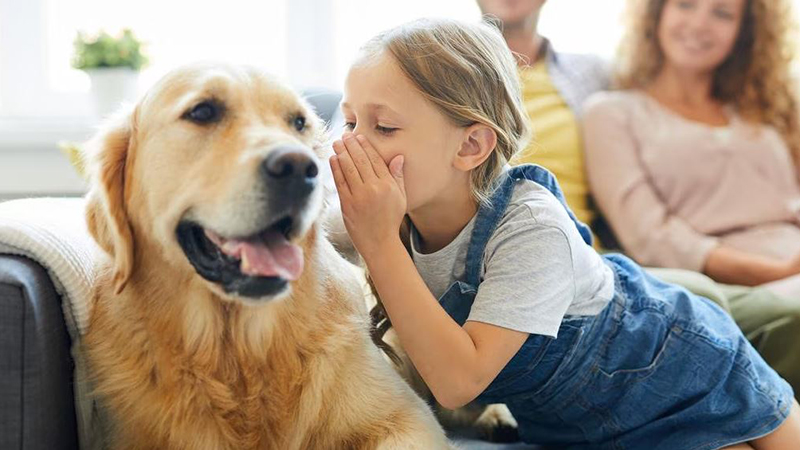
Darwin, 15 May: We often wonder—what if we could talk to our pets?
Imagine being able to understand what your dog or cat is thinking, or what they want to say.
In reality, this is not yet possible. But scientists say that in the future, new ways of communication between humans and animals may emerge.
A recent Disney and Pixar film, “Hoppers”, explores this idea. In the movie, scientists develop technology that allows human consciousness to be transferred into special robotic bodies to communicate with animals.
Although this remains science fiction, researchers say real-world progress is being made in understanding animal communication.
Some scientists believe that limited forms of communication between humans and animals may be possible in the future.
US researcher David Gruber thinks modern technology is opening new possibilities in understanding animal “language.” His research initiative, Project CETI, is analyzing whale sounds in an attempt to decode their communication systems.
Researchers believe that sperm whale vocalizations may contain structures similar to human language patterns.
Around the world, various studies are also underway. Captive chimpanzees have been taught sign-based communication, cuttlefish have been observed using hand-like gestures, and dolphins have shown whistle patterns that resemble elements of language.
However, scientists emphasize that while animals may understand certain signals or sounds, they do not use a fully developed language like humans.
According to researchers, animals do have communication systems, but they are not as complex as human language. Human language includes grammar, sentence structure, and the ability to express abstract ideas—something not observed in other species so far.
Dogs, for example, have been domesticated for thousands of years and can understand human gestures, facial expressions, and commands to a large extent. However, there is no evidence that they understand or produce complex human-like sentences.
Another major barrier is that animals perceive the world very differently from humans. Their senses, priorities, and understanding of the environment vary greatly, making direct translation of meaning extremely difficult.
Despite the challenges, scientists remain hopeful that technology could play a major role in the future. Artificial intelligence, in particular, is already helping identify subtle differences in animal sounds and signals that humans cannot easily detect.
The potential benefits are significant. Better understanding of animal communication could improve pet care, enhance livestock welfare, and even contribute to wildlife conservation.
However, many researchers believe that full human-like conversations with animals may never be possible. Still, learning more about how animals communicate could fundamentally change how we understand their lives and behavior—and that remains one of science’s biggest hopes.
Source: National Geographic

Darwin, 08 March : Today, March 8, 2026, marks International Women’s Day. This year the day is being observed around the world, including in Australia,…

Darwin, 14 February: Valentine’s Day, celebrated every year on February 14, is a beautiful occasion dedicated to love, affection, and meaningful relationships. Across the globe,…

A single ticket sold in Arkansas has won the $1.817 billion Powerball jackpot. Find out the winning numbers for the second-largest lottery prize in US history.

Forget the simple “real or plastic” carbon debate: scientists reveal that Christmas tree plantations play a vital role in biodiversity and sustainable land use. These young forests provide refuge for declining farmland birds (like yellowhammers) and support local economies, fulfilling an important ecological niche, making a real tree often the greener, more nuanced choice.

Darwin, NT — Severe Tropical Cyclone Fina has intensified to a Category 3 system, bringing destructive winds exceeding 200–205km/h as it tracks dangerously close to…

Discover why Istanbul is known as ‘Catstanbul’. The city’s unique bond with its estimated 250,000 stray cats dates back to the Ottoman Empire and the creation of “cat sitters” (mancacı). Today, a sophisticated system of free vet services and local feeding sustains these hybrid community pets, making the Turkish metropolis a global model for human-animal coexistence.

Darwin, 19 November — Tropical Cyclone Fina is rapidly approaching the Australian coastline, prompting authorities to urge residents in Darwin to remain on high alert….
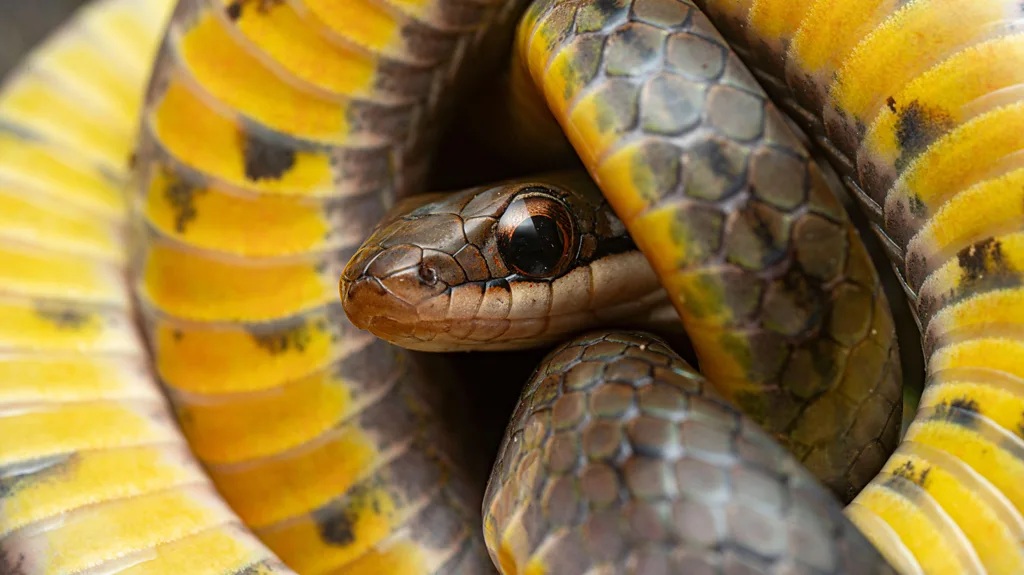
New research shows royal ground snakes drag poison frogs across the ground before eating them to reduce toxins. Scientists are studying this evolutionary arms race to find new treatments for human poisoning