Maha Navami of Sharadiya Durga Puja Celebrated Today
Darwin, October 20: Today is Maha Navami, the ninth day of Sharadiya Durga Puja. Members of the Hindu community will observe the day through religious…



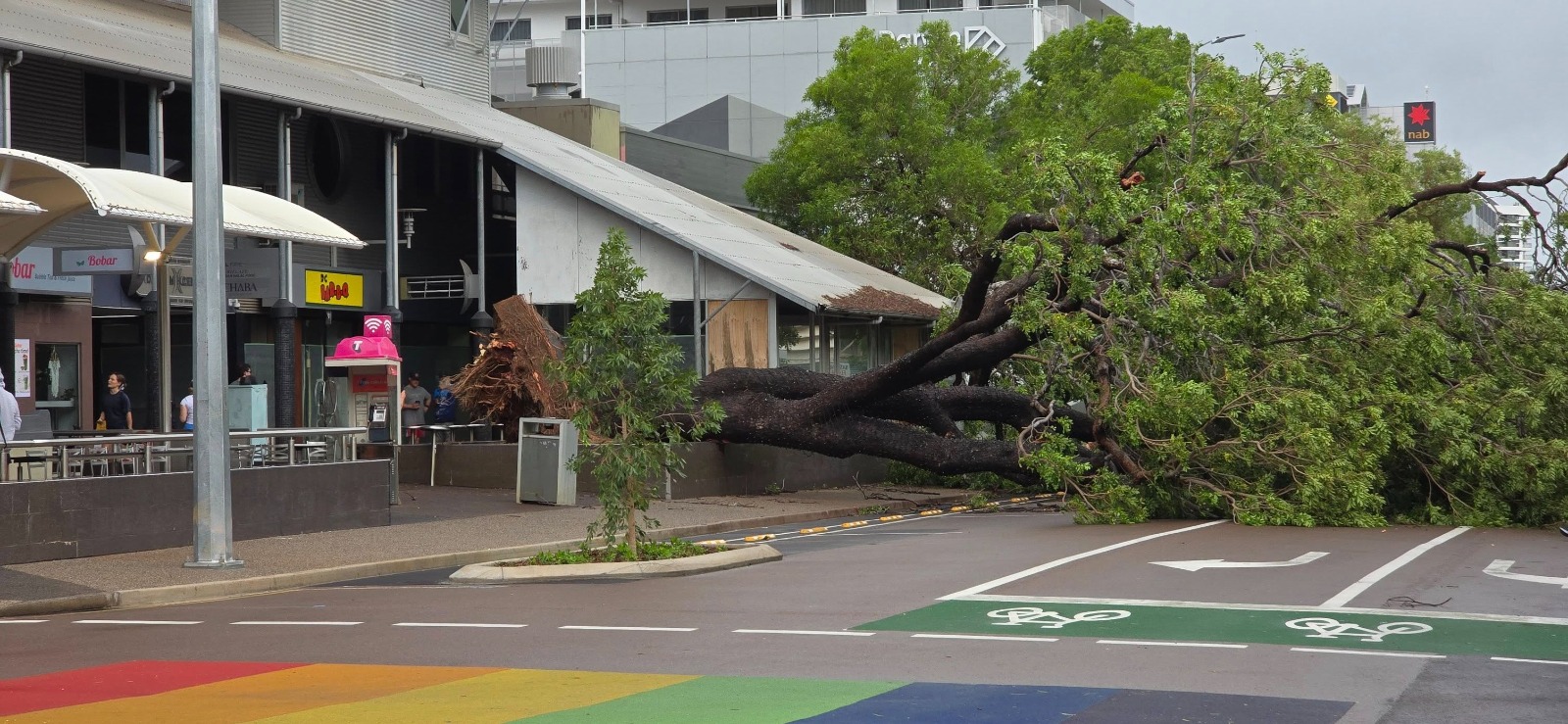
Darwin, 23 November- Australia’s self-governing Northern Territory has been battered by Tropical Cyclone Fina, leaving thousands of people without power on Sunday and forcing the closure of Darwin’s airport.
Fina, a category-three cyclone, was packing wind gusts of up to 205 km/h (127 mph) as it moved away from Darwin on Sunday. The national Bureau of Meteorology said the system had been classified as a “severe tropical cyclone” when it passed over the city late Saturday night.
For Darwin’s population of around 140,000, the storm rekindled painful memories of Cyclone Tracy, which devastated most of the city on Christmas Day in 1974, killing 66 people. Tracy remains one of Australia’s most catastrophic natural disasters.
Northern Territory Chief Minister Lia Finocchiaro said the cyclone cut power to nearly 19,000 residents, damaged homes and left roads waterlogged, though no injuries had been reported.
“This cyclone showed a territory that was united and prepared,” she said during a televised press conference from Darwin.
Authorities have urged residents to stay away from fallen power lines while emergency crews begin assessing damage.
Darwin International Airport, closed on Saturday as a precaution, said it would resume operations as soon as it is safe to do so.
According to the Bureau of Meteorology, category-three cyclones typically damage structures, crops and trees, and cause widespread power outages. Earlier in March, ex-tropical Cyclone Alfred hit neighbouring Queensland, closing schools and leaving hundreds of thousands without electricity.
A Long, Violent Night Across the Top End
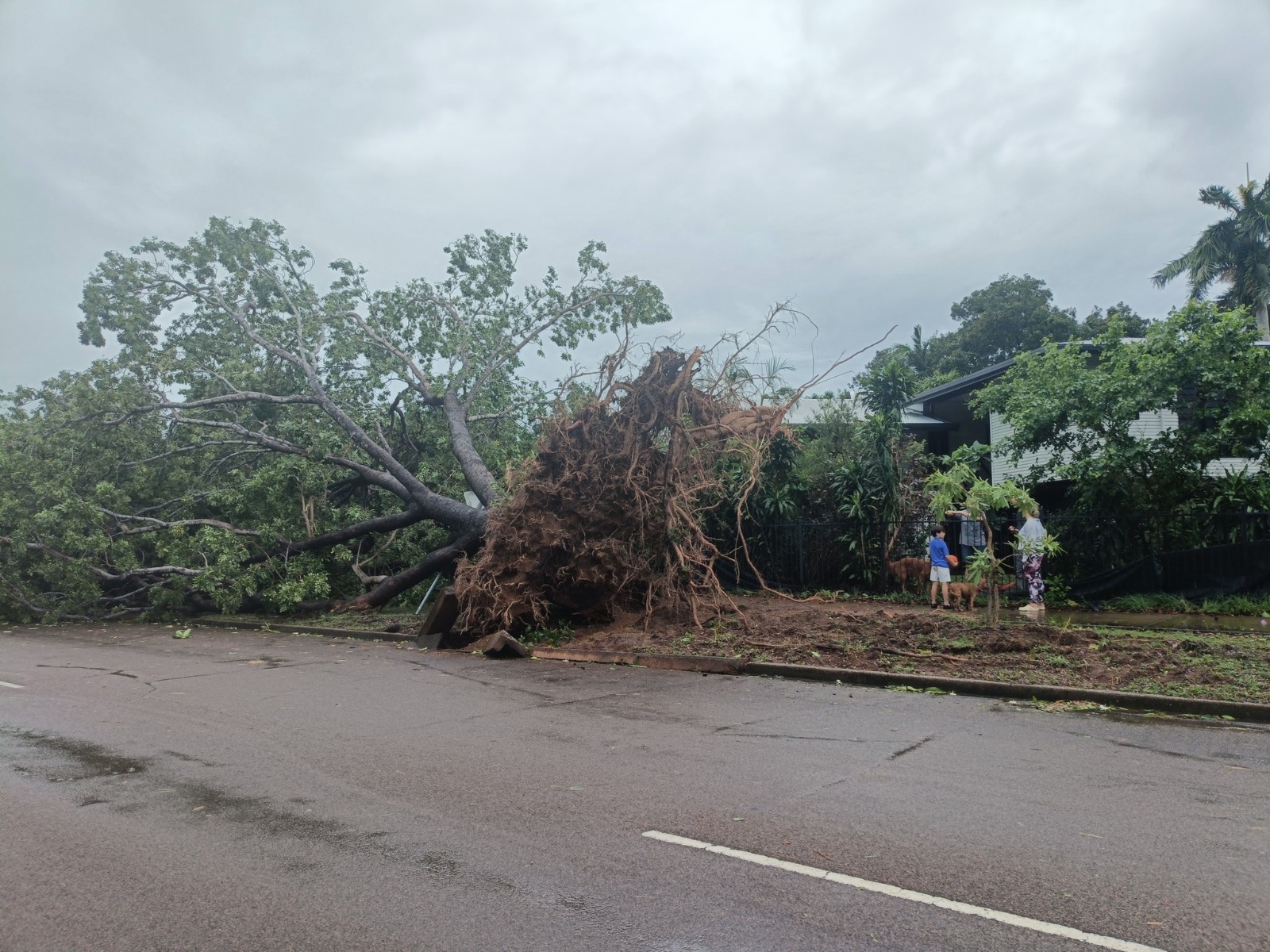
The Northern Territory’s Top End endured a night of destructive winds and torrential rain as Cyclone Fina swept through the region. With gusts near the centre reaching 195 km/h and sustained winds of 140 km/h, the storm uprooted trees, damaged homes, and disrupted power in many communities.
In Darwin and surrounding areas — where gusts reached up to 107 km/h — emergency authorities had instructed residents on Friday to stay indoors or in shelters until an official “all clear” was issued.
After striking the remote Tiwi Islands, Fina moved across Darwin and nearby regions throughout Saturday and into Sunday. Many residents spent the night sleepless and alarmed as roaring winds rattled buildings and tore through trees.
Chief Minister Finocchiaro described it as “a frightening night for everyone,” adding that early-morning briefings confirmed extensive treefall, property damage and downed power lines, but no reported injuries.
Prime Minister Anthony Albanese said the federal government was providing all requested support, adding that his thoughts were with people across the Northern Territory.
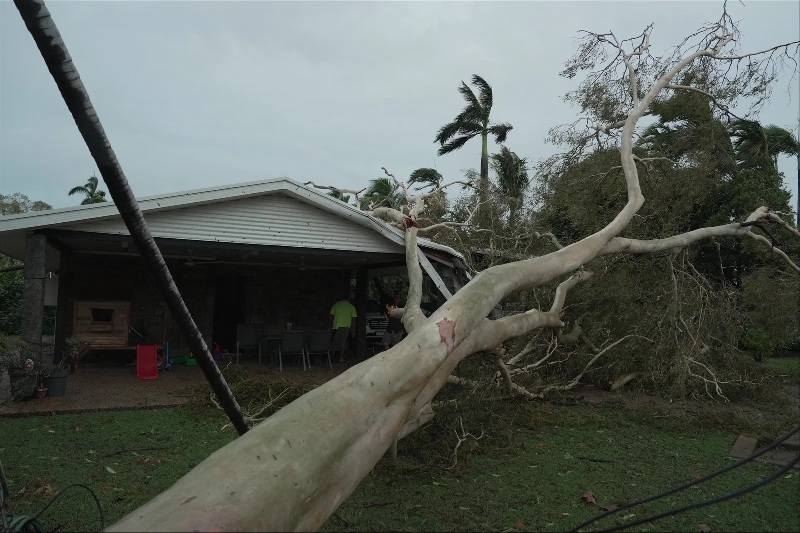
Footage from the peak of the storm showed sheets of rain pouring from rooftops and huge trees collapsing into yards and roadways.
Emergency shelters were opened in Darwin, nearby Palmerston and surrounding rural areas, with residents urged to bring their own bedding and food.
At the Royal Darwin Hospital, part of the roof collapsed, scattering bricks and debris across a corridor, though again no one was injured.
Cyclone Fina Moves Offshore
Fina is now tracking westward toward open waters. A warning zone remains in effect from Wadeye to Cape Hotham — including Darwin, the Tiwi Islands, Dundee Beach, Milikapiti, Pirlangimpi and Wurrumiyanga — where gusts of up to 155 km/h are still possible.
Bureau meteorologist Dean Narramore warned that inland areas could face flash flooding, isolated homesteads and possibly inundated businesses if heavy rainfall continued through Sunday.
The system is expected to weaken by Monday as it approaches the north Kimberley coast.
Although the cyclone’s “very destructive core” has moved offshore, intense rainfall is forecast to persist around Darwin and nearby inland regions, said the Bureau’s Angus Hines.
On Sunday morning at Darwin’s waterfront, local resident Alastair Shields said his home lost power overnight and a nearby road was blocked by a fallen tree.
“It was a rough night — very windy and noisy,” he said. “You couldn’t see what was happening, but you could hear trees cracking and falling. It was pretty hair-raising.”
Once conditions improve, repair crews are expected to begin restoring power and clearing fallen trees and debris.

Darwin, October 20: Today is Maha Navami, the ninth day of Sharadiya Durga Puja. Members of the Hindu community will observe the day through religious…

Darwin, October 05: Deaths in Australia are expected to outnumber births by the 2060s, according to a government report, marking a demographic milestone that countries…

Darwin, October 04: Ten people, including three children, have been injured after a car crashed into a crowd of rugby league fans in Newcastle, eastern…

Darwin, October 4: Australia’s central bank has raised interest rates to their highest level in 15 years, increasing mortgage repayments for millions of Australian households….

Darwin, September 06: Bangladeshi-Australian community leader and Campbelltown City Councillor and former Deputy Mayor Mohammad Ibrahim Khalil Masud has formally announced his candidacy for the…

Darwin, September 02: Queensland has introduced strict new rules governing the use of e-bikes and e-scooters. From now on, people using these electric vehicles in…

Darwin, August 28: At least 39 Australian citizens are among nearly 1,500 people still missing following devastating flash floods and landslides in areas along the…

Darwin, 28 July : Australia’s new national emergency alert system, AusAlert, successfully completed its first nationwide trial on Monday. At 2:00 pm local time (AEST)…