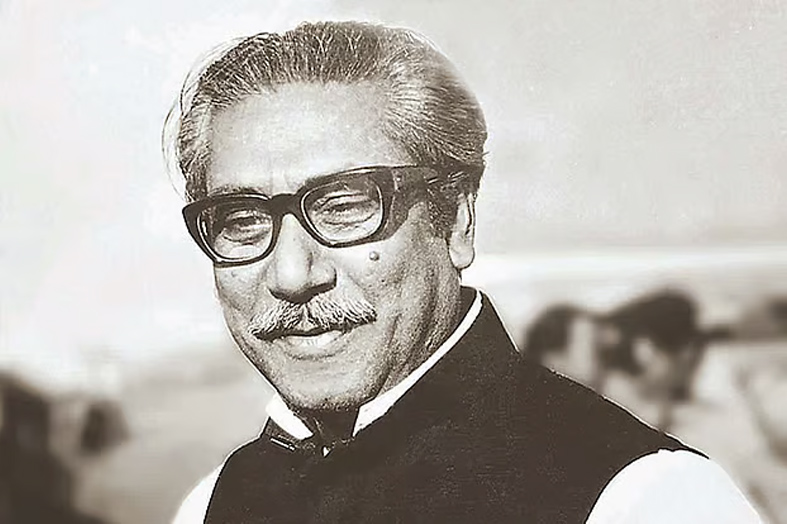
51 years since the assassination of Bangabandhu
Darwin, August 15 : The death anniversary of Bangabandhu Sheikh Mujibur Rahman, the architect of independent Bangladesh, is being observed today, August 15. On this…



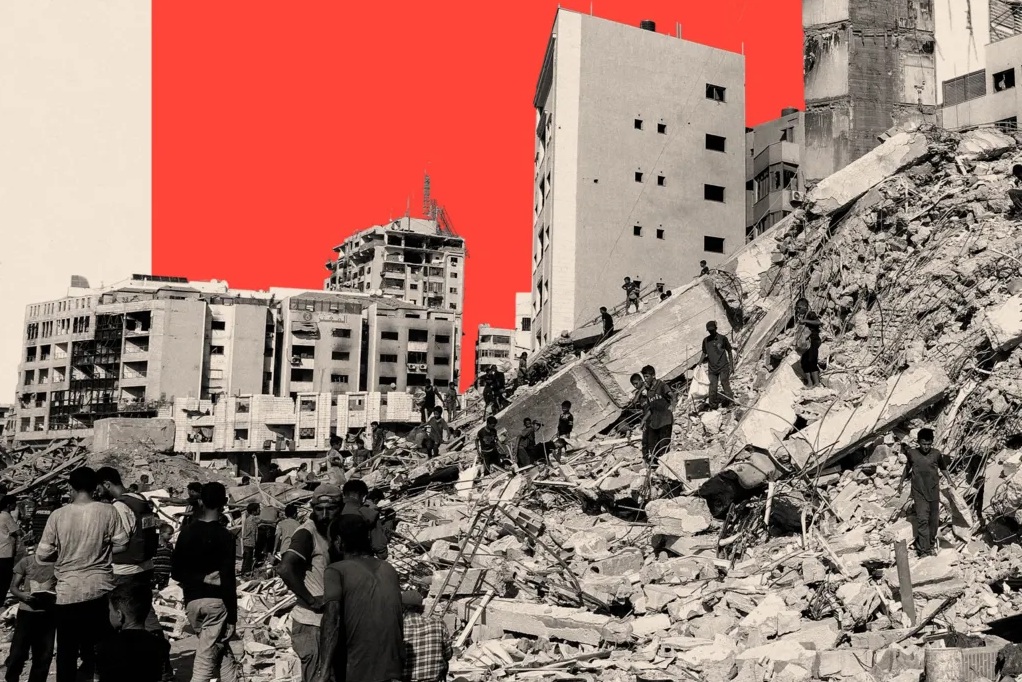
“I rode away on a camel with my grandmother, along a sandy road, and I started to cry.” Ayish Younis is describing the worst moment of his life – he still regards it as such, even though it was 77 years ago, and he’s lived through many horrors since.
KHAN YOUNIS, GAZA – For Ayish Younis, the horrors of 1948 have become a grim present-day reality. At the age of 89, the Palestinian man who was exiled from his home during the first Arab-Israeli war is once again living in a tent, displaced by the ongoing conflict between Israel and Hamas.
Younis describes the moment of his first displacement—fleeing his village of Barbara at age 12—as the worst moment of his life: “I rode away on a camel with my grandmother, along a sandy road, and I started to cry.” He was one of an estimated 700,000 Palestinians who became refugees, crowding into the newly formed Gaza Strip.
“We returned to what we started with, we returned back to tents,” Younis says now, sitting on bare sand outside his makeshift shelter in Al-Mawasi, near Khan Younis.
A Catastrophe More Than 70 Years Later
In May last year, seven months into the current conflict, Younis was forced to evacuate his home in the southern Gaza city of Rafah due to an Israeli military order. The four-storey house he shared with his children and grandchildren has since been destroyed, likely by tank fire.
Now, his home is a small white canvas tent, just a few meters across. The large, extended family is struggling with severe shortages, cooking on open fires and washing with scarce, expensive canned water.
“After we left Barbara and lived in a tent, we eventually succeeded in building a house. But now, the situation is more than a catastrophe,” he reflects, his voice clear despite his age and circumstances.
Lingering Uncertainty Despite Ceasefire
Younis’s ordeal mirrors the generational suffering in Gaza, a region still recovering from the devastating two-year conflict. Although Israel and Hamas recently agreed to the first phase of a ceasefire and hostage-release deal, Younis remains profoundly pessimistic.
“I hope the peace will spread and it will be calm,” he says. “But I believe the Israelis will do whatever they like.”
Under the current agreement, Israel will maintain control of over half the Gaza Strip, including Rafah. This leaves Younis and thousands of other displaced Gazans pondering whether they will ever be able to return to their homes or if the territory can ever be successfully rebuilt.
Younis’s ultimate wish remains to return to the land of his childhood: “I just want to go back to Barbara, with my whole extended family, and again taste the fruit that I remember from there.”
My 18 children and 79 grandchildren
The extraordinary life of Ayish Younis, an 89-year-old Palestinian elder, has come full circle, but not in a welcome way. The patriarch of 18 children and 79 grandchildren—a record family size in Palestine—is reliving the trauma of 1948, forced to exchange his multistory home for a makeshift tent in Gaza’s Al-Mawasi region.
Younis fled his village of Barbara at age 12 during the first Arab-Israeli war. After becoming a respected local headman (mukhtar) and mosque imam in Rafah, he built a life for his massive family, educating nearly all of his children to university level. Now, after his Rafah home was destroyed in the conflict, the family is back to square one.
“We returned to what we started with, we returned back to tents, and we still don’t know how long we will be here,” Younis says, holding the precious title deeds to the ancestral land he fled 77 years ago.
Ayish Younis’s story is an emblem of the Palestinian journey through adversity. After the 1948 exodus, the family transitioned from a tent in a UN camp to an extended cement house, thanks partly to wages earned by sons, like Ahmed, who worked in Israel when the border was open. This income helped their children become engineers, nurses, and teachers, spreading the family across the globe.
However, the violence of the decades did not spare them. Ayish’s daughter, Fadwa, was tragically killed in the 2007 street battles between Fatah and Hamas. Despite surviving multiple subsequent wars, the evacuation order given by the Israeli military last year forced the family to abandon their hard-earned home.
Though a ceasefire is in effect, Younis expresses profound pessimism regarding Gaza’s future.
“I don’t believe Gaza has any future,” he states, pointing to the massive destruction of infrastructure, schools, and health services.
His son, Haritha, living in a nearby tent with his own family, agrees, stating that “An entire generation has been destroyed by this war.” Haritha notes the destruction is far greater than the displacement of 1948 and questions whether donor countries will step up to rebuild.
The Younis family’s despair is compounded by the loss of livelihoods and educational opportunities; Haritha’s daughter has gone two years without schooling due to the war and two years prior due to COVID.
Ayish’s eldest son, Ahmed, a spine specialist living in London, highlights the cycle of destruction: “Every 10 to 15 years, people lose everything and they come back to square one.” Yet, he holds onto the singular hope that “the hope is always in the new generation to rebuild.”
Darwin, August 15 : The death anniversary of Bangabandhu Sheikh Mujibur Rahman, the architect of independent Bangladesh, is being observed today, August 15. On this…
Darwin, 19 June : Over the past 25 years, the United States has experienced several military setbacks in the Middle East, but the war with…
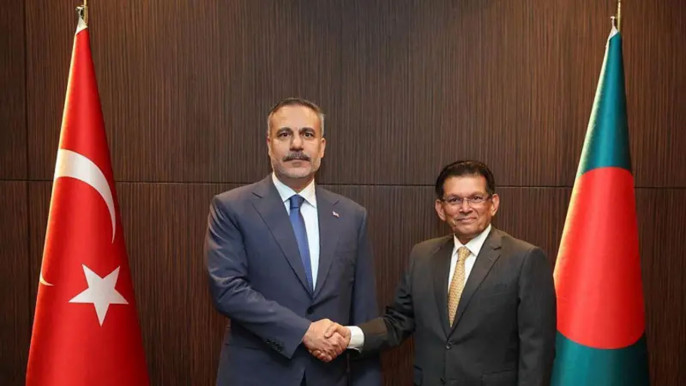
Darwin, 12 June : Turkey’s proposal to strengthen cooperation with Bangladesh in the defense industry, raised during Turkish Foreign Minister Hakan Fidan’s visit to Dhaka,…

Darwin, 14 May : The growing tendency among European leaders to publicly criticize Donald Trump can no longer be viewed as the result of any…

Darwin, 15 December: A senior Bangladeshi journalist has been detained by the Detective Branch (DB) of police following demands from several reactionary groups and activists,…

Ousted PM Sheikh Hasina warns that millions of supporters will boycott the next national election after the Awami League was banned. In her first media engagement since fleeing, Hasina, from New Delhi, questions the polls’ legitimacy

Australian News Time: A widespread controversy has erupted on social media and within the campus over Shree Shanto Roy, a student of Bangladesh University of…

Darwin, 13 Octobor— U.S. President Donald Trump declared on Sunday that the war in Gaza is “over,” expressing strong confidence in the ceasefire and hostage…